THE ADVENTURE COLLECTIVE® · Independent discovery and booking for outdoor travel

Explore Rovinj’s old town on a guided walking tour that moves from solemn monuments to a bustling market and up to the Baroque Church of St. Euphemia. Expect 90–105 minutes of coastal history, narrow lanes, and local flavors.
Explore Rovinj’s old town on a guided walking tour that moves from solemn monuments to a bustling market and up to the Baroque Church of St. Euphemia. Expect 90–105 minutes of coastal history, narrow lanes, and local flavors.
Start at the Monument to the Fallen Fighters and Victims of Fascist Terror, where stone faces and quiet plaques set the tone for a walk that threads history through everyday life. The Adriatic breeze pushes at the edges of narrow lanes as the group moves toward the city market — voices, fish scales, and bundled citrus creating a sensory map of Rovinj.
Verified experiences and guided adventures in the surrounding area.
Operated by Walking Tour Pula with a local - Augustus Walks · Rovinj, Istria
Start at the Monument to the Fallen Fighters and Victims of Fascist Terror, where stone faces and quiet plaques set the tone for a walk that threads history through everyday life. The Adriatic breeze pushes at the edges of narrow lanes as the group moves toward the city market — voices, fish scales, and bundled citrus creating a sensory map of Rovinj.
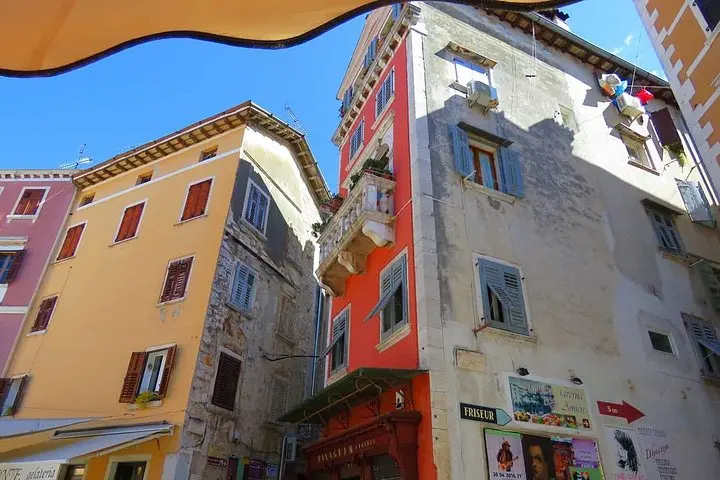
Rovinj’s streets tell a layered story: Roman foundations under Venetian façades, Austro-Hungarian influences in the quay, and the Baroque sweep of the Church of St. Euphemia crowning the old town. The town sits on the western rim of the Istrian peninsula; its limestone and coastal geology shaped both alleys and anchorages. Locals still fish these waters, and small distilleries craft liqueurs from island fruits and herbs.
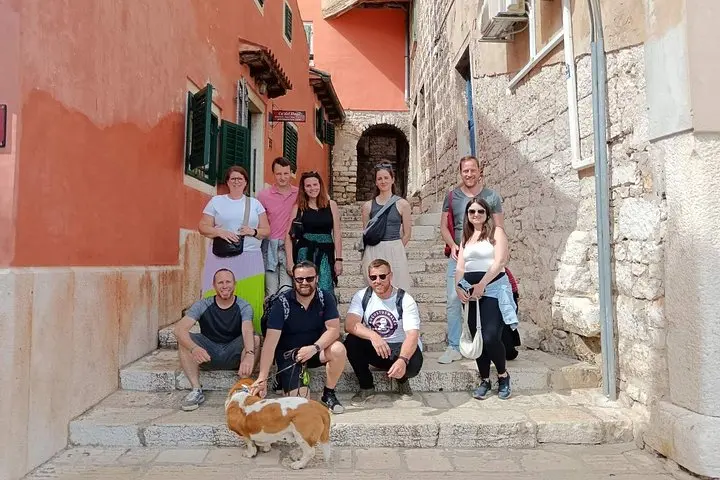
The tour weaves through Trg Valdibora market, Bregovita Street’s steep stone steps, Sv. Križa’s quiet lanes, and ends at Marshal Tito Square — each stop offering context on civic life and cultural persistence.
Practical guidance: wear grippy footwear for cobbles and stepped alleys, bring a refillable bottle (water fountains are available near the harbour), and plan the walk before mid-day in summer to avoid peak sun. Expect roughly 1.5–2 hours of steady walking on uneven surfaces; guides encourage questions and occasional detours for local tastes. This is a walking, listening, tasting experience — short, concentrated, and best paired with time to linger afterward at a café overlooking the harbor.
Meet at the Monument to the Fallen Fighters in Trg Valdibora — guides will be visible and the square is close to the main market.
Children can join but expect narrow, stepped lanes that are not stroller-friendly; infants should sit on laps as required.
Guides typically lead the tour in English; check booking details for other language options or private arrangements.
Large backpacks are discouraged due to narrow streets and crowds; carry a small daypack instead.
Walking Tour Pula with a local - Augustus Walks operates guided outdoor trips and adventures with an emphasis on safety, stewardship, and memorable experiences.

Start at the Monument to the Fallen Fighters and Victims of Fascist Terror, where stone faces and quiet plaques set the tone for a walk that threads history through everyday life. The Adriatic breeze pushes at the edges of narrow lanes as the group moves toward the city market — voices, fish scales, and bundled citrus creating a sensory map of Rovinj.
Start at the Monument to the Fallen Fighters and Victims of Fascist Terror, where stone faces and quiet plaques set the tone for a walk that threads history through everyday life. The Adriatic breeze pushes at the edges of narrow lanes as the group moves toward the city market — voices, fish scales, and bundled citrus creating a sensory map of Rovinj.
Rovinj’s streets tell a layered story: Roman foundations under Venetian façades, Austro-Hungarian influences in the quay, and the Baroque sweep of the Church of St. Euphemia crowning the old town. The town sits on the western rim of the Istrian peninsula; its limestone and coastal geology shaped both alleys and anchorages. Locals still fish these waters, and small distilleries craft liqueurs from island fruits and herbs.
The tour weaves through Trg Valdibora market, Bregovita Street’s steep stone steps, Sv. Križa’s quiet lanes, and ends at Marshal Tito Square — each stop offering context on civic life and cultural persistence.
Practical guidance: wear grippy footwear for cobbles and stepped alleys, bring a refillable bottle (water fountains are available near the harbour), and plan the walk before mid-day in summer to avoid peak sun. Expect roughly 1.5–2 hours of steady walking on uneven surfaces; guides encourage questions and occasional detours for local tastes. This is a walking, listening, tasting experience — short, concentrated, and best paired with time to linger afterward at a café overlooking the harbor.