THE ADVENTURE COLLECTIVE® · Independent discovery and booking for outdoor travel

Four days across the High Atlas and into the Sahara, from the film-ready kasbahs of Ait Ben Haddou to the wind-sculpted dunes of Erg Chebbi. Expect long drives, towering gorges, a camel trek and an overnight desert camp under vivid stars.
Four days across the High Atlas and into the Sahara, from the film-ready kasbahs of Ait Ben Haddou to the wind-sculpted dunes of Erg Chebbi. Expect long drives, towering gorges, a camel trek and an overnight desert camp under vivid stars.
You step out of the minibus where the asphalt gives way to red-earth tracks and the air tastes of spice and sun.
Verified experiences and guided adventures in the surrounding area.
Operated by Morocco Destination · Marrakech, Marrakech-Safi
You step out of the minibus where the asphalt gives way to red-earth tracks and the air tastes of spice and sun.
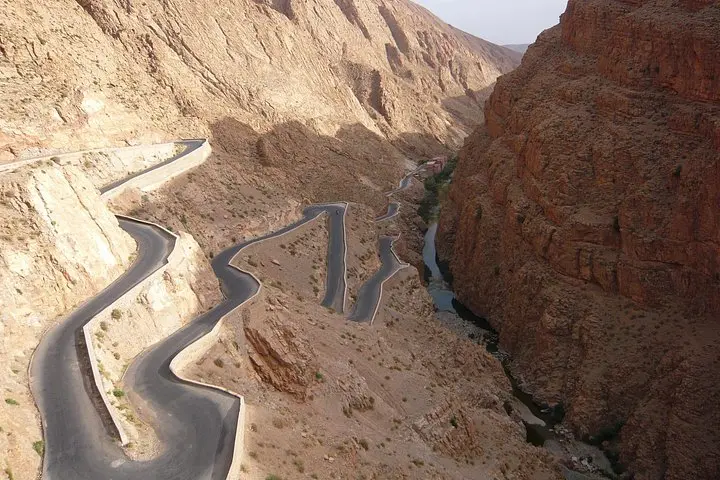
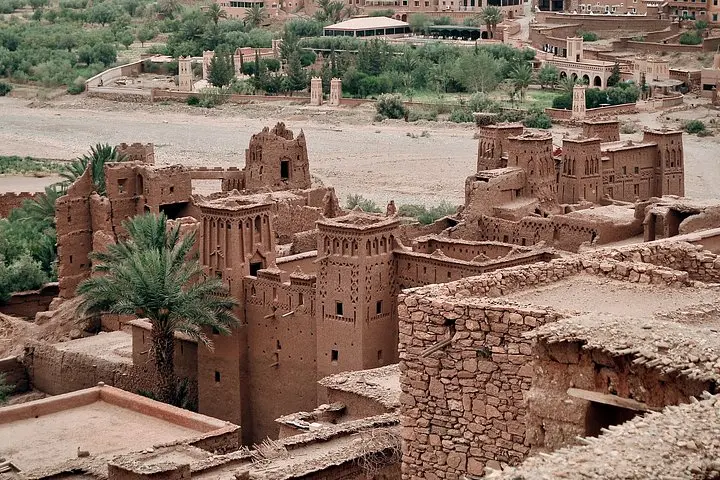
The first day's climb over the High Atlas brings switchbacks and hairpin views—Tizi n'Tichka rises around 2,260 m—before the ochre fortifications of Ait Ben Haddou come into view, a fortified ksar that has guarded caravan routes and film crews for centuries.
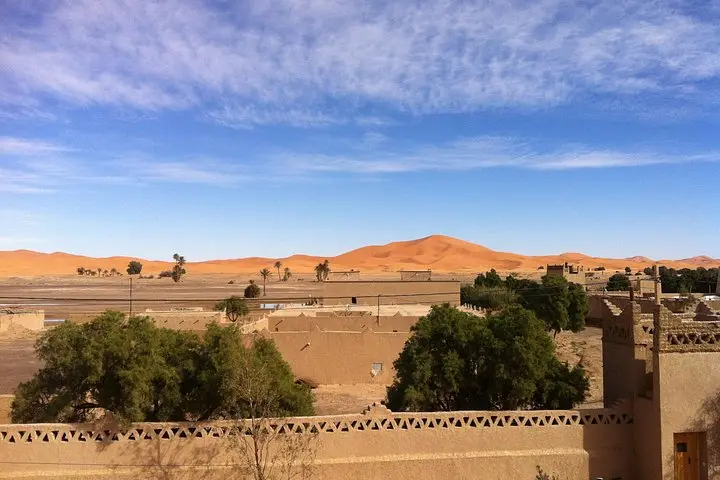
Geology here is bold: river-carved gorges like Dades and Todra slice walls up to 300 m high, while farther east the landscape softens into the rippled ridges of Erg Chebbi, dunefields that can reach 100–150 m above the plain.
Culture threads through small towns—ancient kasbahs, rose farms in the Valley of Roses, and Berber hospitality that centers on slow-minted tea and shared meals. Nights in the desert camp are deliberate: a simple tent, a wood fire, and a sky dense with stars.
Practical guidance: expect long drives—daily transfers commonly run 3–6 hours—so plan light daypacks and hydrate between stops. Walks in the gorges are short but on uneven, sometimes sandy ground; a basic fitness level is enough. For the camel trek to camp, anticipate 1–2 hours of riding over dune slopes; bring a small cushion and sunglasses for sand.
Timing matters—spring brings roses and milder temperatures; summer can be very hot in Merzouga, and winters drop sharply at night. Respect private properties and local customs when photographing villages and kasbahs.
The tour is rated easy—most activities are short walks, camel rides of 1–2 hours, and vehicle transfers; basic mobility is sufficient.
Yes—operators typically leave large bags on the vehicle and bring only a small overnight bag to the desert camp; confirm luggage limits before departure.
This itinerary includes three nights' accommodation and breakfast and dinner as listed; specific hotels vary by departure and should be confirmed at booking.
Most camps offer traditional tents and shared facilities suitable for families; children must be accompanied by an adult and you should confirm bedding and camp amenities in advance.
Morocco Destination operates guided outdoor trips and adventures with an emphasis on safety, stewardship, and memorable experiences.
You step out of the minibus where the asphalt gives way to red-earth tracks and the air tastes of spice and sun.
You step out of the minibus where the asphalt gives way to red-earth tracks and the air tastes of spice and sun.
The first day's climb over the High Atlas brings switchbacks and hairpin views—Tizi n'Tichka rises around 2,260 m—before the ochre fortifications of Ait Ben Haddou come into view, a fortified ksar that has guarded caravan routes and film crews for centuries.
Geology here is bold: river-carved gorges like Dades and Todra slice walls up to 300 m high, while farther east the landscape softens into the rippled ridges of Erg Chebbi, dunefields that can reach 100–150 m above the plain.
Culture threads through small towns—ancient kasbahs, rose farms in the Valley of Roses, and Berber hospitality that centers on slow-minted tea and shared meals. Nights in the desert camp are deliberate: a simple tent, a wood fire, and a sky dense with stars.
Practical guidance: expect long drives—daily transfers commonly run 3–6 hours—so plan light daypacks and hydrate between stops. Walks in the gorges are short but on uneven, sometimes sandy ground; a basic fitness level is enough. For the camel trek to camp, anticipate 1–2 hours of riding over dune slopes; bring a small cushion and sunglasses for sand.
Timing matters—spring brings roses and milder temperatures; summer can be very hot in Merzouga, and winters drop sharply at night. Respect private properties and local customs when photographing villages and kasbahs.