THE ADVENTURE COLLECTIVE® · Independent discovery and booking for outdoor travel

Walk the political center of the Netherlands with a private local guide and learn why The Hague matters to Dutch history, culture, and governance. This focused two-hour tour visits Binnenhof, the Mauritshuis façade, Lange Voorhout and the Grote Kerk with local insights and practical tips.
Walk the political center of the Netherlands with a private local guide and learn why The Hague matters to Dutch history, culture, and governance. This focused two-hour tour visits Binnenhof, the Mauritshuis façade, Lange Voorhout and the Grote Kerk with local insights and practical tips.
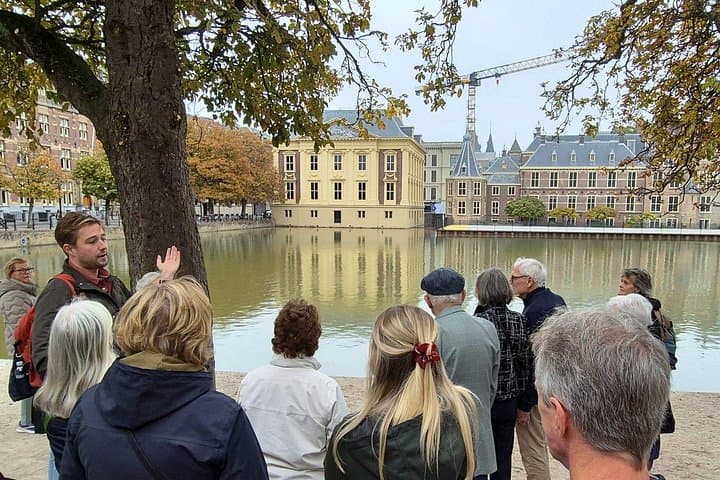
Step out onto the flagstone beside the Hofvijver and the city slides into focus: the clipped edge of the Binnenhof, the low tower of the prime minister’s office, and trams humming a short distance away. This private two-hour walk threads through the political heart of The Hague, where stone squares and narrow streets keep stories within easy earshot.
Verified experiences and guided adventures in the surrounding area.
Operated by Discover Delft · The Hague, South Holland
Step out onto the flagstone beside the Hofvijver and the city slides into focus: the clipped edge of the Binnenhof, the low tower of the prime minister’s office, and trams humming a short distance away. This private two-hour walk threads through the political heart of The Hague, where stone squares and narrow streets keep stories within easy earshot.
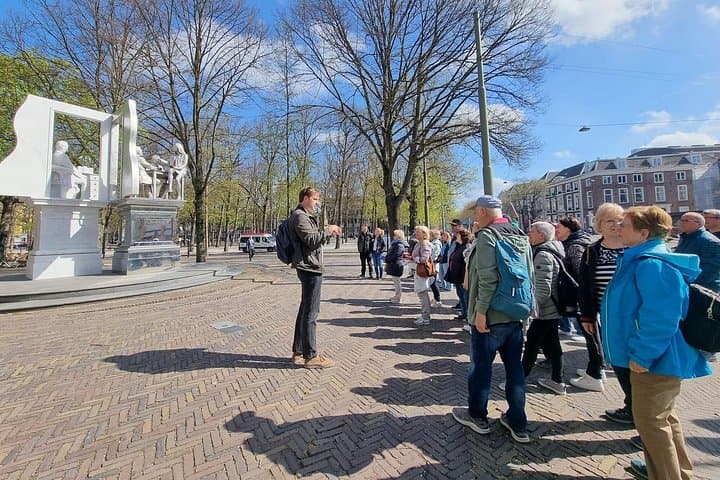
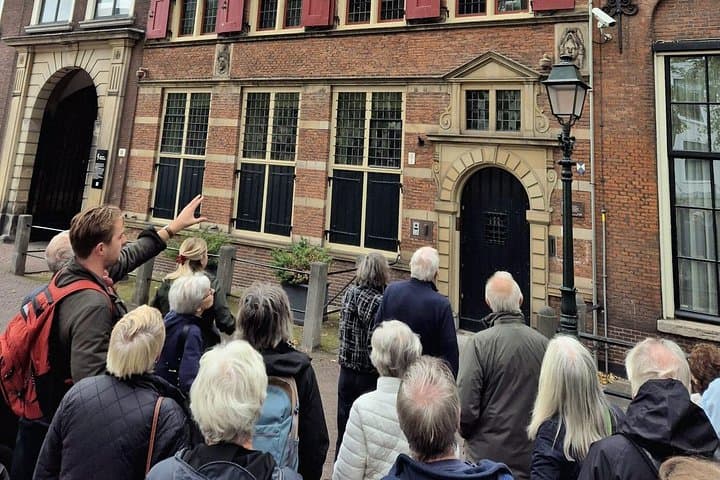
The route concentrates on key landmarks—Binnenhof and the Knight’s Hall, the Mauritshuis façade, Lange Voorhout’s plane trees and the Grote Kerk—each a page from the Low Countries’ political and cultural history. The Hague grew from a count’s hunting residence to the administrative capital of the Netherlands; its streets show that evolution in sandstone, royal palaces, and embassy-lined boulevards. Geology is subtle here—soft marine clays underlie the city, which is why canals and drainage shaped urban design. Expect glimpses of everyday Dutch life: cyclists threading the lanes, local markets, and an occasional minister hurrying past.
Practical guidance: the tour covers roughly 2–3 km of mostly paved and cobbled surfaces with minimal elevation gain, so wear sturdy shoes and allow for uneven stones. Bring a light waterproof layer—the weather changes fast—and a travel card if you plan to extend your day by tram. Ask your guide about skip-the-line options for museums like the Mauritshuis if you want to add entry after the walk. For quieter photos, aim for early morning or late afternoon when light flatters the facades and crowds thin.
This is a concise, conversational way to understand Dutch governance, royal history, and The Hague’s civic personality without rushing through the monuments.
Yes. The tour is advertised as wheelchair accessible and follows mostly paved routes; notify the operator of mobility needs when booking so the guide can adapt the pace and route.
No. The itinerary covers exteriors and public squares; museum entry (e.g., Mauritshuis) is not included but can often be arranged separately.
Yes. This private tour allows you to set the pace and topics—political history, royal residences, or local daily life—when you book or at the start.
Guides typically work in English and Dutch; confirm your preferred language at booking to ensure availability.
Discover Delft operates guided outdoor trips and adventures with an emphasis on safety, stewardship, and memorable experiences.

Step out onto the flagstone beside the Hofvijver and the city slides into focus: the clipped edge of the Binnenhof, the low tower of the prime minister’s office, and trams humming a short distance away. This private two-hour walk threads through the political heart of The Hague, where stone squares and narrow streets keep stories within easy earshot.
Step out onto the flagstone beside the Hofvijver and the city slides into focus: the clipped edge of the Binnenhof, the low tower of the prime minister’s office, and trams humming a short distance away. This private two-hour walk threads through the political heart of The Hague, where stone squares and narrow streets keep stories within easy earshot.
The route concentrates on key landmarks—Binnenhof and the Knight’s Hall, the Mauritshuis façade, Lange Voorhout’s plane trees and the Grote Kerk—each a page from the Low Countries’ political and cultural history. The Hague grew from a count’s hunting residence to the administrative capital of the Netherlands; its streets show that evolution in sandstone, royal palaces, and embassy-lined boulevards. Geology is subtle here—soft marine clays underlie the city, which is why canals and drainage shaped urban design. Expect glimpses of everyday Dutch life: cyclists threading the lanes, local markets, and an occasional minister hurrying past.
Practical guidance: the tour covers roughly 2–3 km of mostly paved and cobbled surfaces with minimal elevation gain, so wear sturdy shoes and allow for uneven stones. Bring a light waterproof layer—the weather changes fast—and a travel card if you plan to extend your day by tram. Ask your guide about skip-the-line options for museums like the Mauritshuis if you want to add entry after the walk. For quieter photos, aim for early morning or late afternoon when light flatters the facades and crowds thin.
This is a concise, conversational way to understand Dutch governance, royal history, and The Hague’s civic personality without rushing through the monuments.