THE ADVENTURE COLLECTIVE® · Independent discovery and booking for outdoor travel

A private two-day journey from M'Hamid El Ghizlane to the towering Erg Chegaga dunes, offering an overnight desert camp experience, sunrise dune walks, and a route that follows the historic Wadi Latash. Perfect for travelers seeking an authentic Sahara introduction with local guides.
A private two-day journey from M'Hamid El Ghizlane to the towering Erg Chegaga dunes, offering an overnight desert camp experience, sunrise dune walks, and a route that follows the historic Wadi Latash. Perfect for travelers seeking an authentic Sahara introduction with local guides.
Morning light breaks over a field of stone and low scrub as a convoy of 4x4s threads the dry bed of the Wadi Latash. Tea is poured on the tailgate, hands warm on steaming glasses, and the guide points to a line of tamarisk trees — landmarks that have guided desert people for generations.
Verified experiences and guided adventures in the surrounding area.
Operated by Z Marrakch Travel · M'Hamid El Ghizlane, Drâa-Tafilalet
Morning light breaks over a field of stone and low scrub as a convoy of 4x4s threads the dry bed of the Wadi Latash. Tea is poured on the tailgate, hands warm on steaming glasses, and the guide points to a line of tamarisk trees — landmarks that have guided desert people for generations.
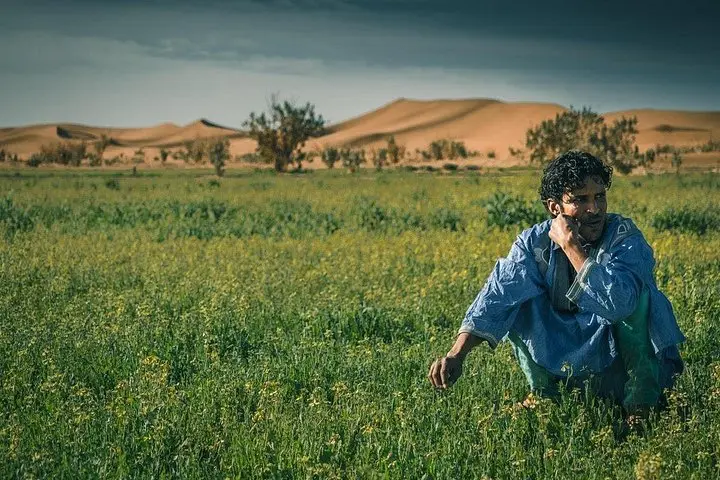
This two-day private tour runs from M'Hamid El Ghizlane out to the vast Erg Chegaga dunes. Geologically the region shifts from hamada (rocky plateaus) to sand seas carved by wind; you’ll traverse plains of flint and limestone before the landscape tips into towering crescent dunes. The area was part of trans-Saharan routes and remains shaped by nomadic culture — local guides often descend from families who moved camel caravans across these paths.
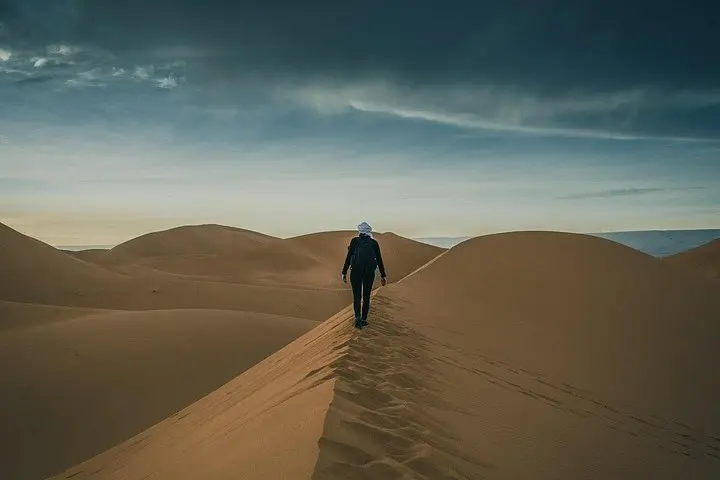
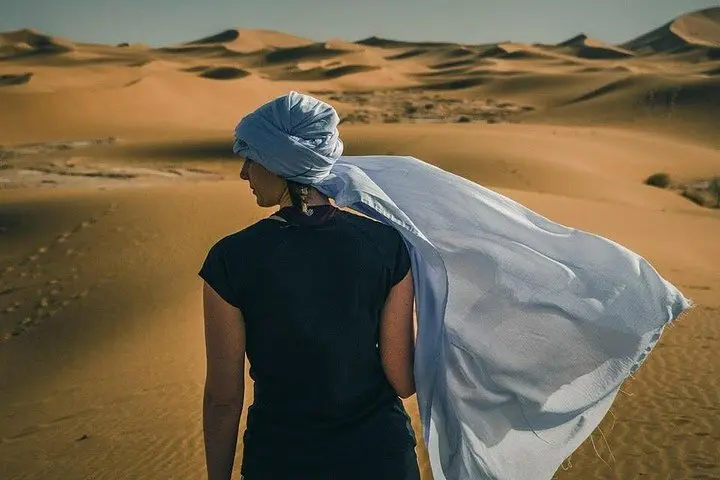
Expect an intimate, low-light desert night in a seasonal camp: sleeping under open sky, waking to an expansive desert sunrise, and walking loose sand where footprints smooth quickly into the wind. Wildlife sightings are subtle — wild camels forage the edges, and the small, nocturnal fennec fox may be glimpsed at dusk.
Practically, the trip is accessible but remote: wear sturdy closed-toe shoes for dune walks, bring 2–3 liters of water per person, high-SPF sun protection, and warm layers for night. Mobile signal is intermittent; carry cash for local purchases and respect camp customs — tea, shared meals, and tented privacy. For photographers and first-time desert travelers, timing dawn and dusk yields the best light and the most comfortable temperatures.
Yes — private transportation is included; operators typically pick up from M'Hamid or nearby meeting points specified during booking.
The tour is rated easy and suitable for most travelers; dune walking is optional and can be more strenuous than vehicle time.
Camps provide basic but comfortable sleeping arrangements, dinner and breakfast, and experienced staff; they follow local safety practices for remote travel.
Bring a small day pack with water, sun protection, a warm layer for night, personal medications, and a headlamp for campsite navigation.
Z Marrakch Travel operates guided outdoor trips and adventures with an emphasis on safety, stewardship, and memorable experiences.
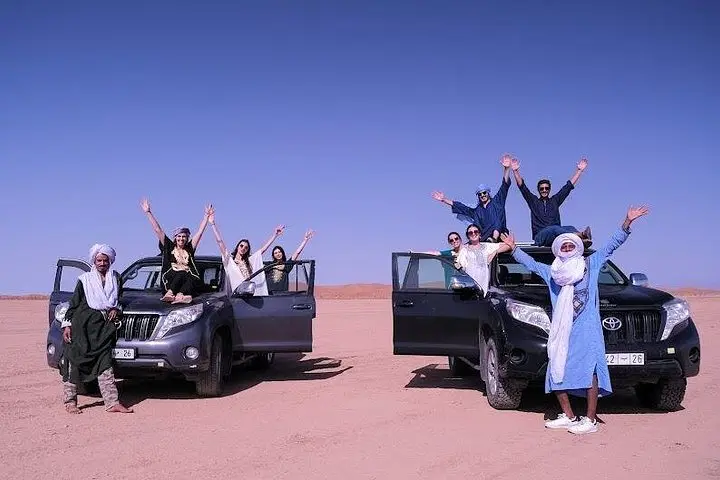
Morning light breaks over a field of stone and low scrub as a convoy of 4x4s threads the dry bed of the Wadi Latash. Tea is poured on the tailgate, hands warm on steaming glasses, and the guide points to a line of tamarisk trees — landmarks that have guided desert people for generations.
Morning light breaks over a field of stone and low scrub as a convoy of 4x4s threads the dry bed of the Wadi Latash. Tea is poured on the tailgate, hands warm on steaming glasses, and the guide points to a line of tamarisk trees — landmarks that have guided desert people for generations.
This two-day private tour runs from M'Hamid El Ghizlane out to the vast Erg Chegaga dunes. Geologically the region shifts from hamada (rocky plateaus) to sand seas carved by wind; you’ll traverse plains of flint and limestone before the landscape tips into towering crescent dunes. The area was part of trans-Saharan routes and remains shaped by nomadic culture — local guides often descend from families who moved camel caravans across these paths.
Expect an intimate, low-light desert night in a seasonal camp: sleeping under open sky, waking to an expansive desert sunrise, and walking loose sand where footprints smooth quickly into the wind. Wildlife sightings are subtle — wild camels forage the edges, and the small, nocturnal fennec fox may be glimpsed at dusk.
Practically, the trip is accessible but remote: wear sturdy closed-toe shoes for dune walks, bring 2–3 liters of water per person, high-SPF sun protection, and warm layers for night. Mobile signal is intermittent; carry cash for local purchases and respect camp customs — tea, shared meals, and tented privacy. For photographers and first-time desert travelers, timing dawn and dusk yields the best light and the most comfortable temperatures.