THE ADVENTURE COLLECTIVE® · Independent discovery and booking for outdoor travel

An eight‑day loop from Dakar that mixes history, wildlife and varied landscapes—from Gorée and the Pink Lake to Djoudj and the Sine‑Saloum. This practical circuit combines cultural sites, bird sanctuaries and desert nights with straightforward logistics.
An eight‑day loop from Dakar that mixes history, wildlife and varied landscapes—from Gorée and the Pink Lake to Djoudj and the Sine‑Saloum. This practical circuit combines cultural sites, bird sanctuaries and desert nights with straightforward logistics.
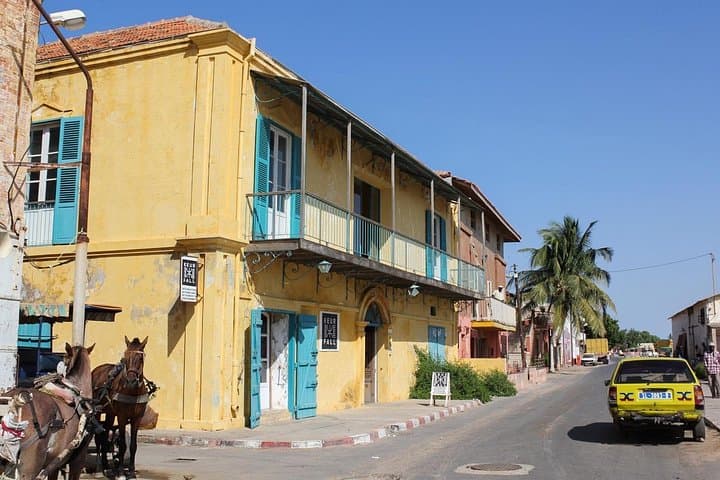
You step off the ferry into the narrow lanes of Gorée and the ocean wind pushes the town’s pastel façades toward you; in the distance the Pink Lake gleams a brittle rose under the sun. Over eight days this circuit moves from urban Dakar to salt flats, desert dunes, mangrove channels and bird-rich deltas—each change of landscape as immediate as a gear shift.
Verified experiences and guided adventures in the surrounding area.
Operated by Senegal Tourist Guide · Dakar, Dakar
You step off the ferry into the narrow lanes of Gorée and the ocean wind pushes the town’s pastel façades toward you; in the distance the Pink Lake gleams a brittle rose under the sun. Over eight days this circuit moves from urban Dakar to salt flats, desert dunes, mangrove channels and bird-rich deltas—each change of landscape as immediate as a gear shift.
The route threads through major historical chapters: Gorée Island’s Slave House and merchants’ quarters, Saint‑Louis’ colonial grid and the spiritual pull of Touba. Geology and hydrology shape the trip—the high salinity of Lac Rose gives its hue; the Lompoul dunes are wind‑sculpted loess; the Sine‑Saloum and Djoudj deltas are sedimentary mosaics that sustain migratory birds.
Culturally the tour emphasizes local practice: women harvesting salt at Kayar, pirogue navigation in Toubacouta, and the mosque and market rhythms in Touba and Dakar. Expect simple 3-star hotels, a night under Mauritanian-style tents in Lompoul, and pirogue transfers through mangroves—transport alternates between 4x4 and boat.
Practical guidance: the itinerary requires moderate fitness and tolerates long drives; pack sun protection, a light rain layer for the wet season, and insect repellent. Bring CFA francs for small purchases, and plan daylight visits for birding and photography. Medical and pregnancy restrictions apply on some segments; confirm pickup details and accessibility when you book. Travel during the dry season (November–April) gives clearer roads and calmer seas, but each season offers distinct lighting and wildlife opportunities.
Pickup and transfer options are arranged from Dakar—confirm your arrival time and chosen pickup point when you book as itineraries use hotel or agreed pickup locations.
Most overnight stays are in 3‑star hotels and an ecolodge; family rooms are possible but check availability for cot or infant seating in advance.
Consult a travel health clinic—standard recommendations for Senegal include routine vaccines and region‑specific advice; bring any prescribed medication from home.
The tour involves boat transfers, dune walking and uneven surfaces; it’s not recommended for travelers with significant spinal, cardiovascular, or mobility restrictions—notify the operator ahead of booking.
Senegal Tourist Guide operates guided outdoor trips and adventures with an emphasis on safety, stewardship, and memorable experiences.

You step off the ferry into the narrow lanes of Gorée and the ocean wind pushes the town’s pastel façades toward you; in the distance the Pink Lake gleams a brittle rose under the sun. Over eight days this circuit moves from urban Dakar to salt flats, desert dunes, mangrove channels and bird-rich deltas—each change of landscape as immediate as a gear shift.
You step off the ferry into the narrow lanes of Gorée and the ocean wind pushes the town’s pastel façades toward you; in the distance the Pink Lake gleams a brittle rose under the sun. Over eight days this circuit moves from urban Dakar to salt flats, desert dunes, mangrove channels and bird-rich deltas—each change of landscape as immediate as a gear shift.
The route threads through major historical chapters: Gorée Island’s Slave House and merchants’ quarters, Saint‑Louis’ colonial grid and the spiritual pull of Touba. Geology and hydrology shape the trip—the high salinity of Lac Rose gives its hue; the Lompoul dunes are wind‑sculpted loess; the Sine‑Saloum and Djoudj deltas are sedimentary mosaics that sustain migratory birds.
Culturally the tour emphasizes local practice: women harvesting salt at Kayar, pirogue navigation in Toubacouta, and the mosque and market rhythms in Touba and Dakar. Expect simple 3-star hotels, a night under Mauritanian-style tents in Lompoul, and pirogue transfers through mangroves—transport alternates between 4x4 and boat.
Practical guidance: the itinerary requires moderate fitness and tolerates long drives; pack sun protection, a light rain layer for the wet season, and insect repellent. Bring CFA francs for small purchases, and plan daylight visits for birding and photography. Medical and pregnancy restrictions apply on some segments; confirm pickup details and accessibility when you book. Travel during the dry season (November–April) gives clearer roads and calmer seas, but each season offers distinct lighting and wildlife opportunities.