THE ADVENTURE COLLECTIVE® · Independent discovery and booking for outdoor travel

A seven-day loop from Tunis through Roman ruins, mountain oases and Sahara dunes. Expect long drives, desert skies and a mix of cultural highlights from El Jem to the troglodyte cave-houses of Matmata.
A seven-day loop from Tunis through Roman ruins, mountain oases and Sahara dunes. Expect long drives, desert skies and a mix of cultural highlights from El Jem to the troglodyte cave-houses of Matmata.
You step out in Tunis as the city bleeds gold into the Mediterranean, the smell of mint tea and baking bread drifting past the cafe doors.
Verified experiences and guided adventures in the surrounding area.
Operated by TUNISIVISION · Tunis, Tunis Governorate
You step out in Tunis as the city bleeds gold into the Mediterranean, the smell of mint tea and baking bread drifting past the cafe doors.
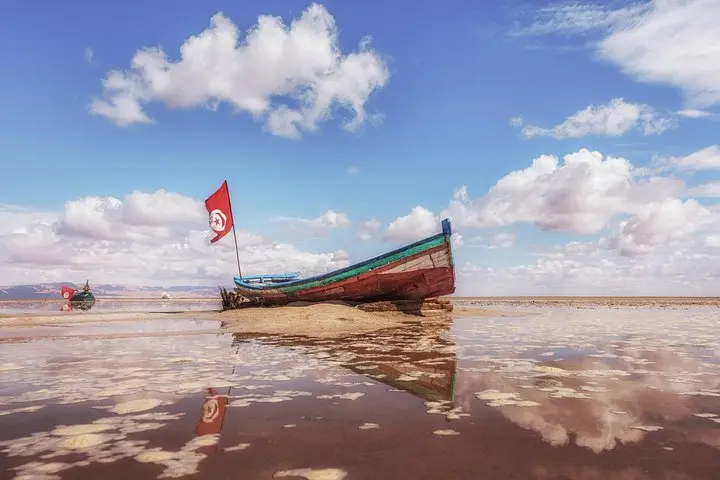
Over seven days this loop stitches together Tunisia’s coastal archaeology, Roman stonework, oasis palms and the open Sahara. In Kairouan the Great Mosque and Aghlabid basins underline North Africa’s early Islamic heart; El Jem’s amphitheatre demonstrates Roman ambition carved in limestone and sun. Geology swings from coastal limestone and fertile plains to the blinding white crust of Chott el Jerid and the wind-sculpted dunes around Douz.
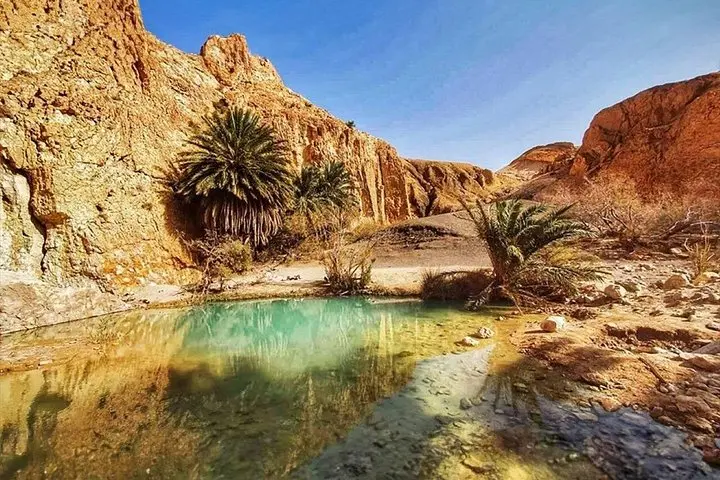
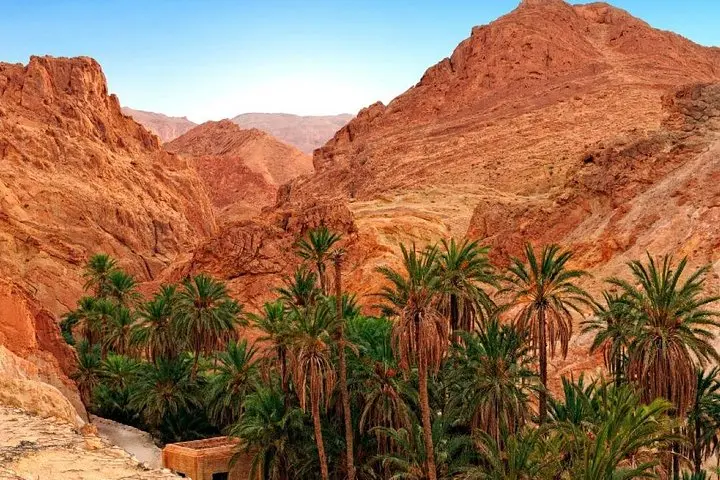
In the south, Tozeur’s palm groves and Chebika’s spring-fed pools feel improbably green against red-brown escarpments. Tamaghza’s cascades and Mides’ 820 m viewpoint give sudden altitude and vast valley sightlines. Ong Jmal’s sandy hollows — used as a film location — offer lunar textures and dune walking; Tiniri Camp presents a simple night under starlit desert horizons.
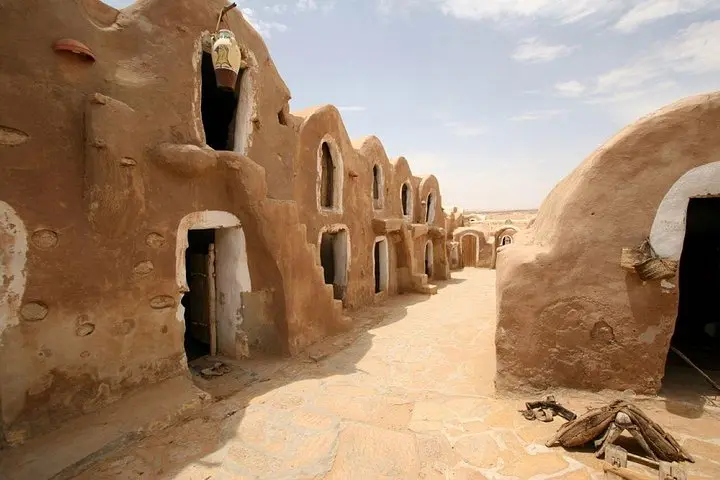
Cultural notes: Berber troglodyte homes at Matmata reveal millennia of adaptation; Sidi Bou Said and Carthage recall Phoenician and Ottoman layers. Guides typically bridge language and history while you move between sites by private vehicle.
Practical guidance: expect long driving days—pack a refillable water bottle, sun protection, light layers and sturdy walking shoes. Moderate fitness is recommended for short hikes, dune walks and uneven village paths. Travel in spring or autumn for comfortable temperatures; winter can be chilly after dark. Bring local-currency cash for small vendors, and leave no trace in fragile desert and oasis habitats.
Many nationalities may enter Tunisia visa-free for short stays, but check current entry rules and passport validity for your country before travel.
This itinerary includes multiple long road transfers—expect several hours on some days, particularly between Tunis, Tozeur and Douz.
Yes—camel rides, quad excursions and some 4x4 routes in Douz are often optional extras and can be booked locally or in advance.
Accommodations are a mix of mid-range pensions and a desert camp; desert nights may be basic but include dinner and breakfast.
TUNISIVISION operates guided outdoor trips and adventures with an emphasis on safety, stewardship, and memorable experiences.
You step out in Tunis as the city bleeds gold into the Mediterranean, the smell of mint tea and baking bread drifting past the cafe doors.
You step out in Tunis as the city bleeds gold into the Mediterranean, the smell of mint tea and baking bread drifting past the cafe doors.
Over seven days this loop stitches together Tunisia’s coastal archaeology, Roman stonework, oasis palms and the open Sahara. In Kairouan the Great Mosque and Aghlabid basins underline North Africa’s early Islamic heart; El Jem’s amphitheatre demonstrates Roman ambition carved in limestone and sun. Geology swings from coastal limestone and fertile plains to the blinding white crust of Chott el Jerid and the wind-sculpted dunes around Douz.
In the south, Tozeur’s palm groves and Chebika’s spring-fed pools feel improbably green against red-brown escarpments. Tamaghza’s cascades and Mides’ 820 m viewpoint give sudden altitude and vast valley sightlines. Ong Jmal’s sandy hollows — used as a film location — offer lunar textures and dune walking; Tiniri Camp presents a simple night under starlit desert horizons.
Cultural notes: Berber troglodyte homes at Matmata reveal millennia of adaptation; Sidi Bou Said and Carthage recall Phoenician and Ottoman layers. Guides typically bridge language and history while you move between sites by private vehicle.
Practical guidance: expect long driving days—pack a refillable water bottle, sun protection, light layers and sturdy walking shoes. Moderate fitness is recommended for short hikes, dune walks and uneven village paths. Travel in spring or autumn for comfortable temperatures; winter can be chilly after dark. Bring local-currency cash for small vendors, and leave no trace in fragile desert and oasis habitats.