THE ADVENTURE COLLECTIVE® · Independent discovery and booking for outdoor travel

Explore the Lidador, an 1878 shipwreck turned artificial reef in Angra do Heroísmo. This guided 90-minute try-scuba experience pairs safety briefings with a sheltered wreck dive that’s ideal for first-timers and ocean lovers.
Explore the Lidador, an 1878 shipwreck turned artificial reef in Angra do Heroísmo. This guided 90-minute try-scuba experience pairs safety briefings with a sheltered wreck dive that’s ideal for first-timers and ocean lovers.
You step off the zodiak and the bay rearranges itself—the sea pulling light into the wreck’s silhouette as the ruined hull of the Lidador looms below. The water is cool against your face, visibility opening into arches of iron where small fish weave through portholes and encrusting life claims old plates of metal.
Verified experiences and guided adventures in the surrounding area.
Operated by Scubazores divers · Angra do Heroísmo, Azores
You step off the zodiak and the bay rearranges itself—the sea pulling light into the wreck’s silhouette as the ruined hull of the Lidador looms below. The water is cool against your face, visibility opening into arches of iron where small fish weave through portholes and encrusting life claims old plates of metal.
The Lidador sank in 1878 and was intentionally left to form an artificial reef; today it’s a classroom for both marine life and newcomers to scuba. Terceira’s volcanic geology shapes the harbor: basalt shelves and sheltered bays make Angra do Heroísmo a safe place for first dives, while local instructors weave natural history with hands-on skills. The town itself carries maritime stories—forts, churches, and a port that has guided sailors for centuries.
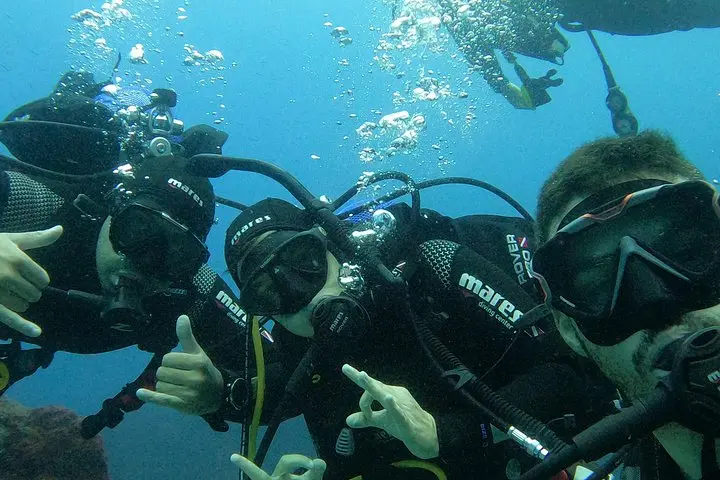
On this 90-minute program you’ll get a brief academic introduction to safety and equipment, followed by a guided, sheltered-bay dive around the wreck with professional Scubazores instructors. Expect gentle currents, abundant juvenile fish, and chance encounters with octopus and wrasse. The instructor-led format means minimal navigation for novices and clear briefings on buoyancy, communication, and wreck etiquette.
Practical guidance: arrive hydrated and rested, wear thermal layers for the boat ride, and listen closely during the pre-dive checks. Bring a sweater for post-dive wind and book morning slots for the calmest seas and best light. Respect the site—no touching, no collecting—so the wreck and its community of creatures remain for the next diver.
No certification is required; the program includes an academic briefing and guided shallow dive with an instructor to introduce basic skills.
Age requirements vary by operator but most try-scuba experiences allow participants 10–12 years and older with parental consent—confirm when booking.
Sea temperatures in the Azores typically range from about 16°C (winter) to 22°C (late summer); a 5mm wetsuit is commonly recommended for comfort.
Yes—the wreck sits in sheltered waters with modest depth and limited current, and dives are instructor-led with conservative profiles for beginners.
Scubazores divers operates guided outdoor trips and adventures with an emphasis on safety, stewardship, and memorable experiences.
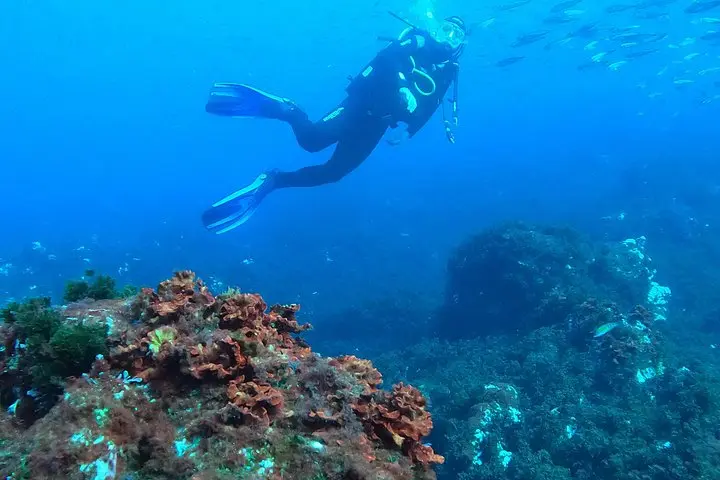
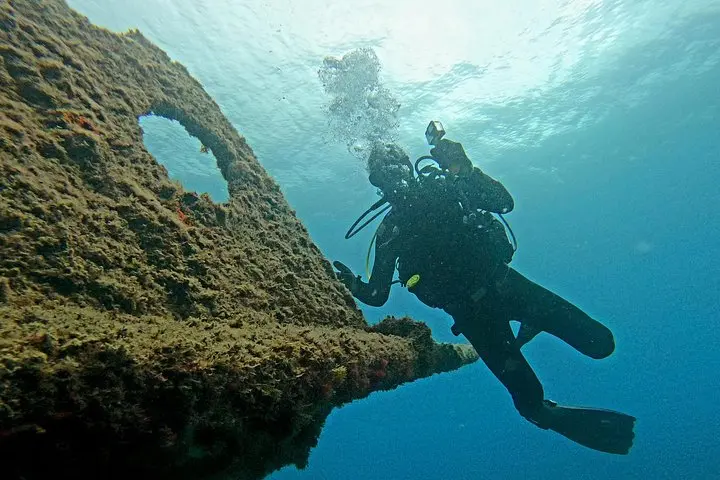
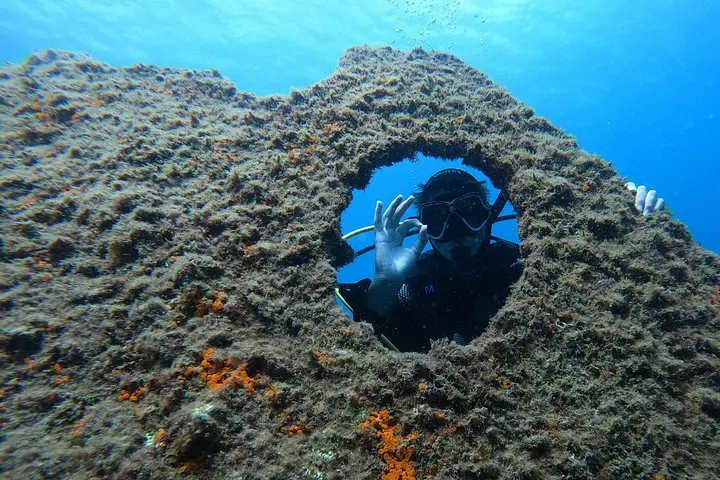
You step off the zodiak and the bay rearranges itself—the sea pulling light into the wreck’s silhouette as the ruined hull of the Lidador looms below. The water is cool against your face, visibility opening into arches of iron where small fish weave through portholes and encrusting life claims old plates of metal.
You step off the zodiak and the bay rearranges itself—the sea pulling light into the wreck’s silhouette as the ruined hull of the Lidador looms below. The water is cool against your face, visibility opening into arches of iron where small fish weave through portholes and encrusting life claims old plates of metal.
The Lidador sank in 1878 and was intentionally left to form an artificial reef; today it’s a classroom for both marine life and newcomers to scuba. Terceira’s volcanic geology shapes the harbor: basalt shelves and sheltered bays make Angra do Heroísmo a safe place for first dives, while local instructors weave natural history with hands-on skills. The town itself carries maritime stories—forts, churches, and a port that has guided sailors for centuries.
On this 90-minute program you’ll get a brief academic introduction to safety and equipment, followed by a guided, sheltered-bay dive around the wreck with professional Scubazores instructors. Expect gentle currents, abundant juvenile fish, and chance encounters with octopus and wrasse. The instructor-led format means minimal navigation for novices and clear briefings on buoyancy, communication, and wreck etiquette.
Practical guidance: arrive hydrated and rested, wear thermal layers for the boat ride, and listen closely during the pre-dive checks. Bring a sweater for post-dive wind and book morning slots for the calmest seas and best light. Respect the site—no touching, no collecting—so the wreck and its community of creatures remain for the next diver.