THE ADVENTURE COLLECTIVE® · Independent discovery and booking for outdoor travel

Explore the Museo Subacuático de Arte and the living reefs around Isla Mujeres on a guided day trip from Cancún. This full-day diving tour blends introductory training with two immersive dives—perfect for new and returning divers who want art, coral and abundant marine life.
Explore the Museo Subacuático de Arte and the living reefs around Isla Mujeres on a guided day trip from Cancún. This full-day diving tour blends introductory training with two immersive dives—perfect for new and returning divers who want art, coral and abundant marine life.
The morning light on the Caribbean cuts across the boat as the engine slips off and the water takes the sound. You stand at the rail with a mask in hand, watching muted sculptures rise from the blue — the Museo Subacuático de Arte (MUSA) appears like a submerged gallery, its concrete figures gathering algae and reef life as if in conversation with the sea.
Verified experiences and guided adventures in the surrounding area.
Operated by krea travel · Cancún, Quintana Roo
The morning light on the Caribbean cuts across the boat as the engine slips off and the water takes the sound. You stand at the rail with a mask in hand, watching muted sculptures rise from the blue — the Museo Subacuático de Arte (MUSA) appears like a submerged gallery, its concrete figures gathering algae and reef life as if in conversation with the sea.
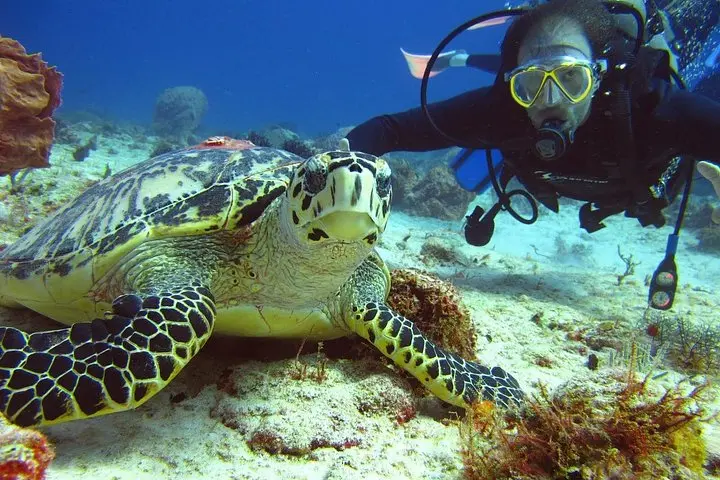
MUSA was installed to relieve pressure on natural reefs and to encourage coral settlement; the nearby coral formations around Isla Mujeres are limestone living architecture, carved by currents and time. The tour pairs a guided dive at the museum with reef swim-throughs around Isla Mujeres, so you’ll see both human-made structures that are already biological substrates and fringing reef flats that host parrotfish, trumpetfish and schools of snapper.
Culturally, diving here plugs you into Cancún’s tourism history — from early sport-diving pioneers to modern conservation-minded operators. Geology matters: expect sandy channels, coral bommies, and visibility that can swing from 10 to 30 meters depending on surge and plankton.
Practical edge: the operator includes gear, a pre-dive briefing and introductory skills if you’re new. Be ready to demonstrate basic equalization and mask-clearing; follow no-touch rules, and surface with your guide. Hydrate before boarding, protect skin with a reef-safe sunscreen or a thin lycra top, and plan for a 7–8 hour outing including transit. Bring a waterproof camera or disposable, but respect lighting rules around sculptures. Whether you’re there for the art or the marine life, the dives move at a steady, deliberate pace — the ocean will ask you to slow down and look.
Not necessarily — operators usually offer a guided introductory course and required skills training for beginners; check operator policies ahead of booking.
Most MUSA installations sit in shallow to mid depths, commonly 5–12 meters, making them accessible to novice divers while still interesting for advanced divers.
Children can often participate if they meet minimum age and swim requirements; infants are not permitted on dives and operators typically require parental consent and safety vetting.
Tours may be canceled for rough seas or low visibility; operators usually offer full refunds or rescheduling if canceled for weather.
krea travel operates guided outdoor trips and adventures with an emphasis on safety, stewardship, and memorable experiences.
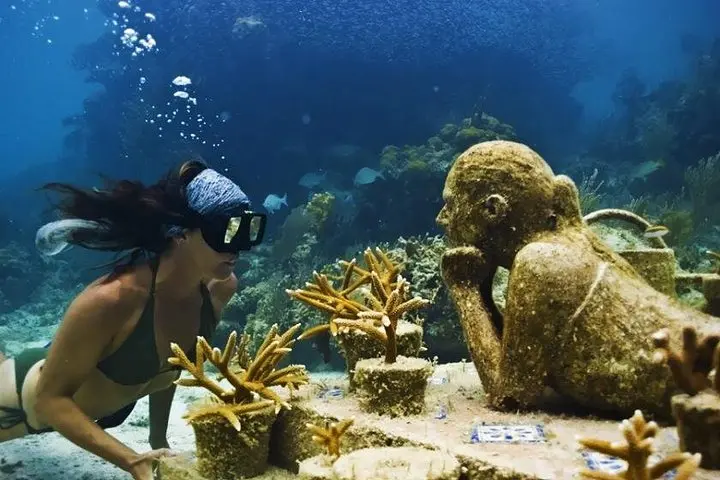
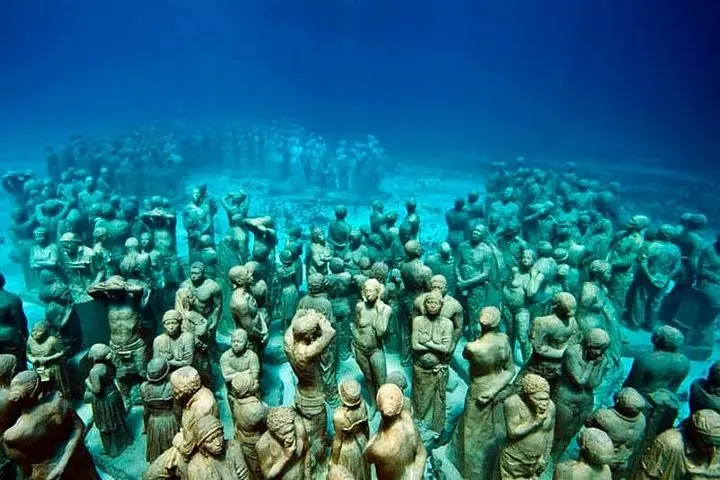
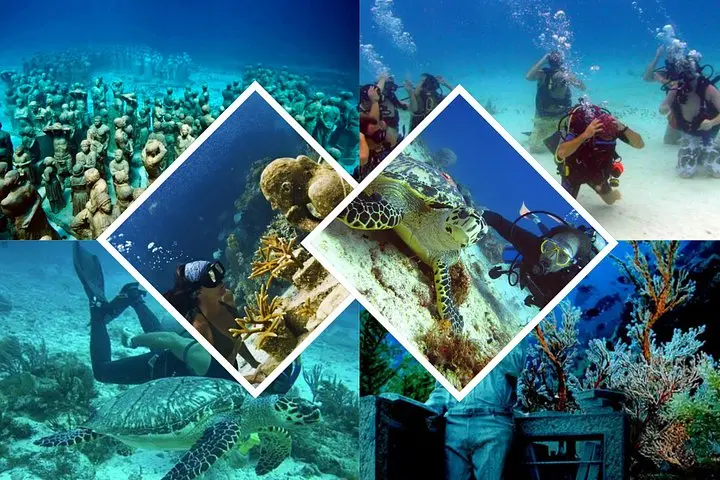
The morning light on the Caribbean cuts across the boat as the engine slips off and the water takes the sound. You stand at the rail with a mask in hand, watching muted sculptures rise from the blue — the Museo Subacuático de Arte (MUSA) appears like a submerged gallery, its concrete figures gathering algae and reef life as if in conversation with the sea.
The morning light on the Caribbean cuts across the boat as the engine slips off and the water takes the sound. You stand at the rail with a mask in hand, watching muted sculptures rise from the blue — the Museo Subacuático de Arte (MUSA) appears like a submerged gallery, its concrete figures gathering algae and reef life as if in conversation with the sea.
MUSA was installed to relieve pressure on natural reefs and to encourage coral settlement; the nearby coral formations around Isla Mujeres are limestone living architecture, carved by currents and time. The tour pairs a guided dive at the museum with reef swim-throughs around Isla Mujeres, so you’ll see both human-made structures that are already biological substrates and fringing reef flats that host parrotfish, trumpetfish and schools of snapper.
Culturally, diving here plugs you into Cancún’s tourism history — from early sport-diving pioneers to modern conservation-minded operators. Geology matters: expect sandy channels, coral bommies, and visibility that can swing from 10 to 30 meters depending on surge and plankton.
Practical edge: the operator includes gear, a pre-dive briefing and introductory skills if you’re new. Be ready to demonstrate basic equalization and mask-clearing; follow no-touch rules, and surface with your guide. Hydrate before boarding, protect skin with a reef-safe sunscreen or a thin lycra top, and plan for a 7–8 hour outing including transit. Bring a waterproof camera or disposable, but respect lighting rules around sculptures. Whether you’re there for the art or the marine life, the dives move at a steady, deliberate pace — the ocean will ask you to slow down and look.