THE ADVENTURE COLLECTIVE® · Independent discovery and booking for outdoor travel

Explore more than 500 submerged sculptures at the Museo Subacuático de Arte and follow with a dive on the nearby Mayan Riviera reef. This 5-hour outing pairs art-driven conservation with classic Caribbean reef diving—perfect for certified divers who want an accessible, wildlife-rich two-dive day.
Explore more than 500 submerged sculptures at the Museo Subacuático de Arte and follow with a dive on the nearby Mayan Riviera reef. This 5-hour outing pairs art-driven conservation with classic Caribbean reef diving—perfect for certified divers who want an accessible, wildlife-rich two-dive day.
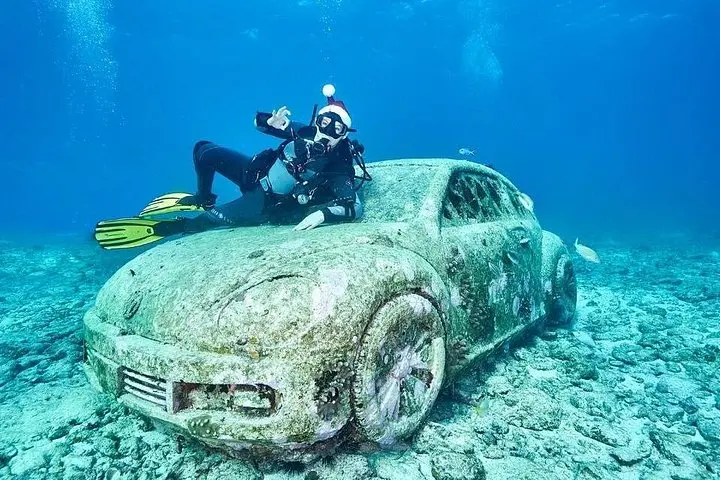
Sunlight splinters through the Caribbean as the boat slows and the guide points to a grid of faces lying below. You slip under the surface and the sculptures—silent, human-scale shapes—appear like a submerged gallery where fish dart through eye sockets and corals stitch themselves to shoulders.
Verified experiences and guided adventures in the surrounding area.
Operated by Diversland Mexico · Cancun, Quintana Roo
Sunlight splinters through the Caribbean as the boat slows and the guide points to a grid of faces lying below. You slip under the surface and the sculptures—silent, human-scale shapes—appear like a submerged gallery where fish dart through eye sockets and corals stitch themselves to shoulders.
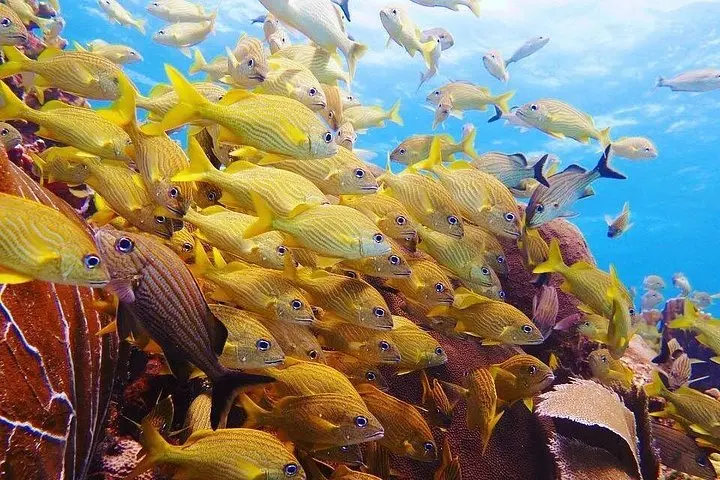
The Museo Subacuático de Arte (MUSA) was established to divert visitors from sensitive reef sections and to accelerate new reef habitat. Laid on the seabed starting in 2009, the more than 500 concrete figures now host sponges, algae and schooling fish, while the nearby section of the Mesoamerican Barrier Reef—the second-largest in the world—shows classic fringing-reef structure over a limestone platform.
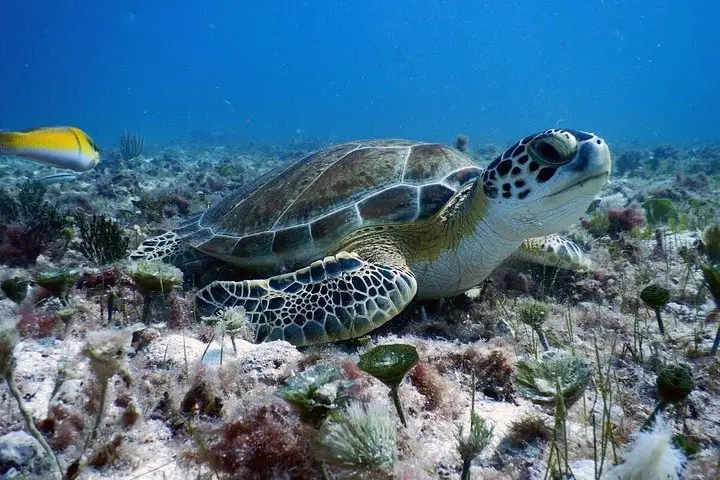
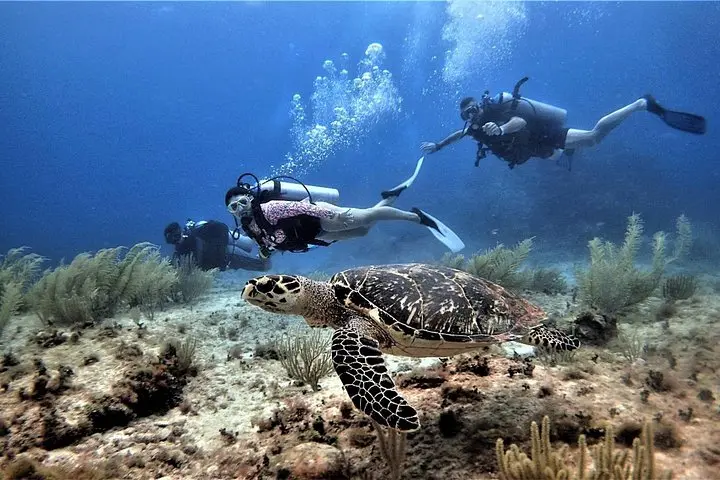
Local dive skippers and guides blend modern conservation aims with coastal fishing culture; many projects around Cancun focus on restoring coral cover and educating divers about contact-free exploring. Expect gentle currents that nudge you past installations and sections of natural reef where reef fish, parrotfish and occasional turtles patrol.
Practical guidance: this trip runs about five hours with hotel pickup, two dives (MUSA and a reef), tanks and weights included. Evidence of Open Water certification is required for certified dives; non-certified divers should arrange an introductory program. Don’t fly within 24 hours of diving, bring a thin wetsuit (water averages mid-20s°C), and use reef-safe sunscreen. Respect the site—no touching sculptures or corals—and follow your guide’s buoyancy and navigation briefings. Visibility often ranges 10–30 meters; plan for short surface intervals and a relaxed pace to absorb both art and marine life.
Yes—evidence of Open Water Diver certification (PADI or equivalent) is required for certified dives; some operators offer introductory dives for non-certified guests with additional instruction.
The tour is approximately five hours and includes two dives, two tanks, weights and belts, and bottled water; check whether boat transfers or hotel pickup are included for your booking.
Minimum age is typically 10 years for reef diving, but age limits can vary for specific programs—confirm with the operator before booking.
No—touching sculptures or corals is prohibited to protect the artificial reef and live organisms; follow guides’ instructions and maintain neutral buoyancy.
Diversland Mexico operates guided outdoor trips and adventures with an emphasis on safety, stewardship, and memorable experiences.
Sunlight splinters through the Caribbean as the boat slows and the guide points to a grid of faces lying below. You slip under the surface and the sculptures—silent, human-scale shapes—appear like a submerged gallery where fish dart through eye sockets and corals stitch themselves to shoulders.
Sunlight splinters through the Caribbean as the boat slows and the guide points to a grid of faces lying below. You slip under the surface and the sculptures—silent, human-scale shapes—appear like a submerged gallery where fish dart through eye sockets and corals stitch themselves to shoulders.
The Museo Subacuático de Arte (MUSA) was established to divert visitors from sensitive reef sections and to accelerate new reef habitat. Laid on the seabed starting in 2009, the more than 500 concrete figures now host sponges, algae and schooling fish, while the nearby section of the Mesoamerican Barrier Reef—the second-largest in the world—shows classic fringing-reef structure over a limestone platform.
Local dive skippers and guides blend modern conservation aims with coastal fishing culture; many projects around Cancun focus on restoring coral cover and educating divers about contact-free exploring. Expect gentle currents that nudge you past installations and sections of natural reef where reef fish, parrotfish and occasional turtles patrol.
Practical guidance: this trip runs about five hours with hotel pickup, two dives (MUSA and a reef), tanks and weights included. Evidence of Open Water certification is required for certified dives; non-certified divers should arrange an introductory program. Don’t fly within 24 hours of diving, bring a thin wetsuit (water averages mid-20s°C), and use reef-safe sunscreen. Respect the site—no touching sculptures or corals—and follow your guide’s buoyancy and navigation briefings. Visibility often ranges 10–30 meters; plan for short surface intervals and a relaxed pace to absorb both art and marine life.