THE ADVENTURE COLLECTIVE® · Independent discovery and booking for outdoor travel

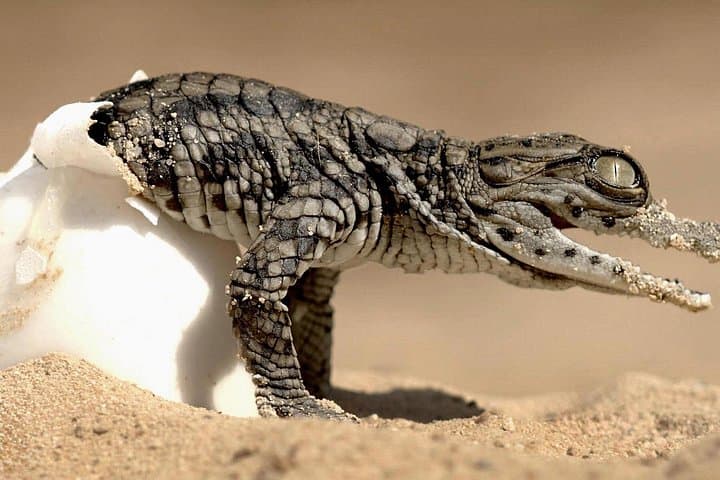
Get up close with Nile crocodiles on a four-hour guided tour of Djerba’s Crocodile Park. Expect feeding demonstrations, educational exhibits and easy, stroller-friendly paths ideal for families.
Get up close with Nile crocodiles on a four-hour guided tour of Djerba’s Crocodile Park. Expect feeding demonstrations, educational exhibits and easy, stroller-friendly paths ideal for families.
You step off the air-conditioned shuttle into a sandy glare, the air carrying dry warmth and the distant calls of seabirds. Pathways wind between shaded basins where Nile crocodiles lie half-submerged, eyes and armored ridges just above the water — still but watchful, as if waiting for the moment the guide lifts a bucket and the feeding demonstration begins.
Verified experiences and guided adventures in the surrounding area.
Operated by TRAVEL EST TUNISIA · Houmt Souk, Medenine Governorate
You step off the air-conditioned shuttle into a sandy glare, the air carrying dry warmth and the distant calls of seabirds. Pathways wind between shaded basins where Nile crocodiles lie half-submerged, eyes and armored ridges just above the water — still but watchful, as if waiting for the moment the guide lifts a bucket and the feeding demonstration begins.
The crocodile park on Djerba showcases more than reptiles; small enclosures house turtles, snakes and local bird species while a compact museum explains North African herpetology and regional conservation efforts. Geologically, Djerba is a low-lying island of fossil sands and coastal lagoons; the park’s basins mimic brackish-water habitats that support these species.
Culturally, the site sits within a long tradition of Tunisian animal collections that blend education with tourism — guides contextualize human-wildlife interactions, breeding programs and threats like habitat loss and illegal trade.
Practical guidance: the full excursion runs about four hours (roughly three at the park), and operator pickup is usually available from Houmt Souk and nearby hotels. Trails are flat and stroller-accessible; summer afternoons get hot, so plan morning visits for cooler animal activity and better viewing. Bring sun protection, a refillable water bottle and a camera zoom — feeding demos are the highlight and great for photos. Expect family-friendly, educational pacing with clear safety boundaries around enclosures. The visit pairs well with a half-day of island exploration — markets, olive groves and coastal viewpoints are minutes away.
The overall excursion is about four hours, with roughly three hours spent at the crocodile park itself.
Yes — paths are stroller-accessible and the tour is family-friendly, though young children should remain supervised near enclosures.
Yes — a scheduled feeding demonstration is a highlight and included during the park visit.
Pickup is typically included from Houmt Souk-area hotels; confirm your pickup point when booking.
TRAVEL EST TUNISIA operates guided outdoor trips and adventures with an emphasis on safety, stewardship, and memorable experiences.

You step off the air-conditioned shuttle into a sandy glare, the air carrying dry warmth and the distant calls of seabirds. Pathways wind between shaded basins where Nile crocodiles lie half-submerged, eyes and armored ridges just above the water — still but watchful, as if waiting for the moment the guide lifts a bucket and the feeding demonstration begins.
You step off the air-conditioned shuttle into a sandy glare, the air carrying dry warmth and the distant calls of seabirds. Pathways wind between shaded basins where Nile crocodiles lie half-submerged, eyes and armored ridges just above the water — still but watchful, as if waiting for the moment the guide lifts a bucket and the feeding demonstration begins.
The crocodile park on Djerba showcases more than reptiles; small enclosures house turtles, snakes and local bird species while a compact museum explains North African herpetology and regional conservation efforts. Geologically, Djerba is a low-lying island of fossil sands and coastal lagoons; the park’s basins mimic brackish-water habitats that support these species.
Culturally, the site sits within a long tradition of Tunisian animal collections that blend education with tourism — guides contextualize human-wildlife interactions, breeding programs and threats like habitat loss and illegal trade.
Practical guidance: the full excursion runs about four hours (roughly three at the park), and operator pickup is usually available from Houmt Souk and nearby hotels. Trails are flat and stroller-accessible; summer afternoons get hot, so plan morning visits for cooler animal activity and better viewing. Bring sun protection, a refillable water bottle and a camera zoom — feeding demos are the highlight and great for photos. Expect family-friendly, educational pacing with clear safety boundaries around enclosures. The visit pairs well with a half-day of island exploration — markets, olive groves and coastal viewpoints are minutes away.