THE ADVENTURE COLLECTIVE® · Independent discovery and booking for outdoor travel

Disembark in Sokcho and take a tailored six-hour tour to the eastern DMZ—visiting a war exhibition, the DMZ museum and an observatory that looks directly across the border. Practical, accessible, and guided in English, this route offers a quieter alternative to the Seoul DMZ circuit.
Disembark in Sokcho and take a tailored six-hour tour to the eastern DMZ—visiting a war exhibition, the DMZ museum and an observatory that looks directly across the border. Practical, accessible, and guided in English, this route offers a quieter alternative to the Seoul DMZ circuit.
You step off the cruise, the sea wind pushing at your jacket, and board a small coach that threads north along Gangwon’s raw coastline. Windows frame the Taebaek range receding inland while your guide outlines checkpoints, maps and the strict etiquette ahead. The observatory comes first: binoculars scratch the horizon, and a narrow slice of North Korea sits like a paused page in a living history book.
Verified experiences and guided adventures in the surrounding area.
Operated by chan · Sokcho, Gangwon-do
You step off the cruise, the sea wind pushing at your jacket, and board a small coach that threads north along Gangwon’s raw coastline. Windows frame the Taebaek range receding inland while your guide outlines checkpoints, maps and the strict etiquette ahead. The observatory comes first: binoculars scratch the horizon, and a narrow slice of North Korea sits like a paused page in a living history book.
The tour moves between the Korean War exhibition, the DMZ museum and an observatory overlooking former North Korean territory. The DMZ was created in 1953 as a ceasefire buffer; its uneasy silence has become the most unlikely refuge for wildlife and rare grasses. Geologically, the line cuts across coastal plains into the eastern foothills of the Taebaek Mountains, where glacially worn ridges meet the sea, shaping a landscape both strategic and fragile.
Culturally, the DMZ is a place of memory—families divided, soldiers on watch—and local guides balance factual briefing with respectful restraint. Expect firm entry procedures, documentary exhibits, and interpretive panels that make the political geography tangible.
Practical guidance: bring your passport (ID checks are mandatory), wear sturdy shoes and layered clothing for coastal winds, and carry water and snacks for the roughly six-hour window. Photography will be limited in sensitive spots; follow your guide’s instructions closely. The tour is wheelchair accessible and suited to most fitness levels, but the emotional weight of the sites can be heavy. Timing your visit for clear weather gives the best visibility across the border; when the light is right, the observatory feels like a single, held breath between two nations.
Yes—passport or national ID is required for all visitors due to checkpoints and security procedures.
Yes; the itinerary is described as physically easy and vehicles and most sites are wheelchair accessible, but check specific mobility needs when booking.
Photography is allowed in many public areas but restricted at sensitive observation points—always follow the guide’s directions.
This offering includes an English-speaking local guide familiar with the history and logistics of eastern DMZ visits.
chan operates guided outdoor trips and adventures with an emphasis on safety, stewardship, and memorable experiences.



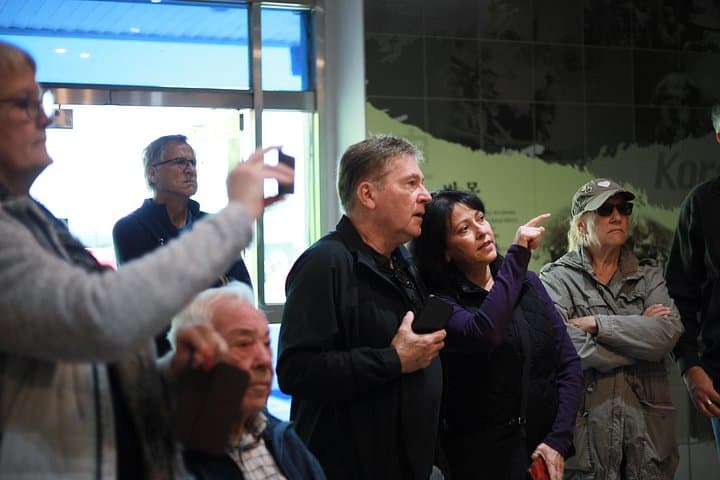
You step off the cruise, the sea wind pushing at your jacket, and board a small coach that threads north along Gangwon’s raw coastline. Windows frame the Taebaek range receding inland while your guide outlines checkpoints, maps and the strict etiquette ahead. The observatory comes first: binoculars scratch the horizon, and a narrow slice of North Korea sits like a paused page in a living history book.
You step off the cruise, the sea wind pushing at your jacket, and board a small coach that threads north along Gangwon’s raw coastline. Windows frame the Taebaek range receding inland while your guide outlines checkpoints, maps and the strict etiquette ahead. The observatory comes first: binoculars scratch the horizon, and a narrow slice of North Korea sits like a paused page in a living history book.
The tour moves between the Korean War exhibition, the DMZ museum and an observatory overlooking former North Korean territory. The DMZ was created in 1953 as a ceasefire buffer; its uneasy silence has become the most unlikely refuge for wildlife and rare grasses. Geologically, the line cuts across coastal plains into the eastern foothills of the Taebaek Mountains, where glacially worn ridges meet the sea, shaping a landscape both strategic and fragile.
Culturally, the DMZ is a place of memory—families divided, soldiers on watch—and local guides balance factual briefing with respectful restraint. Expect firm entry procedures, documentary exhibits, and interpretive panels that make the political geography tangible.
Practical guidance: bring your passport (ID checks are mandatory), wear sturdy shoes and layered clothing for coastal winds, and carry water and snacks for the roughly six-hour window. Photography will be limited in sensitive spots; follow your guide’s instructions closely. The tour is wheelchair accessible and suited to most fitness levels, but the emotional weight of the sites can be heavy. Timing your visit for clear weather gives the best visibility across the border; when the light is right, the observatory feels like a single, held breath between two nations.