THE ADVENTURE COLLECTIVE® · Independent discovery and booking for outdoor travel
Swap Doha’s glass skyline for endless sand and engine hum: a 2–3 hour desert loop that pairs self-ride quads and ATVs with camel rides and sandboarding. Expect shifting dunes, short steep faces, cultural camp stops, and practical briefings before you ride.
Swap Doha’s glass skyline for endless sand and engine hum: a 2–3 hour desert loop that pairs self-ride quads and ATVs with camel rides and sandboarding. Expect shifting dunes, short steep faces, cultural camp stops, and practical briefings before you ride.
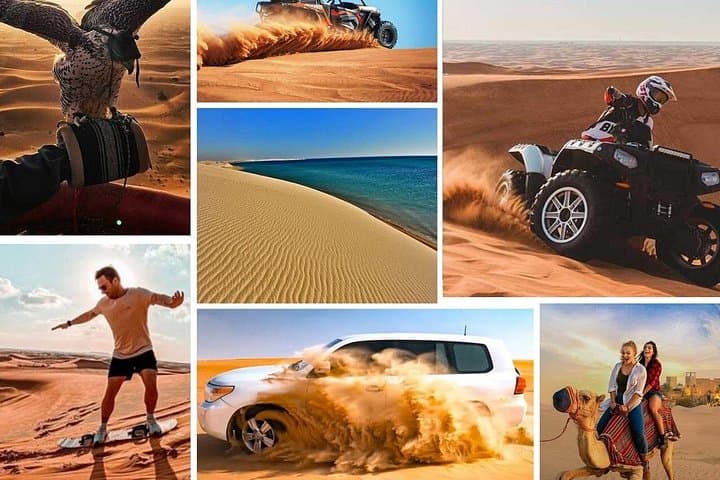
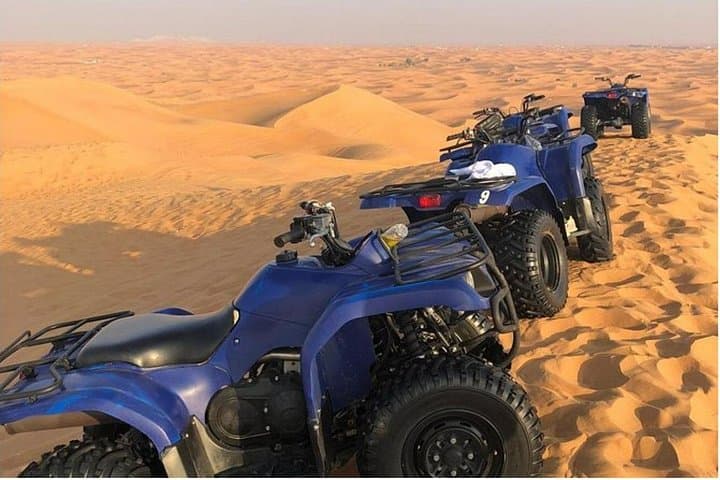
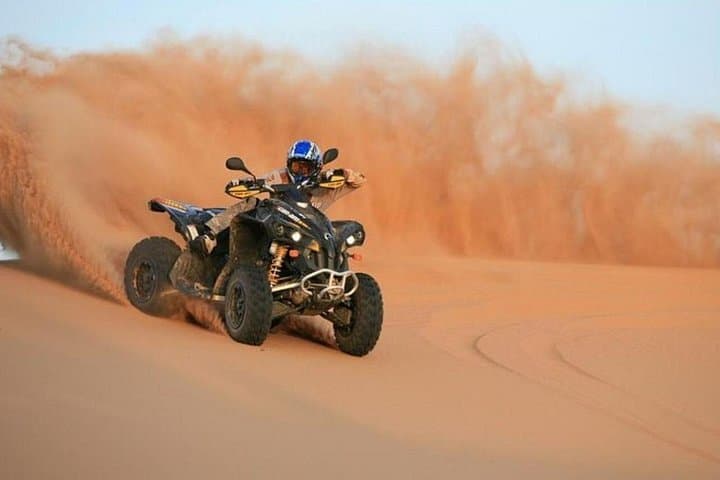
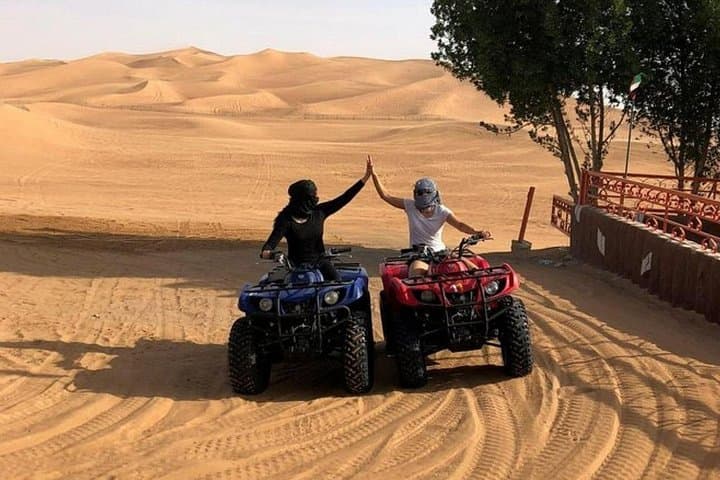
The engine note rises and the dune folds beneath you — sunlight slides across wind-sculpted ridges as the convoy cuts a path through Arabia's open sand. In this two-to-three hour loop from Doha you'll trade the city skyline for raw desert motion: self-ride quad bikes and ATVs, short dune-bashing runs, a camel ride that slows the pace, and a chance to sandboard down steep lee faces.
Verified experiences and guided adventures in the surrounding area.
Operated by Al Annabi Tourism · Doha, Ad Dawhah
The engine note rises and the dune folds beneath you — sunlight slides across wind-sculpted ridges as the convoy cuts a path through Arabia's open sand. In this two-to-three hour loop from Doha you'll trade the city skyline for raw desert motion: self-ride quad bikes and ATVs, short dune-bashing runs, a camel ride that slows the pace, and a chance to sandboard down steep lee faces.
Qatar’s dunes are recent geologic sculptures of reworked coastal and inland sands pushed inland by the Shamal and summer breezes; nearby settlements grew from Bedouin routes and seasonal pearl-diving economies, and camel travel remains a living link to that past. Culture here centers on hospitality — tea and dates at desert camps — and responsible guiding that balances excitement with respect for fragile dune ecology.
Practical guidance is direct: expect soft, shifting sand with dune faces up to about 40–60 meters; traction changes suddenly and visibility can reduce when plumes form. Tours typically last 120–180 minutes, run in small groups, and provide helmets, bottled water and an air‑conditioned shuttle to the camp. Bring closed-toe shoes, eye protection, sunscreen and layered light clothing; ride conservatively if you’re new to ATVs. Schedule outings for early morning or late afternoon when temperatures are lower and light is best for photos.
Safety: let guides brief you on throttle control and dune etiquette, keep a safe distance between vehicles, and prioritise hydration — the desert demands both respect and curiosity.
No — tours typically welcome beginners and include a safety briefing; riders should be comfortable with basic throttle/brake control.
Shared tours usually run with up to about 15 participants, split into smaller riding groups for safety.
Yes; reputable operators supply helmets and basic protective gear as part of the package.
Early morning or late afternoon slots are best for cooler temperatures and softer, more photogenic light.
Al Annabi Tourism operates guided outdoor trips and adventures with an emphasis on safety, stewardship, and memorable experiences.
The engine note rises and the dune folds beneath you — sunlight slides across wind-sculpted ridges as the convoy cuts a path through Arabia's open sand. In this two-to-three hour loop from Doha you'll trade the city skyline for raw desert motion: self-ride quad bikes and ATVs, short dune-bashing runs, a camel ride that slows the pace, and a chance to sandboard down steep lee faces.
The engine note rises and the dune folds beneath you — sunlight slides across wind-sculpted ridges as the convoy cuts a path through Arabia's open sand. In this two-to-three hour loop from Doha you'll trade the city skyline for raw desert motion: self-ride quad bikes and ATVs, short dune-bashing runs, a camel ride that slows the pace, and a chance to sandboard down steep lee faces.
Qatar’s dunes are recent geologic sculptures of reworked coastal and inland sands pushed inland by the Shamal and summer breezes; nearby settlements grew from Bedouin routes and seasonal pearl-diving economies, and camel travel remains a living link to that past. Culture here centers on hospitality — tea and dates at desert camps — and responsible guiding that balances excitement with respect for fragile dune ecology.
Practical guidance is direct: expect soft, shifting sand with dune faces up to about 40–60 meters; traction changes suddenly and visibility can reduce when plumes form. Tours typically last 120–180 minutes, run in small groups, and provide helmets, bottled water and an air‑conditioned shuttle to the camp. Bring closed-toe shoes, eye protection, sunscreen and layered light clothing; ride conservatively if you’re new to ATVs. Schedule outings for early morning or late afternoon when temperatures are lower and light is best for photos.
Safety: let guides brief you on throttle control and dune etiquette, keep a safe distance between vehicles, and prioritise hydration — the desert demands both respect and curiosity.
