THE ADVENTURE COLLECTIVE® · Independent discovery and booking for outdoor travel

Drive Qatar’s wild west coast to stand beside Richard Serra’s desert plates, climb the windswept outline of Zekreet Fort and photograph the umbrella-shaped mushroom rock. This 3–4 hour small-group excursion pairs stark desert geology with contemporary art and coastal wildlife.
Drive Qatar’s wild west coast to stand beside Richard Serra’s desert plates, climb the windswept outline of Zekreet Fort and photograph the umbrella-shaped mushroom rock. This 3–4 hour small-group excursion pairs stark desert geology with contemporary art and coastal wildlife.
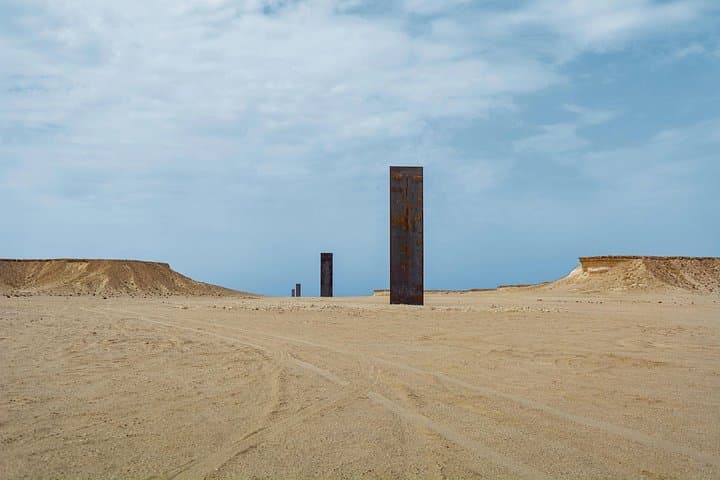
You pull away from Doha’s skyline and the air changes—cooler, salt-tinged, and carried on a wind that has been shaping this strip of coastline for millennia. Within an hour the city’s glass and towers are behind you and the landscape opens into low dunes, limestone outcrops and a broad, bleached shore where Richard Serra’s monumental steel plates stand like a modern codex across the desert.
Verified experiences and guided adventures in the surrounding area.
Operated by Arabian Tourism · Doha, Al-Shahaniya
You pull away from Doha’s skyline and the air changes—cooler, salt-tinged, and carried on a wind that has been shaping this strip of coastline for millennia. Within an hour the city’s glass and towers are behind you and the landscape opens into low dunes, limestone outcrops and a broad, bleached shore where Richard Serra’s monumental steel plates stand like a modern codex across the desert.
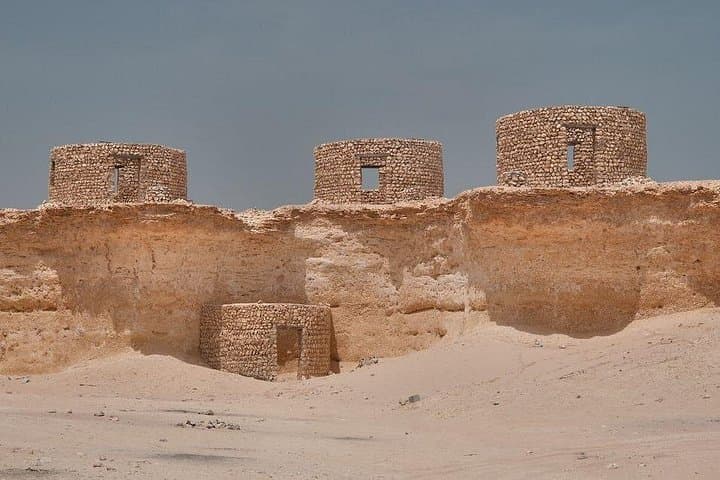
The route crosses the Zekreet Peninsula and Brouq (Ras Abrouq) Nature Reserve, a place of recent human history and older geology. Zekreet Fort, built roughly two centuries ago and attributed to Raḥmah ibn Jābir al-Jalāhimah, shows how wind and occasional rain strip softer rock back to a skeleton. The coastline’s limestone and fossil-bearing marl reveal an ancient seabed; the Serra installation was positioned after careful topo-mapping to play with those contours.
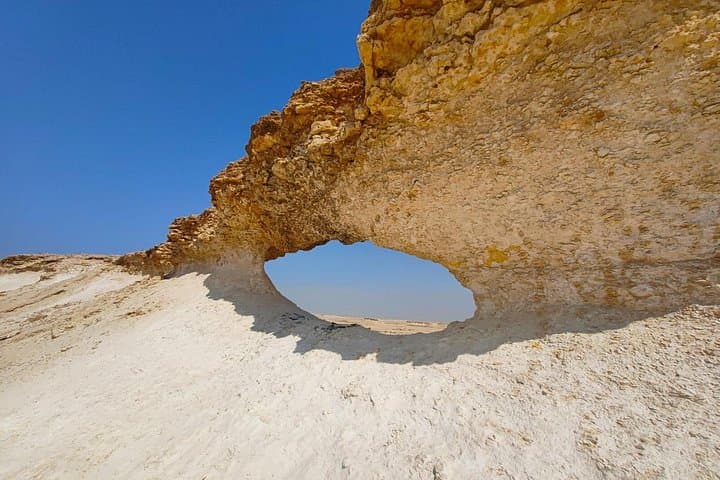
Culturally the tour mixes traditional Qatari coastal life—camel tracks and remote fishing camps—with contemporary public art and conservation-minded reserve management. Expect short walks over uneven, sandy terrain, photo stops at the umbrella-shaped mushroom rock, and a stretch at the Serra plates that can take an hour to explore.
Practically: most tours run 3–4 hours and use air-conditioned vehicles (small-group sizes of six or fewer are common). Bottled water and hot drinks are usually provided; wear sturdy shoes for sand and sunscreen for the relentless sun. The trip is accessible to most fitness levels but is not recommended for those with serious back, heart, or pregnancy concerns. Timing your visit for morning or late afternoon gives softer light and cooler temperatures—ideal for both photos and comfort.
Tours typically run 3–4 hours and include an air-conditioned vehicle, bottled water and tea/coffee; some itineraries accommodate small groups of up to six.
Short walks are required over sandy and rocky ground; the tour is family-friendly but not recommended for those with serious spinal or mobility conditions.
Yes—the sites are publicly accessible, but guided tours provide transport, local context and navigation across unmarked desert tracks.
Mobile or paper tickets are accepted; for a full refund you generally must cancel at least 24 hours before departure (policies can vary by operator).
Arabian Tourism operates guided outdoor trips and adventures with an emphasis on safety, stewardship, and memorable experiences.
You pull away from Doha’s skyline and the air changes—cooler, salt-tinged, and carried on a wind that has been shaping this strip of coastline for millennia. Within an hour the city’s glass and towers are behind you and the landscape opens into low dunes, limestone outcrops and a broad, bleached shore where Richard Serra’s monumental steel plates stand like a modern codex across the desert.
You pull away from Doha’s skyline and the air changes—cooler, salt-tinged, and carried on a wind that has been shaping this strip of coastline for millennia. Within an hour the city’s glass and towers are behind you and the landscape opens into low dunes, limestone outcrops and a broad, bleached shore where Richard Serra’s monumental steel plates stand like a modern codex across the desert.
The route crosses the Zekreet Peninsula and Brouq (Ras Abrouq) Nature Reserve, a place of recent human history and older geology. Zekreet Fort, built roughly two centuries ago and attributed to Raḥmah ibn Jābir al-Jalāhimah, shows how wind and occasional rain strip softer rock back to a skeleton. The coastline’s limestone and fossil-bearing marl reveal an ancient seabed; the Serra installation was positioned after careful topo-mapping to play with those contours.
Culturally the tour mixes traditional Qatari coastal life—camel tracks and remote fishing camps—with contemporary public art and conservation-minded reserve management. Expect short walks over uneven, sandy terrain, photo stops at the umbrella-shaped mushroom rock, and a stretch at the Serra plates that can take an hour to explore.
Practically: most tours run 3–4 hours and use air-conditioned vehicles (small-group sizes of six or fewer are common). Bottled water and hot drinks are usually provided; wear sturdy shoes for sand and sunscreen for the relentless sun. The trip is accessible to most fitness levels but is not recommended for those with serious back, heart, or pregnancy concerns. Timing your visit for morning or late afternoon gives softer light and cooler temperatures—ideal for both photos and comfort.