THE ADVENTURE COLLECTIVE® · Independent discovery and booking for outdoor travel

Spend a day on Thailand’s highest peak—trek through cloud forest, visit twin royal pagodas, watch an 80m waterfall, and meet a Hmong village. This full-day eco tour balances easy walks and short climbs with cultural insight and low‑impact travel practices.
Spend a day on Thailand’s highest peak—trek through cloud forest, visit twin royal pagodas, watch an 80m waterfall, and meet a Hmong village. This full-day eco tour balances easy walks and short climbs with cultural insight and low‑impact travel practices.
Fog lifts off the ridgeline as the van winds higher, and the air suddenly tastes cooler—this is Doi Inthanon, Thailand’s roof at 2,565 meters, where cloud forest scrubs the sky and streams dare you closer.
Verified experiences and guided adventures in the surrounding area.
Operated by TripGuru Thailand · Chiang Mai, Chiang Mai Province
Fog lifts off the ridgeline as the van winds higher, and the air suddenly tastes cooler—this is Doi Inthanon, Thailand’s roof at 2,565 meters, where cloud forest scrubs the sky and streams dare you closer.
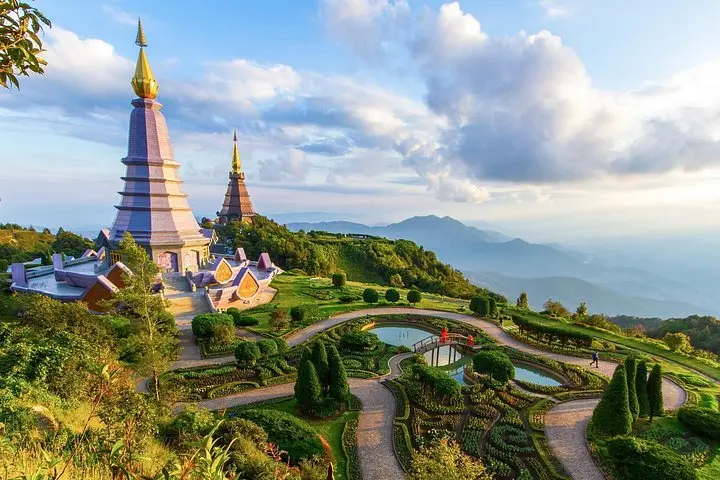
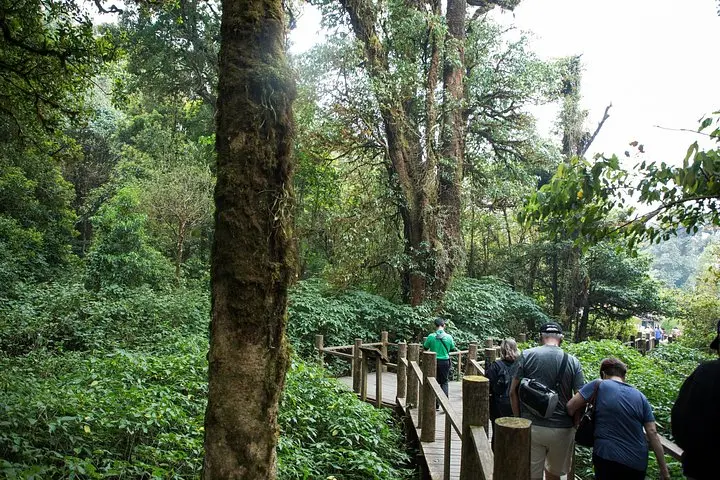
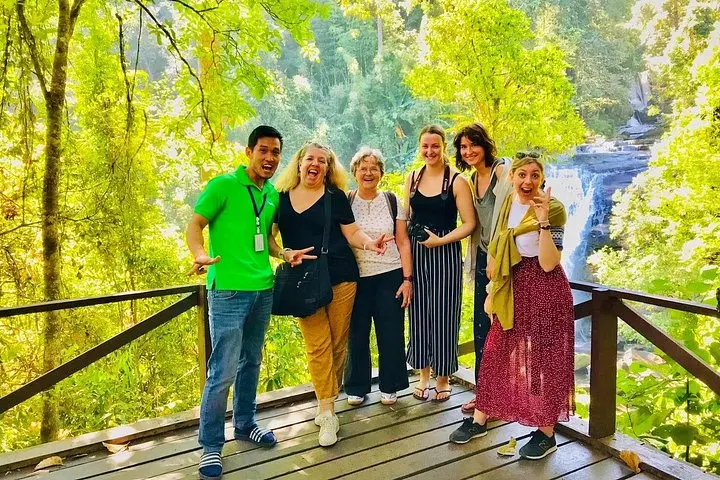
Walks here move between moss-slick boardwalks and steeper mountain paths. Geologically part of the Thanon Thong Chai Range, the park’s granite shoulders support montane evergreen and oak forests that trap mist and feed an 80‑meter waterfall that hurls spray into rainbows. Two royal pagodas—Naphamethinidon and Naphaphonphumisiri—stand like engineered viewpoints, built to honor the late King and Queen and to offer wide panoramas across southern Chiang Mai province.
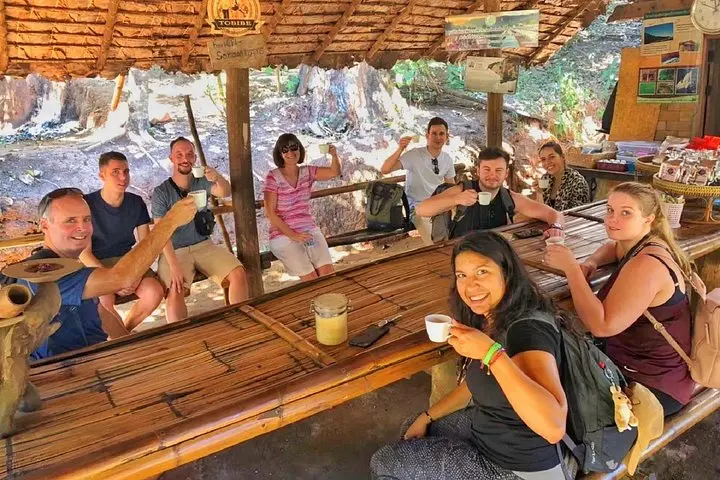
Culture threads through the trip: small Hmong communities welcome visitors to share coffee-brewing rituals and handicrafts, offering a quick, human counterpoint to the park’s wild rhythms. Wildlife peers from the undergrowth—birds, civets and occasional hornbills—while placards along the trail explain endemic plants.
Practical guidance: expect a full six-hour day with mixed walking surfaces—short boardwalks, dirt trails and some stepped sections. The climb to the summit is short but gains altitude; bring a warm layer and monitor for light breathlessness. Monsoon months make trails slippery; a lightweight rain jacket and good traction are non-negotiable. Carry cash for village purchases, stay hydrated with a reusable bottle, and heed park signage—paths protect fragile soil and moss cover.
Tours run with local guides and low‑impact principles; aim to arrive early, keep noise down near villages, and leave no trace so the mountain keeps daring future visitors onward.
Entrance fees are included only in some booking options (notably private tours); confirm the fare breakdown when you book.
The summit reaches 2,565 m but the route is short and accessible; most visitors manage fine, though those sensitive to altitude should take it slowly and hydrate.
Most shared tours include hotel pickup and drop-off in Chiang Mai—double-check your voucher for pickup time and location.
Lunch is not listed among standard inclusions for all departures—many operators include a simple meal, but verify at booking if a meal is important to you.
TripGuru Thailand operates guided outdoor trips and adventures with an emphasis on safety, stewardship, and memorable experiences.
Fog lifts off the ridgeline as the van winds higher, and the air suddenly tastes cooler—this is Doi Inthanon, Thailand’s roof at 2,565 meters, where cloud forest scrubs the sky and streams dare you closer.
Fog lifts off the ridgeline as the van winds higher, and the air suddenly tastes cooler—this is Doi Inthanon, Thailand’s roof at 2,565 meters, where cloud forest scrubs the sky and streams dare you closer.
Walks here move between moss-slick boardwalks and steeper mountain paths. Geologically part of the Thanon Thong Chai Range, the park’s granite shoulders support montane evergreen and oak forests that trap mist and feed an 80‑meter waterfall that hurls spray into rainbows. Two royal pagodas—Naphamethinidon and Naphaphonphumisiri—stand like engineered viewpoints, built to honor the late King and Queen and to offer wide panoramas across southern Chiang Mai province.
Culture threads through the trip: small Hmong communities welcome visitors to share coffee-brewing rituals and handicrafts, offering a quick, human counterpoint to the park’s wild rhythms. Wildlife peers from the undergrowth—birds, civets and occasional hornbills—while placards along the trail explain endemic plants.
Practical guidance: expect a full six-hour day with mixed walking surfaces—short boardwalks, dirt trails and some stepped sections. The climb to the summit is short but gains altitude; bring a warm layer and monitor for light breathlessness. Monsoon months make trails slippery; a lightweight rain jacket and good traction are non-negotiable. Carry cash for village purchases, stay hydrated with a reusable bottle, and heed park signage—paths protect fragile soil and moss cover.
Tours run with local guides and low‑impact principles; aim to arrive early, keep noise down near villages, and leave no trace so the mountain keeps daring future visitors onward.