THE ADVENTURE COLLECTIVE® · Independent discovery and booking for outdoor travel

Climb from Chiang Mai into cool cloud forests on a full-day trek to Doi Inthanon’s Pha Dok Siew. Expect mossy trails, multi-tiered waterfalls, Karen village visits, and panoramic high-mountain air at Thailand’s highest point.
Climb from Chiang Mai into cool cloud forests on a full-day trek to Doi Inthanon’s Pha Dok Siew. Expect mossy trails, multi-tiered waterfalls, Karen village visits, and panoramic high-mountain air at Thailand’s highest point.
A damp morning air greets hikers as minivans thread out of Chiang Mai and up a road that climbs toward cool cloud and pine. By midmorning the group reaches the summit ridge at 2,565 meters—thin, brisk air; the Ang Ka mossy trail breathes beneath a canopy of old trees—and the trek begins at Pha Dok Siew, a rainforest valley where vines and bamboo frame narrow footpaths.
Verified experiences and guided adventures in the surrounding area.
Operated by Parallel Tour · Chiang Mai, Chiang Mai Province
A damp morning air greets hikers as minivans thread out of Chiang Mai and up a road that climbs toward cool cloud and pine. By midmorning the group reaches the summit ridge at 2,565 meters—thin, brisk air; the Ang Ka mossy trail breathes beneath a canopy of old trees—and the trek begins at Pha Dok Siew, a rainforest valley where vines and bamboo frame narrow footpaths.
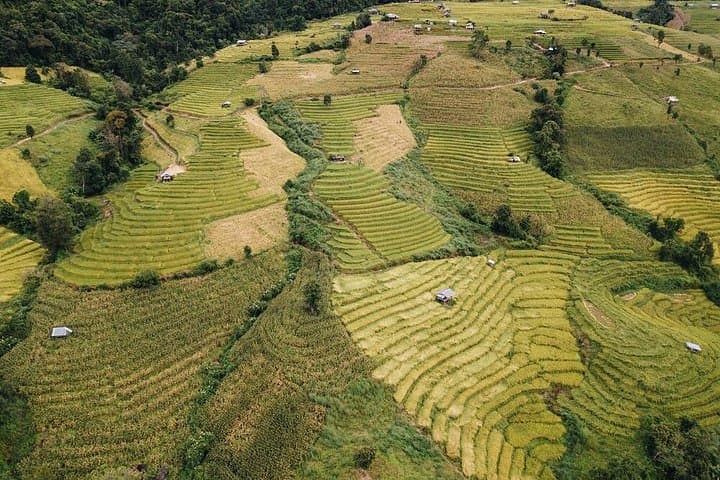
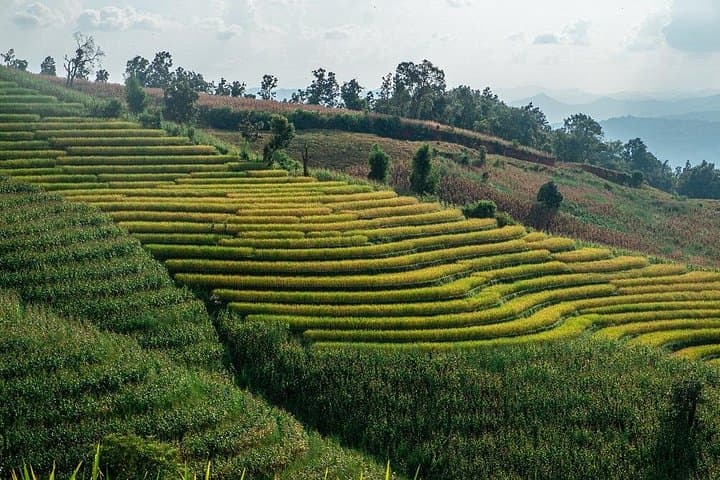
Geology here is ancient granite and schist, folded and exposed by erosion; soil depth and frequent mist support broadleaf montane forest rather than lowland teak. History and culture arrive in small doses: a shrine to King Inthawichayanon near the peak, the Twin Royal Pagodas that commemorate royal visits, and a stop at Ban Mae Klang Luang where Karen villagers practice rice farming and shade-grown Arabica coffee cultivation.
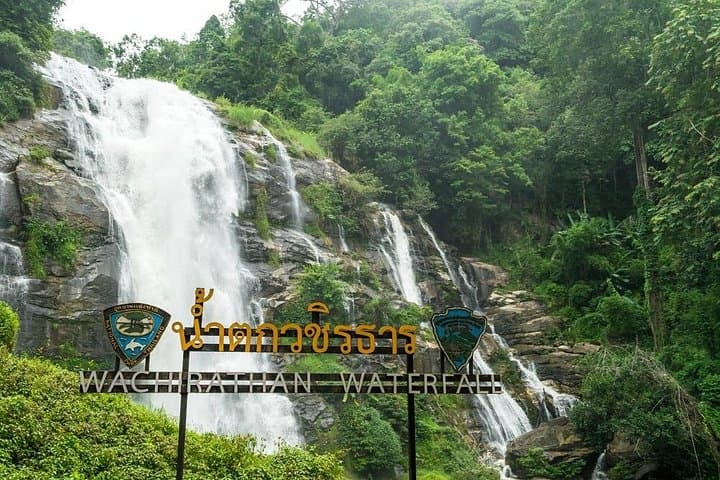
On trail, hikers encounter multi-tiered waterfalls—Pha Dok Siew and Wachirathan—where clear pools offer a natural cool-down even in the dry season. Wildlife is quieter: hornbills call at dawn, and shy macaques or small deer may appear in understory breaks. The day's rhythm is pragmatic: pick-up in Chiang Mai, short guided walks totaling about two hours on mixed dirt and rock trails, lunch at a local restaurant, and return by early evening.
Practical guidance: dress in layers for 5–10°C temperature swings, bring gaitered shoes for muddy stretches after rain, and allow extra time for local stops. The route is well-trafficked but retains an authentic village and forest character—ideal for hikers seeking mountain air, cultural contact, and a compact day of high-elevation rainforest.
The guided walk at Pha Dok Siew is roughly 1.5–2 hours on marked forest trails; the full trip, including travel, waterfalls and village visits, is a full day (about 9 hours).
At 2,565 m the air is cooler and slightly thinner; most people experience only mild effects—take it slow, hydrate, and inform guides of any medical conditions.
Lunch and bottled water are included; guides can accommodate vegetarian, vegan, gluten-free, and halal requests if noted at booking.
Basic facilities exist at major stops (park entrance, pagodas, village); on-trail options are primitive—carry hand sanitizer and be prepared for natural conditions.
Parallel Tour operates guided outdoor trips and adventures with an emphasis on safety, stewardship, and memorable experiences.
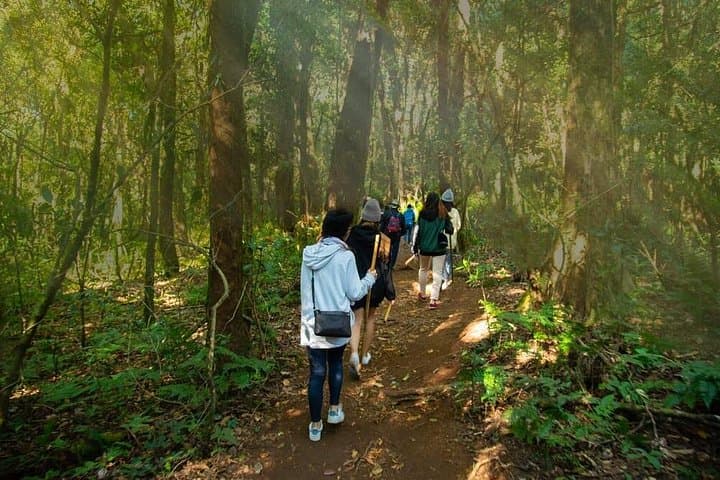
A damp morning air greets hikers as minivans thread out of Chiang Mai and up a road that climbs toward cool cloud and pine. By midmorning the group reaches the summit ridge at 2,565 meters—thin, brisk air; the Ang Ka mossy trail breathes beneath a canopy of old trees—and the trek begins at Pha Dok Siew, a rainforest valley where vines and bamboo frame narrow footpaths.
A damp morning air greets hikers as minivans thread out of Chiang Mai and up a road that climbs toward cool cloud and pine. By midmorning the group reaches the summit ridge at 2,565 meters—thin, brisk air; the Ang Ka mossy trail breathes beneath a canopy of old trees—and the trek begins at Pha Dok Siew, a rainforest valley where vines and bamboo frame narrow footpaths.
Geology here is ancient granite and schist, folded and exposed by erosion; soil depth and frequent mist support broadleaf montane forest rather than lowland teak. History and culture arrive in small doses: a shrine to King Inthawichayanon near the peak, the Twin Royal Pagodas that commemorate royal visits, and a stop at Ban Mae Klang Luang where Karen villagers practice rice farming and shade-grown Arabica coffee cultivation.
On trail, hikers encounter multi-tiered waterfalls—Pha Dok Siew and Wachirathan—where clear pools offer a natural cool-down even in the dry season. Wildlife is quieter: hornbills call at dawn, and shy macaques or small deer may appear in understory breaks. The day's rhythm is pragmatic: pick-up in Chiang Mai, short guided walks totaling about two hours on mixed dirt and rock trails, lunch at a local restaurant, and return by early evening.
Practical guidance: dress in layers for 5–10°C temperature swings, bring gaitered shoes for muddy stretches after rain, and allow extra time for local stops. The route is well-trafficked but retains an authentic village and forest character—ideal for hikers seeking mountain air, cultural contact, and a compact day of high-elevation rainforest.