THE ADVENTURE COLLECTIVE® · Independent discovery and booking for outdoor travel

Climb the naga staircase to Wat Phra That Doi Suthep, take in sweeping views over Chiang Mai, then visit a Hmong hill tribe village to observe traditional crafts and daily life. This half-day tour pairs accessible mountain scenery with living cultural insight.
Climb the naga staircase to Wat Phra That Doi Suthep, take in sweeping views over Chiang Mai, then visit a Hmong hill tribe village to observe traditional crafts and daily life. This half-day tour pairs accessible mountain scenery with living cultural insight.
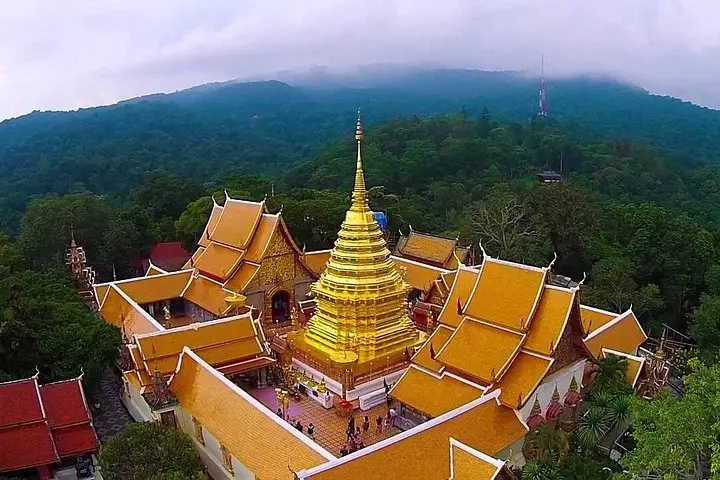
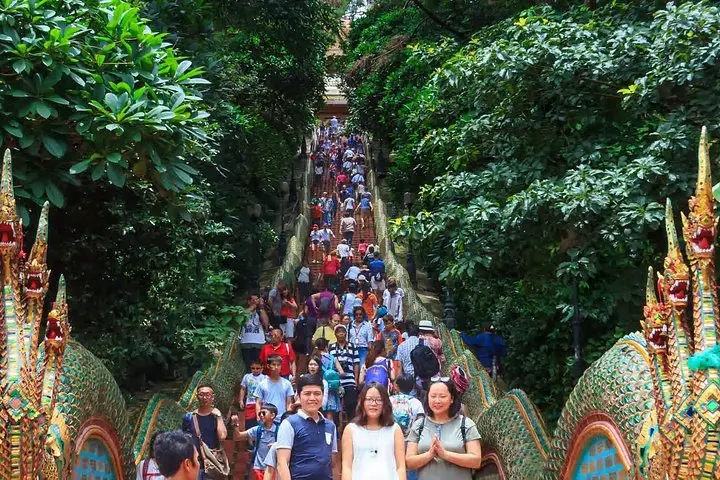
You step out of an air-conditioned minivan into a drizzle of mountain air and a view that spreads like a folded map below — Chiang Mai’s city grid, rice paddies and distant ridgelines. The trail to Wat Phra That Doi Suthep begins with the iconic naga staircase: more than 300 steps that demand steady breathing and reward you with a gleaming golden chedi and a 360-degree overlook.
Verified experiences and guided adventures in the surrounding area.
Operated by Sunleisure World · Chiang Mai, Chiang Mai
You step out of an air-conditioned minivan into a drizzle of mountain air and a view that spreads like a folded map below — Chiang Mai’s city grid, rice paddies and distant ridgelines. The trail to Wat Phra That Doi Suthep begins with the iconic naga staircase: more than 300 steps that demand steady breathing and reward you with a gleaming golden chedi and a 360-degree overlook.
The temple dates back to the 14th century; its central chedi enshrines a relic and was embellished across centuries, folding Lanna artisan motifs into gilded surfaces. The mountain itself is a volcanic ridge whose soil supports cloud-shrouded pines and roadside orchids. After the temple, the tour continues to Doi Pui, a Hmong village where homes, textiles and daily routines give practical shape to centuries‑old customs — embroidery patterns, silverwork, and seasonal crops.
Expect conversational interpretation from an English-speaking guide, a roughly four-hour schedule with hotel pickup, and minimal technical difficulty aside from the staircase. Dress respectfully for the temple (shoulders and knees covered), carry water, and be ready for variable weather: sun can be fierce at the overlook; afternoons in the highlands can turn cool.
Practical tips: wear grippy shoes for the stone steps, leave large backpacks on the bus, and keep camera etiquette in sacred spaces. The route is family-friendly and offers concentrated cultural context in a half day — a compact blend of landscape, history and living culture that fits neatly into Chiang Mai's broader mountain scenery.
The tour runs about four hours, typically with hotel pickup in the morning and return by early afternoon.
Yes — temple admission is included on this tour as noted in the itinerary.
No — there is no technical hiking, but you will climb more than 300 steps on the naga staircase, so pace yourself if you have mobility concerns.
Yes — the tour is family-friendly, though infants must sit on an adult’s lap during transport and some walkers may find the stair ascent challenging.
Sunleisure World operates guided outdoor trips and adventures with an emphasis on safety, stewardship, and memorable experiences.


You step out of an air-conditioned minivan into a drizzle of mountain air and a view that spreads like a folded map below — Chiang Mai’s city grid, rice paddies and distant ridgelines. The trail to Wat Phra That Doi Suthep begins with the iconic naga staircase: more than 300 steps that demand steady breathing and reward you with a gleaming golden chedi and a 360-degree overlook.
You step out of an air-conditioned minivan into a drizzle of mountain air and a view that spreads like a folded map below — Chiang Mai’s city grid, rice paddies and distant ridgelines. The trail to Wat Phra That Doi Suthep begins with the iconic naga staircase: more than 300 steps that demand steady breathing and reward you with a gleaming golden chedi and a 360-degree overlook.
The temple dates back to the 14th century; its central chedi enshrines a relic and was embellished across centuries, folding Lanna artisan motifs into gilded surfaces. The mountain itself is a volcanic ridge whose soil supports cloud-shrouded pines and roadside orchids. After the temple, the tour continues to Doi Pui, a Hmong village where homes, textiles and daily routines give practical shape to centuries‑old customs — embroidery patterns, silverwork, and seasonal crops.
Expect conversational interpretation from an English-speaking guide, a roughly four-hour schedule with hotel pickup, and minimal technical difficulty aside from the staircase. Dress respectfully for the temple (shoulders and knees covered), carry water, and be ready for variable weather: sun can be fierce at the overlook; afternoons in the highlands can turn cool.
Practical tips: wear grippy shoes for the stone steps, leave large backpacks on the bus, and keep camera etiquette in sacred spaces. The route is family-friendly and offers concentrated cultural context in a half day — a compact blend of landscape, history and living culture that fits neatly into Chiang Mai's broader mountain scenery.