THE ADVENTURE COLLECTIVE® · Independent discovery and booking for outdoor travel

Set out from Muscat on a half-day marine safari to watch pods of dolphins and snorkel protected coral beds. This accessible trip pairs calm coastal cruising with guided snorkeling—perfect for travelers wanting wildlife encounters without a full-day commitment.
Set out from Muscat on a half-day marine safari to watch pods of dolphins and snorkel protected coral beds. This accessible trip pairs calm coastal cruising with guided snorkeling—perfect for travelers wanting wildlife encounters without a full-day commitment.
The boat eases away from Muscat’s harbor at first light and the sea opens like a moving room: silver skin, swell rhythm, and the quick flash of dorsal fins. Dolphins appear with practiced grace — bottlenose and spinner arching through wake, Risso’s trailing in softer groups — as the captain follows known coastal highways where pods often travel.
Verified experiences and guided adventures in the surrounding area.
Operated by Golden Oryx Tours · Muscat, Muscat Governorate
The boat eases away from Muscat’s harbor at first light and the sea opens like a moving room: silver skin, swell rhythm, and the quick flash of dorsal fins. Dolphins appear with practiced grace — bottlenose and spinner arching through wake, Risso’s trailing in softer groups — as the captain follows known coastal highways where pods often travel.
Oman’s coastline is shaped by the Arabian Sea and the rugged Al Hajar foothills, a place with a long seafaring history from pearl diving to frankincense trade. Marine terraces and coral outcrops create small offshore reefs that sustain reef fish and sea turtles; local communities still read the sea for weather and food.
Practically, expect a four-hour departure (commonly 09:00–13:00). Trips run from small charters with groups up to eight and include snorkeling equipment and basic safety briefing. Waters range from calm bays to choppier open swell; guides watch for marine life and will brief you on reef etiquette — no touching coral or fish, and minimal splashing to avoid disturbing feeding dolphins.
Bring reef-safe sunscreen, a snug mask, and a short briefing on snorkeling techniques if you’re new to the sport. If you’re prone to seasickness pick a seat mid-boat and focus on the horizon. The payoff is clear: swimming over shallow coral beds alive with parrotfish and wrasse, and the rare, charged moment when a pod decides to surface nearby — the sea daring you to watch.
Most operators supply snorkeling equipment as part of the tour, but bringing your own mask ensures a better fit and comfort.
Dolphins are commonly sighted but wildlife sightings cannot be guaranteed; guides follow areas of known activity to maximize chances.
Infants must sit on laps and special seats are sometimes available; non-swimmers can often still join with a life jacket but should inform the operator in advance.
Do not touch, stand on, or feed marine life; maintain neutral buoyancy and keep fins clear of the reef to prevent damage.
Golden Oryx Tours operates guided outdoor trips and adventures with an emphasis on safety, stewardship, and memorable experiences.

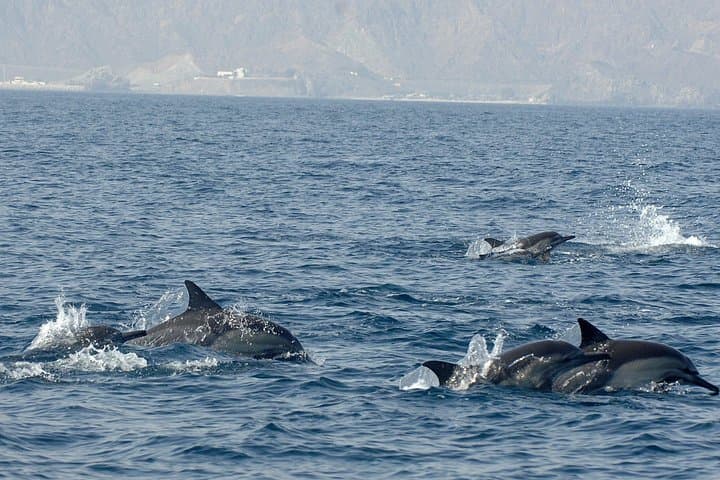
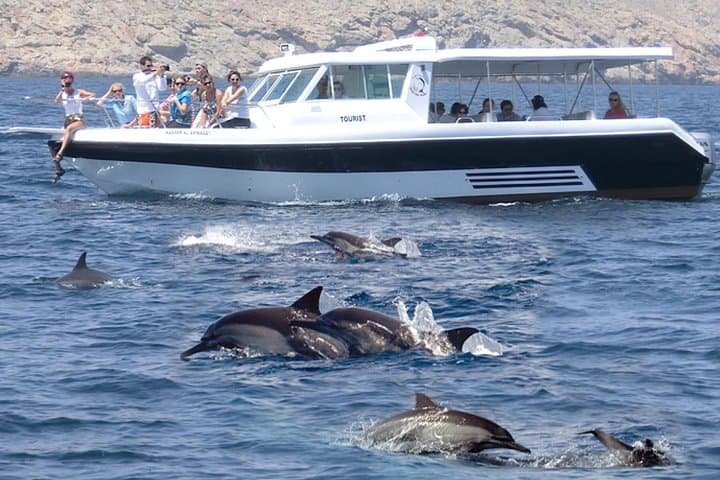
The boat eases away from Muscat’s harbor at first light and the sea opens like a moving room: silver skin, swell rhythm, and the quick flash of dorsal fins. Dolphins appear with practiced grace — bottlenose and spinner arching through wake, Risso’s trailing in softer groups — as the captain follows known coastal highways where pods often travel.
The boat eases away from Muscat’s harbor at first light and the sea opens like a moving room: silver skin, swell rhythm, and the quick flash of dorsal fins. Dolphins appear with practiced grace — bottlenose and spinner arching through wake, Risso’s trailing in softer groups — as the captain follows known coastal highways where pods often travel.
Oman’s coastline is shaped by the Arabian Sea and the rugged Al Hajar foothills, a place with a long seafaring history from pearl diving to frankincense trade. Marine terraces and coral outcrops create small offshore reefs that sustain reef fish and sea turtles; local communities still read the sea for weather and food.
Practically, expect a four-hour departure (commonly 09:00–13:00). Trips run from small charters with groups up to eight and include snorkeling equipment and basic safety briefing. Waters range from calm bays to choppier open swell; guides watch for marine life and will brief you on reef etiquette — no touching coral or fish, and minimal splashing to avoid disturbing feeding dolphins.
Bring reef-safe sunscreen, a snug mask, and a short briefing on snorkeling techniques if you’re new to the sport. If you’re prone to seasickness pick a seat mid-boat and focus on the horizon. The payoff is clear: swimming over shallow coral beds alive with parrotfish and wrasse, and the rare, charged moment when a pod decides to surface nearby — the sea daring you to watch.