THE ADVENTURE COLLECTIVE® · Independent discovery and booking for outdoor travel

Set out from Puerto del Carmen for a half-day catamaran cruise to Isla de Lobos—dolphin sightings, a swim stop at a sheltered cove and a picnic lunch combine into an accessible, wildlife-forward ocean outing. Expect calm narration, clear logistics and natural history on the water.
Set out from Puerto del Carmen for a half-day catamaran cruise to Isla de Lobos—dolphin sightings, a swim stop at a sheltered cove and a picnic lunch combine into an accessible, wildlife-forward ocean outing. Expect calm narration, clear logistics and natural history on the water.
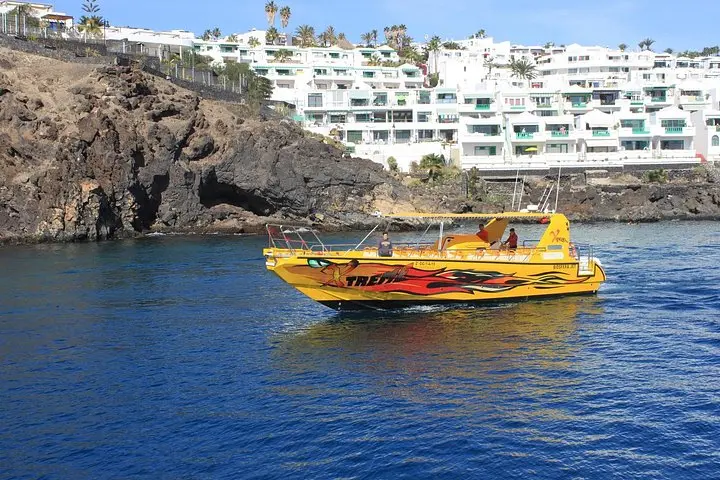
The catamaran slips away from the marina and the island recedes into a band of ochre cliffs and white rooftops; the Atlantic opens, its surface catching the late-morning sun like a skin of mercury. Onboard, passengers drift toward the rail, scanning the wake—then, as if cued, a pod answers: sleek backs break the water, then an arcing spray, then more. The animals push the boat’s rhythm into something livelier; dolphin and passenger alike ride the same current.
Verified experiences and guided adventures in the surrounding area.
Operated by Tour2b · Puerto del Carmen, Las Palmas
The catamaran slips away from the marina and the island recedes into a band of ochre cliffs and white rooftops; the Atlantic opens, its surface catching the late-morning sun like a skin of mercury. Onboard, passengers drift toward the rail, scanning the wake—then, as if cued, a pod answers: sleek backs break the water, then an arcing spray, then more. The animals push the boat’s rhythm into something livelier; dolphin and passenger alike ride the same current.
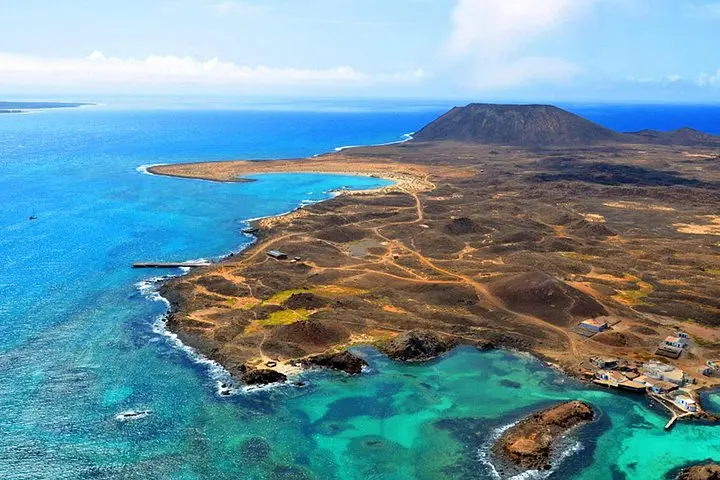
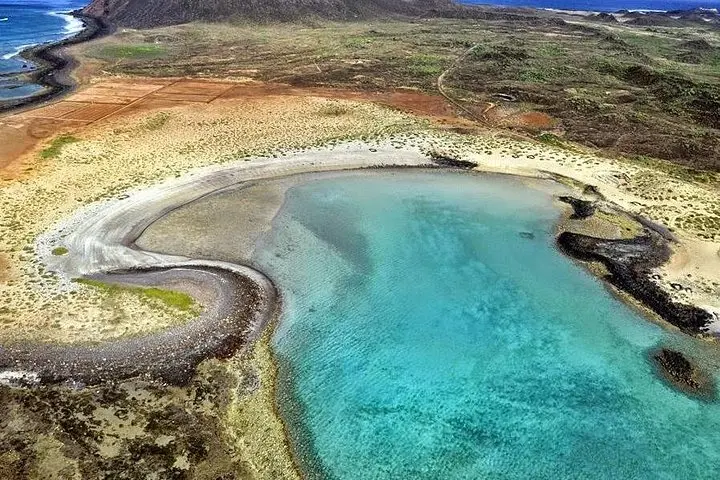
Isla de Lobos sits a short crossing from Lanzarote and Fuerteventura. Little more than six square kilometers, it was named for the monk seals that once hauled out on its beaches and was legally protected as a Natural Park in 1982. Geologically, Lobos is volcanic—black basalt cliffs and lava fields meet the pearly sand of La Concha beach—while currents around the islet funnel baitfish and attract permanent and transient marine mammals. Culturally, the nearest towns—Corralejo on Fuerteventura and Puerto del Carmen on Lanzarote—have long been connected to the sea: fishing, ferrying and now ecotourism shape local rhythms.
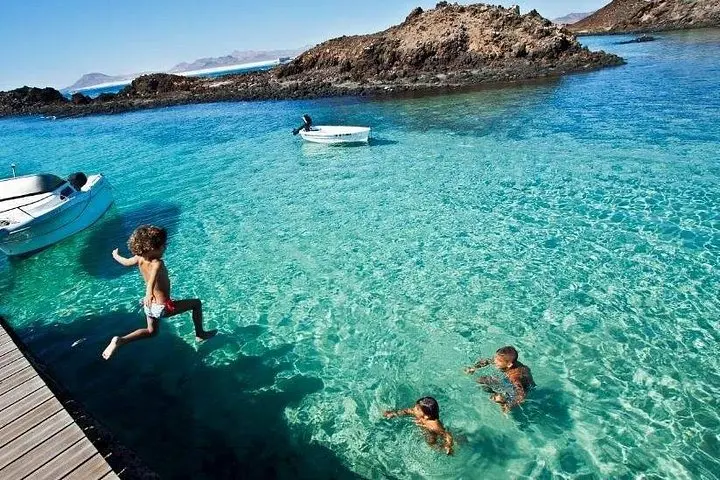
The packaged excursion is practical: hotel pickup in Puerto del Carmen, a roughly 1.5–2-hour crossing depending on sea state, and a 3.5–hour window on the water that includes dolphin watching, an anchorage for swimming and snorkel time, and a picnic-style lunch. Note that some operators allow disembarkation on Lobos while others remain anchored offshore due to park regulations—check the specific operator policy before you go.
For travelers: wear reef-safe sunscreen and a light wind layer, bring swimwear and a towel, and pack seasickness meds if you’re prone—the Atlantic can be playful. The boat’s pace is unhurried: photographers will want to position themselves on the bow for clear ocean shots; naturalists will find the captain’s commentary helpful for identifying species. Respect the regulations: keep distance from wildlife, do not feed animals, and follow crew instructions when swimming or snorkeling.
Practical details: total outing time with pickup is about 5–5.5 hours; on-the-water time is typically 3–3.5 hours. Lunch and drinks are usually included; vegetarian and coeliac options can be arranged with prior notice. Cancellation policies often allow a full refund if you cancel 24+ hours ahead.
This is a straightforward ocean day that balances spectacle and ease—dolphins cutting through salt and sunlight, an island that still behaves like a protected refuge, and a boat that makes both accessible in a single, well-paced outing.
No—dolphins are wild animals, but operators report a high sighting rate; sightings are more likely in calmer seas and when baitfish are present.
Yes—most tours include a picnic lunch with a sandwich, gazpacho and drinks; dietary requirements (vegetarian, coeliac) can usually be accommodated with advance notice.
Landing rules vary by operator and current park regulations; some excursions allow disembarkation while others anchor offshore—confirm when booking.
Typical departure is mid‑morning with about 3–3.5 hours on the water and roughly 5–5.5 hours door‑to‑door including pickup.
Yes; the activity is rated easy and suitable for most ages, though boarding and deck movement require basic mobility and supervision for young children.
Bring your own mask/snorkel for the best fit, reef‑safe sunscreen, a towel and water‑resistant footwear for boarding if needed.
Tour2b operates guided outdoor trips and adventures with an emphasis on safety, stewardship, and memorable experiences.
The catamaran slips away from the marina and the island recedes into a band of ochre cliffs and white rooftops; the Atlantic opens, its surface catching the late-morning sun like a skin of mercury. Onboard, passengers drift toward the rail, scanning the wake—then, as if cued, a pod answers: sleek backs break the water, then an arcing spray, then more. The animals push the boat’s rhythm into something livelier; dolphin and passenger alike ride the same current.
The catamaran slips away from the marina and the island recedes into a band of ochre cliffs and white rooftops; the Atlantic opens, its surface catching the late-morning sun like a skin of mercury. Onboard, passengers drift toward the rail, scanning the wake—then, as if cued, a pod answers: sleek backs break the water, then an arcing spray, then more. The animals push the boat’s rhythm into something livelier; dolphin and passenger alike ride the same current.
Isla de Lobos sits a short crossing from Lanzarote and Fuerteventura. Little more than six square kilometers, it was named for the monk seals that once hauled out on its beaches and was legally protected as a Natural Park in 1982. Geologically, Lobos is volcanic—black basalt cliffs and lava fields meet the pearly sand of La Concha beach—while currents around the islet funnel baitfish and attract permanent and transient marine mammals. Culturally, the nearest towns—Corralejo on Fuerteventura and Puerto del Carmen on Lanzarote—have long been connected to the sea: fishing, ferrying and now ecotourism shape local rhythms.
The packaged excursion is practical: hotel pickup in Puerto del Carmen, a roughly 1.5–2-hour crossing depending on sea state, and a 3.5–hour window on the water that includes dolphin watching, an anchorage for swimming and snorkel time, and a picnic-style lunch. Note that some operators allow disembarkation on Lobos while others remain anchored offshore due to park regulations—check the specific operator policy before you go.
For travelers: wear reef-safe sunscreen and a light wind layer, bring swimwear and a towel, and pack seasickness meds if you’re prone—the Atlantic can be playful. The boat’s pace is unhurried: photographers will want to position themselves on the bow for clear ocean shots; naturalists will find the captain’s commentary helpful for identifying species. Respect the regulations: keep distance from wildlife, do not feed animals, and follow crew instructions when swimming or snorkeling.
Practical details: total outing time with pickup is about 5–5.5 hours; on-the-water time is typically 3–3.5 hours. Lunch and drinks are usually included; vegetarian and coeliac options can be arranged with prior notice. Cancellation policies often allow a full refund if you cancel 24+ hours ahead.
This is a straightforward ocean day that balances spectacle and ease—dolphins cutting through salt and sunlight, an island that still behaves like a protected refuge, and a boat that makes both accessible in a single, well-paced outing.