THE ADVENTURE COLLECTIVE® · Independent discovery and booking for outdoor travel

A half-day trek from Savannakhet that pairs forest walking with cultural stops: visit That Ing Hang stupa, explore Dong Natad Protected Forest, and enjoy a lakeside picnic while learning about edible and medicinal plants from a local guide. Ideal for travelers with moderate fitness looking for active cultural immersion.
A half-day trek from Savannakhet that pairs forest walking with cultural stops: visit That Ing Hang stupa, explore Dong Natad Protected Forest, and enjoy a lakeside picnic while learning about edible and medicinal plants from a local guide. Ideal for travelers with moderate fitness looking for active cultural immersion.
You step out of Savannakhet town and the air changes—rice paddies flatten toward low forest ridges while a soft wind pushes across the fields like an invitation.
Verified experiences and guided adventures in the surrounding area.
Operated by Marvelaos Travel and Tour · Savannakhet, Savannakhet Province
You step out of Savannakhet town and the air changes—rice paddies flatten toward low forest ridges while a soft wind pushes across the fields like an invitation.
The day begins with a short drive to Bungva Lake, a manmade mirror in the paddy plain, then moves to That Ing Hang where incense and muted chants mark a living Buddhist practice; the stupa is a local pilgrimage point said to house a relic of the Buddha. Geologically this corner of central Laos is lowland alluvium with scattered sandstone outcrops; the forest you enter is a protected dry evergreen-pine mosaic that holds a surprising variety of medicinal species.
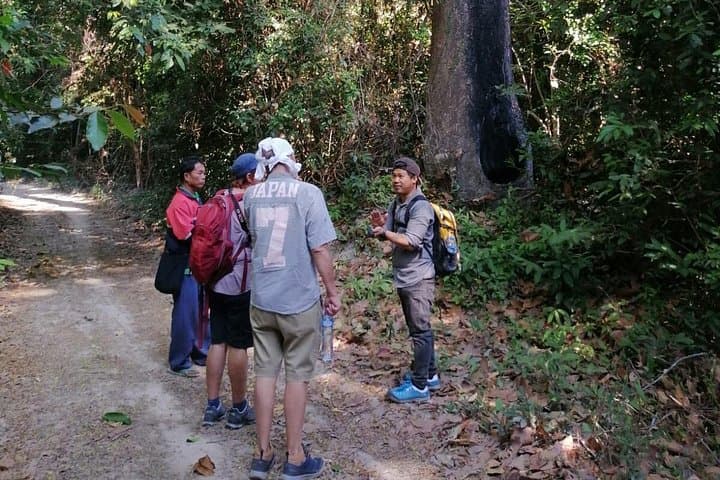
Your guide reads the landscape: pointing out edible vines, a leaf used for fever, and trails where civet and hornbills pass at dawn. Culture is practical here—temple gongs to invite luck, villagers tending fishponds and rice, and an oral knowledge of plants that supplements the map.
Expect 5–6 hours on dirt tracks and singletrack, roughly 8–10 km total with modest climbs (under 300 m cumulative gain). Terrain ranges from packed earth to soft loam; in the wet season roots and mud demand attention. Bring a layered shirt for humidity swings, carry 1–2 liters of water, and wear closed shoes with grip for slippery banks. A guided conversation about plant uses and a lakeside picnic are the day’s rewards—an easy rhythm of walking, listening, and learning that suits travelers who want active cultural immersion without technical climbing.
The outing lasts about 5–6 hours and covers roughly 8–10 km with modest elevation gain; it’s classed as moderate—uneven ground but no technical sections.
Yes, but you should dress respectfully (covered shoulders/knees) and follow your guide’s instructions around worshippers; not recommended for those who cannot walk short distances.
Lunch (lakeside picnic) and bottled water are included—bring extra fluids if you sweat heavily or on very hot days.
Carry a valid passport on the day of travel; the protected forest is visited under local permits managed by the operator.
Marvelaos Travel and Tour operates guided outdoor trips and adventures with an emphasis on safety, stewardship, and memorable experiences.


You step out of Savannakhet town and the air changes—rice paddies flatten toward low forest ridges while a soft wind pushes across the fields like an invitation.
You step out of Savannakhet town and the air changes—rice paddies flatten toward low forest ridges while a soft wind pushes across the fields like an invitation.
The day begins with a short drive to Bungva Lake, a manmade mirror in the paddy plain, then moves to That Ing Hang where incense and muted chants mark a living Buddhist practice; the stupa is a local pilgrimage point said to house a relic of the Buddha. Geologically this corner of central Laos is lowland alluvium with scattered sandstone outcrops; the forest you enter is a protected dry evergreen-pine mosaic that holds a surprising variety of medicinal species.
Your guide reads the landscape: pointing out edible vines, a leaf used for fever, and trails where civet and hornbills pass at dawn. Culture is practical here—temple gongs to invite luck, villagers tending fishponds and rice, and an oral knowledge of plants that supplements the map.
Expect 5–6 hours on dirt tracks and singletrack, roughly 8–10 km total with modest climbs (under 300 m cumulative gain). Terrain ranges from packed earth to soft loam; in the wet season roots and mud demand attention. Bring a layered shirt for humidity swings, carry 1–2 liters of water, and wear closed shoes with grip for slippery banks. A guided conversation about plant uses and a lakeside picnic are the day’s rewards—an easy rhythm of walking, listening, and learning that suits travelers who want active cultural immersion without technical climbing.