THE ADVENTURE COLLECTIVE® · Independent discovery and booking for outdoor travel

Ride gentle, sure-footed donkeys through the Idaouqourd hills near Essaouira, where argan trees, small villages, and rescued animals form the backbone of a responsible cultural excursion. Perfect for travelers seeking an easy-paced outdoor experience with local flavor.
Ride gentle, sure-footed donkeys through the Idaouqourd hills near Essaouira, where argan trees, small villages, and rescued animals form the backbone of a responsible cultural excursion. Perfect for travelers seeking an easy-paced outdoor experience with local flavor.
A low stone wall marks the trailhead and a donkey lifts its head as you approach—the animals here move with a gentle patience that sets the pace. The ride out of the coastal plain toward the Idaouqourd hills is quiet: scrubby argan trees, terraces stitched into soft slopes, and a wind that seems to dare you to slow down and listen.
Verified experiences and guided adventures in the surrounding area.
Operated by Village Donkey · Essaouira, Marrakesh-Safi
A low stone wall marks the trailhead and a donkey lifts its head as you approach—the animals here move with a gentle patience that sets the pace. The ride out of the coastal plain toward the Idaouqourd hills is quiet: scrubby argan trees, terraces stitched into soft slopes, and a wind that seems to dare you to slow down and listen.
This part of Morocco carries layers of history. Idaouqourd’s hills show traces of Amazigh village life and rural farming patterns; nearby ruins recall small-scale sugar production from earlier centuries. Geology here is folded limestone and red soils that erode into narrow gullies—good footing for sure-footed donkeys, less so for fast bikes. Culturally, the experience is as much about meeting local guides and tasting mint tea as it is about the route; the donkeys themselves are often rescued or adopted animals cared for by the village cooperative.
Practically, expect a 1–3 hour outing that’s physically undemanding but uneven underfoot. Guides handle tack and lead lines; riders should wear long pants, closed shoes, and sun protection. Bring water, travel light, and plan for mid-morning or late afternoon departures to avoid the hottest hours. The operator emphasizes sustainability—your visit supports animal care and local livelihoods—so leave no waste and follow guide instructions around animals and village property.
For first-time riders this is an accessible, slow-travel option that combines mild outdoor pace with direct cultural exchange: a short, tactile route through landscape and community that rewards attention rather than speed.
Rides vary from about 1 hour up to 3 hours depending on the chosen itinerary—most standard outings are around 90 minutes.
Yes—infants may ride in a stroller before or after the ride and small children can ride, but they must sit on an adult’s lap and follow operator guidance.
No—this excursion is designed for beginners and experienced riders; guides manage the donkeys and provide simple instructions.
The operator lists accessibility options for transport and some surfaces, but the donkey ride itself involves mounting and uneven trails and may not be suitable for all mobility needs.
Village Donkey operates guided outdoor trips and adventures with an emphasis on safety, stewardship, and memorable experiences.
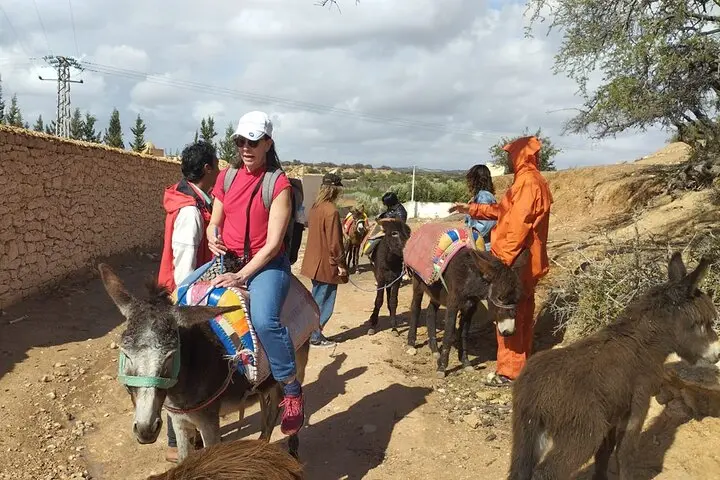
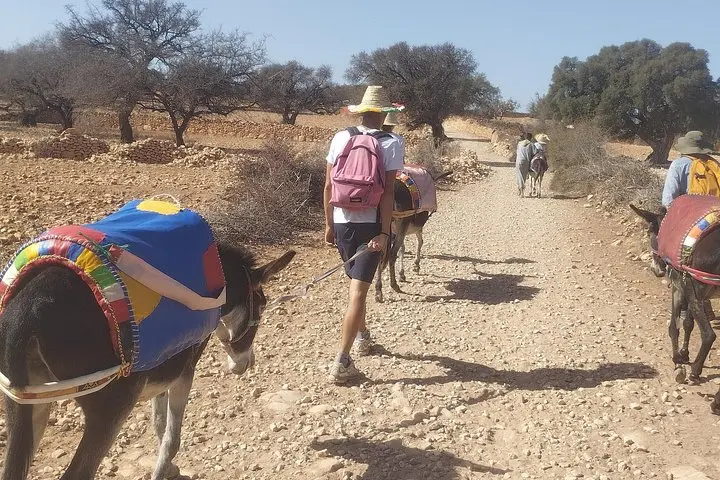
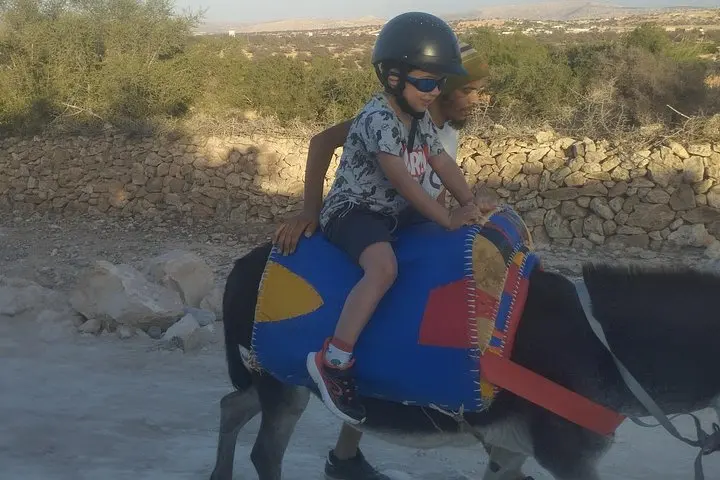
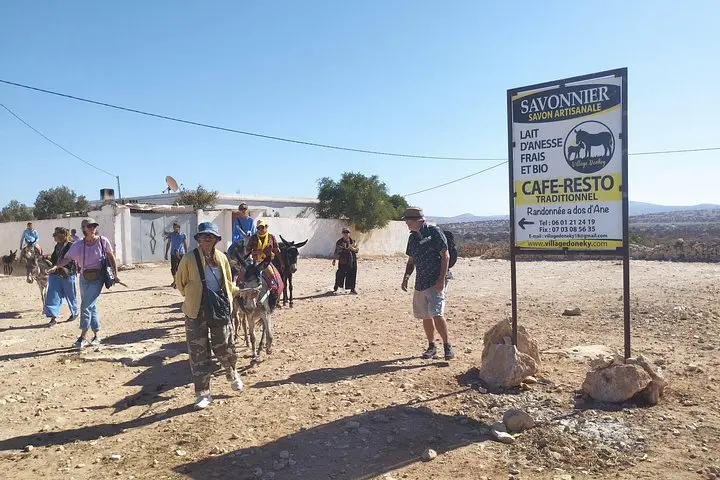
A low stone wall marks the trailhead and a donkey lifts its head as you approach—the animals here move with a gentle patience that sets the pace. The ride out of the coastal plain toward the Idaouqourd hills is quiet: scrubby argan trees, terraces stitched into soft slopes, and a wind that seems to dare you to slow down and listen.
A low stone wall marks the trailhead and a donkey lifts its head as you approach—the animals here move with a gentle patience that sets the pace. The ride out of the coastal plain toward the Idaouqourd hills is quiet: scrubby argan trees, terraces stitched into soft slopes, and a wind that seems to dare you to slow down and listen.
This part of Morocco carries layers of history. Idaouqourd’s hills show traces of Amazigh village life and rural farming patterns; nearby ruins recall small-scale sugar production from earlier centuries. Geology here is folded limestone and red soils that erode into narrow gullies—good footing for sure-footed donkeys, less so for fast bikes. Culturally, the experience is as much about meeting local guides and tasting mint tea as it is about the route; the donkeys themselves are often rescued or adopted animals cared for by the village cooperative.
Practically, expect a 1–3 hour outing that’s physically undemanding but uneven underfoot. Guides handle tack and lead lines; riders should wear long pants, closed shoes, and sun protection. Bring water, travel light, and plan for mid-morning or late afternoon departures to avoid the hottest hours. The operator emphasizes sustainability—your visit supports animal care and local livelihoods—so leave no waste and follow guide instructions around animals and village property.
For first-time riders this is an accessible, slow-travel option that combines mild outdoor pace with direct cultural exchange: a short, tactile route through landscape and community that rewards attention rather than speed.