THE ADVENTURE COLLECTIVE® · Independent discovery and booking for outdoor travel

Feel the wind and see Kauai without barriers on a full 60-minute doors-off helicopter flight. Float over Waimea Canyon, skirt the Na Pali cliffs, and watch waterfalls tumble from mountaintop craters—this is an aerial primer on why Kauai feels like a different planet.
Feel the wind and see Kauai without barriers on a full 60-minute doors-off helicopter flight. Float over Waimea Canyon, skirt the Na Pali cliffs, and watch waterfalls tumble from mountaintop craters—this is an aerial primer on why Kauai feels like a different planet.
The rotor's thump settles into your chest and then the island unspools beneath you—green ridges folding into jagged, seaworn cliffs, a web of waterfalls threading down into emerald valleys. With the doors removed, wind becomes part of the ride: it teases your hair, ruffles maps, and makes the world feel immediate. Pilots bank the MD500E to give every passenger a clean line of sight: first the low, secret pockets of the south shore, then the deep rust and ochre walls of Waimea Canyon, and finally the cathedral cliffs of the Na Pali Coast, where ocean and rock argue over who shapes the other.
Verified experiences and guided adventures in the surrounding area.
Operated by Jack Harter Helicopters - Tours · Lihue, Hawaii
The rotor's thump settles into your chest and then the island unspools beneath you—green ridges folding into jagged, seaworn cliffs, a web of waterfalls threading down into emerald valleys. With the doors removed, wind becomes part of the ride: it teases your hair, ruffles maps, and makes the world feel immediate. Pilots bank the MD500E to give every passenger a clean line of sight: first the low, secret pockets of the south shore, then the deep rust and ochre walls of Waimea Canyon, and finally the cathedral cliffs of the Na Pali Coast, where ocean and rock argue over who shapes the other.
Kauai is older than its neighbors, its topography a record of relentless erosion. Waimea Canyon—sometimes called the Grand Canyon of the Pacific—shows that story in layers of oxidized lava and collapsed valleys. Mt. Waialeale, the island's ancient shield volcano, is the opposite story: persistent rain gouging an over-deepened crater and feeding a thousand waterfalls. From the air you also pass human histories: the patterned stonework of Menehune Fishpond, an engineering feat of early Hawaiian settlers, and coastal reefs that supported generations of fishers.
Culturally, the island rewards a quieter curiosity. The Na Pali cliffs are sacred in places and fragile everywhere: there are no roads, only trails and boat lanes, and the best views are the ones you earn with responsible travel. Operators on Kauai work within strict landing and noise guidelines to balance access and stewardship; doors-off flights offer a visceral connection to the land without touching it.
Practicalities are straightforward but important. The full experience is more than 60 airborne minutes—plan on two to three hours for check-in, weight briefing, hangar prep, and the flight. Weight and balance rules are enforced for safety; disclose accurate weights when booking and be prepared for rearranged seating. Wrist straps are provided for phones, but a camera tether or chest harness is the best way to keep equipment secure in the wind. Dress in layers: the air is cool at altitude and sun-intense when you crest a ridge. If you get motion sick, consider an over-the-counter preventative and sit forward to oriented into the aircraft's movement.
For photographers, the doors-off format is gold: bring a mid-range zoom and a fast shutter speed—shutter priority around 1/1000s to freeze rotor-induced motion. Golden hour softens the cliffs; midday highlights reef color. Arrive early, listen to the safety briefing, and treat the flight as both a performance and a field trip: be curious, respectful, and ready to be out of breath from beauty rather than exertion.
Yes; for safety and balance the operator requires accurate weights at booking and may limit or reassign seats if necessary.
Doors are removed only for better visibility; pilots and crew provide a safety briefing, wrist straps, and require harnessing of loose items.
Yes—wrist straps are provided for phones and cameras; a camera tether is recommended for additional security.
No—this tour is scenic only; landings on Na Pali are restricted. The flight brings you close for aerial views without touching down.
Tours are canceled or rescheduled if weather or winds create unsafe flying conditions; operators generally refund if canceled 24+ hours prior.
Children may fly but must meet weight and safety requirements; pregnant passengers should check with their physician and the operator before booking.
Jack Harter Helicopters - Tours operates guided outdoor trips and adventures with an emphasis on safety, stewardship, and memorable experiences.
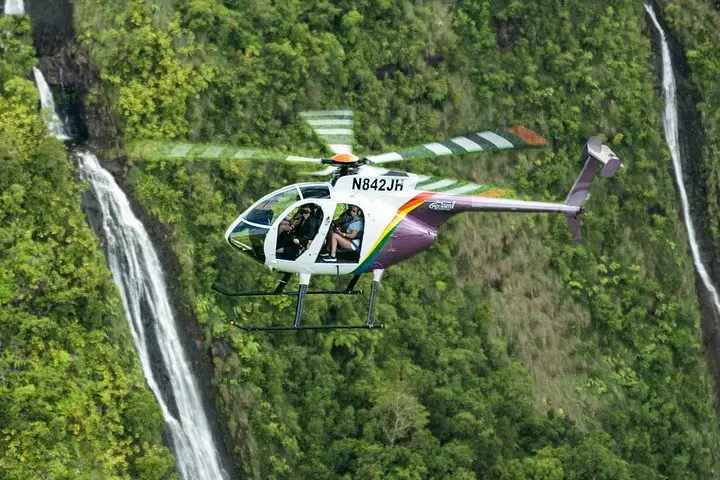
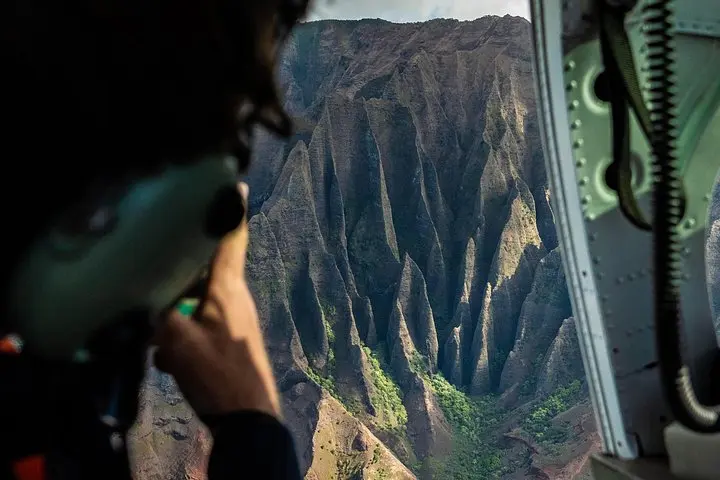
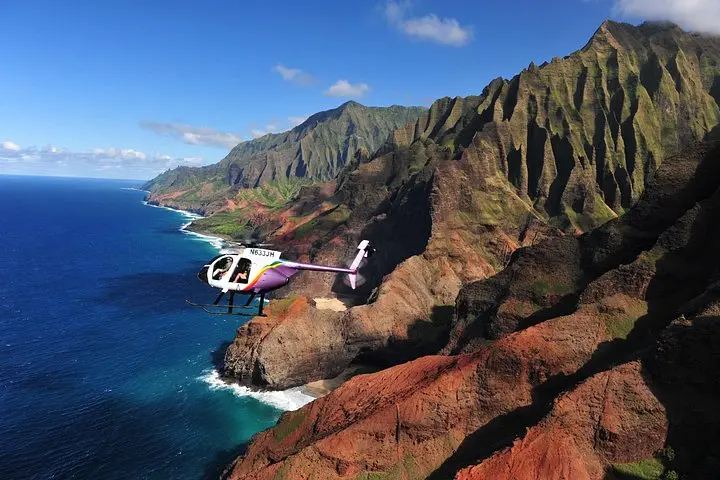
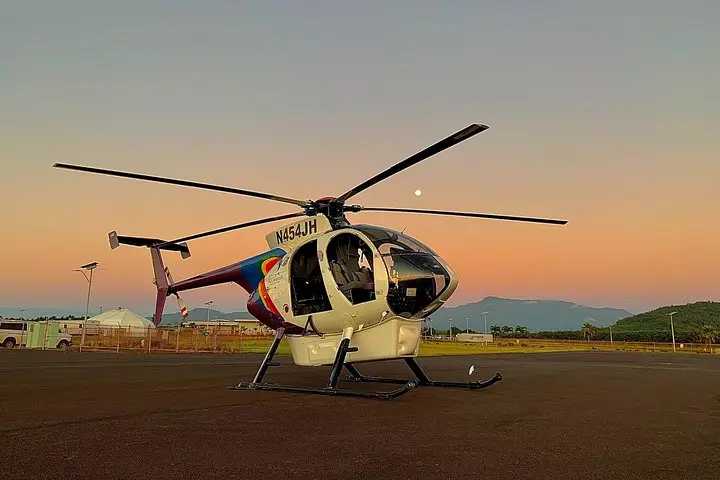
The rotor's thump settles into your chest and then the island unspools beneath you—green ridges folding into jagged, seaworn cliffs, a web of waterfalls threading down into emerald valleys. With the doors removed, wind becomes part of the ride: it teases your hair, ruffles maps, and makes the world feel immediate. Pilots bank the MD500E to give every passenger a clean line of sight: first the low, secret pockets of the south shore, then the deep rust and ochre walls of Waimea Canyon, and finally the cathedral cliffs of the Na Pali Coast, where ocean and rock argue over who shapes the other.
The rotor's thump settles into your chest and then the island unspools beneath you—green ridges folding into jagged, seaworn cliffs, a web of waterfalls threading down into emerald valleys. With the doors removed, wind becomes part of the ride: it teases your hair, ruffles maps, and makes the world feel immediate. Pilots bank the MD500E to give every passenger a clean line of sight: first the low, secret pockets of the south shore, then the deep rust and ochre walls of Waimea Canyon, and finally the cathedral cliffs of the Na Pali Coast, where ocean and rock argue over who shapes the other.
Kauai is older than its neighbors, its topography a record of relentless erosion. Waimea Canyon—sometimes called the Grand Canyon of the Pacific—shows that story in layers of oxidized lava and collapsed valleys. Mt. Waialeale, the island's ancient shield volcano, is the opposite story: persistent rain gouging an over-deepened crater and feeding a thousand waterfalls. From the air you also pass human histories: the patterned stonework of Menehune Fishpond, an engineering feat of early Hawaiian settlers, and coastal reefs that supported generations of fishers.
Culturally, the island rewards a quieter curiosity. The Na Pali cliffs are sacred in places and fragile everywhere: there are no roads, only trails and boat lanes, and the best views are the ones you earn with responsible travel. Operators on Kauai work within strict landing and noise guidelines to balance access and stewardship; doors-off flights offer a visceral connection to the land without touching it.
Practicalities are straightforward but important. The full experience is more than 60 airborne minutes—plan on two to three hours for check-in, weight briefing, hangar prep, and the flight. Weight and balance rules are enforced for safety; disclose accurate weights when booking and be prepared for rearranged seating. Wrist straps are provided for phones, but a camera tether or chest harness is the best way to keep equipment secure in the wind. Dress in layers: the air is cool at altitude and sun-intense when you crest a ridge. If you get motion sick, consider an over-the-counter preventative and sit forward to oriented into the aircraft's movement.
For photographers, the doors-off format is gold: bring a mid-range zoom and a fast shutter speed—shutter priority around 1/1000s to freeze rotor-induced motion. Golden hour softens the cliffs; midday highlights reef color. Arrive early, listen to the safety briefing, and treat the flight as both a performance and a field trip: be curious, respectful, and ready to be out of breath from beauty rather than exertion.