THE ADVENTURE COLLECTIVE® · Independent discovery and booking for outdoor travel

Swim among Roman villas and mosaics in the submerged Park of Baia on a two-dive experience from the Gulf of Pozzuoli. Certified divers explore archaeological ruins preserved beneath clear Mediterranean waters.
Swim among Roman villas and mosaics in the submerged Park of Baia on a two-dive experience from the Gulf of Pozzuoli. Certified divers explore archaeological ruins preserved beneath clear Mediterranean waters.
A pale ribbon of sunlight filters through turquoise water as divers slip over the buoy line and descend toward columns and mosaics that now sit beneath the Gulf of Pozzuoli.
Verified experiences and guided adventures in the surrounding area.
Operated by Sea World Baia Diving · Bacoli, Campania
A pale ribbon of sunlight filters through turquoise water as divers slip over the buoy line and descend toward columns and mosaics that now sit beneath the Gulf of Pozzuoli.
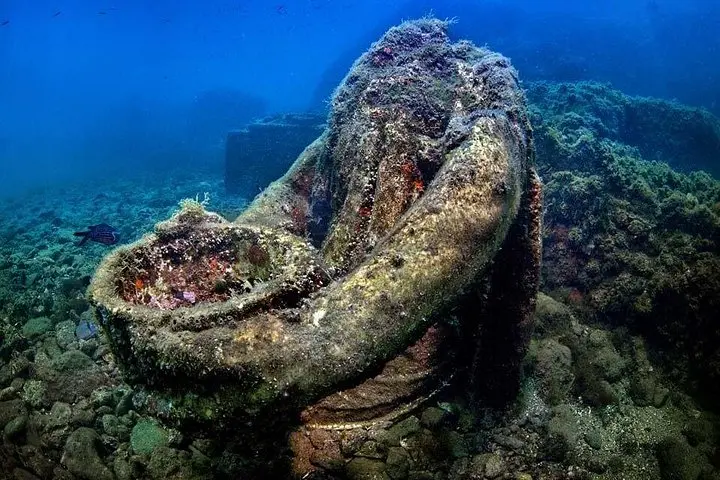
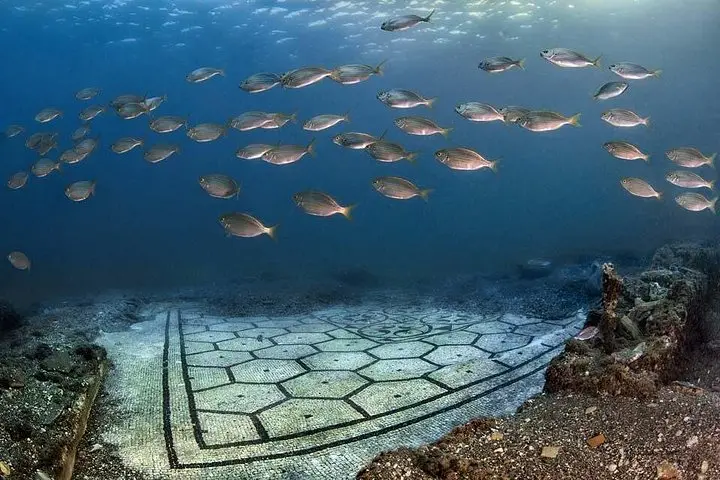
Baia was Rome’s playground for emperors and nobles; centuries of bradyseism — slow ground subsidence driven by the Phlegraean volcanic field — left waterfront villas sitting four meters below the surface. Those stone walls and marble floors have been preserved by the sea, and a double-dive in the Submerged Park of Baia turns archaeology into an underwater itinerary.
Geology here is active: bubbling fumaroles and sulfur-rich springs inland explain why the coastline shifted. Culturally, Baia links imperial luxury with Campanian maritime life; local guides often stitch myths about Neptune and Roman banquets into dive briefings.
Practically, expect two guided dives of roughly 45 minutes each, an hour at the buoy between dives, rib transport out of a nearby diving center, and access to showers and changing rooms on return. Minimum certification: Junior Open Water or equivalent. Conditions can vary with swell and visibility; a dive computer and close buoyancy control make viewing mosaics and statues easy without touching fragile surfaces.
Plan for early starts to catch calmer seas, bring a reef-safe sunscreen and a warm layer for post-dive breezes, and leave artifacts where they are — the park is protected and monitored. Whether an experienced diver or a certified newbie on a first open-water certificate, the submerged city of Baia offers a rare mix of Roman history, active geology, and close-up marine archaeology.
Yes — minimum Junior Open Water Diver or Scuba Diver certification is required for this two-dive program.
Most archaeological features sit around 3–6 meters deep, with typical dive depths keeping within recreational limits handled on a single tank.
The operator usually cancels for bad weather; full refunds require cancellation at least 24 hours prior, and trips may be rescheduled subject to availability.
No — the park is protected; touching damages fragile mosaics and removing artifacts is illegal and harmful to conservation efforts.
Sea World Baia Diving operates guided outdoor trips and adventures with an emphasis on safety, stewardship, and memorable experiences.
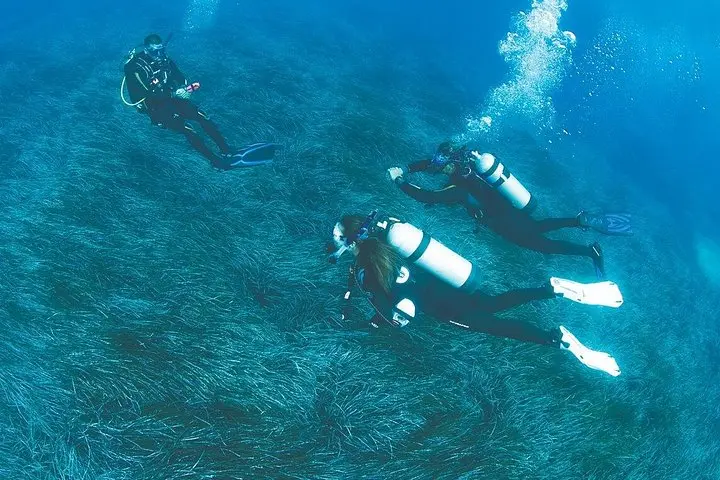
A pale ribbon of sunlight filters through turquoise water as divers slip over the buoy line and descend toward columns and mosaics that now sit beneath the Gulf of Pozzuoli.
A pale ribbon of sunlight filters through turquoise water as divers slip over the buoy line and descend toward columns and mosaics that now sit beneath the Gulf of Pozzuoli.
Baia was Rome’s playground for emperors and nobles; centuries of bradyseism — slow ground subsidence driven by the Phlegraean volcanic field — left waterfront villas sitting four meters below the surface. Those stone walls and marble floors have been preserved by the sea, and a double-dive in the Submerged Park of Baia turns archaeology into an underwater itinerary.
Geology here is active: bubbling fumaroles and sulfur-rich springs inland explain why the coastline shifted. Culturally, Baia links imperial luxury with Campanian maritime life; local guides often stitch myths about Neptune and Roman banquets into dive briefings.
Practically, expect two guided dives of roughly 45 minutes each, an hour at the buoy between dives, rib transport out of a nearby diving center, and access to showers and changing rooms on return. Minimum certification: Junior Open Water or equivalent. Conditions can vary with swell and visibility; a dive computer and close buoyancy control make viewing mosaics and statues easy without touching fragile surfaces.
Plan for early starts to catch calmer seas, bring a reef-safe sunscreen and a warm layer for post-dive breezes, and leave artifacts where they are — the park is protected and monitored. Whether an experienced diver or a certified newbie on a first open-water certificate, the submerged city of Baia offers a rare mix of Roman history, active geology, and close-up marine archaeology.