THE ADVENTURE COLLECTIVE® · Independent discovery and booking for outdoor travel

Hop a short boat from Peniche to the Berlengas Natural Reserve for two guided snorkel stops in shallow, sheltered bays. This half‑day outing emphasizes safe, surface-level marine observation with local guidance and simple comforts on board.
Hop a short boat from Peniche to the Berlengas Natural Reserve for two guided snorkel stops in shallow, sheltered bays. This half‑day outing emphasizes safe, surface-level marine observation with local guidance and simple comforts on board.
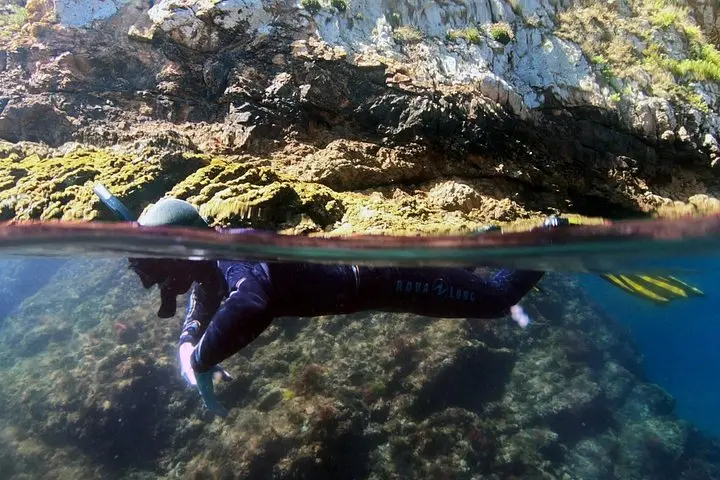
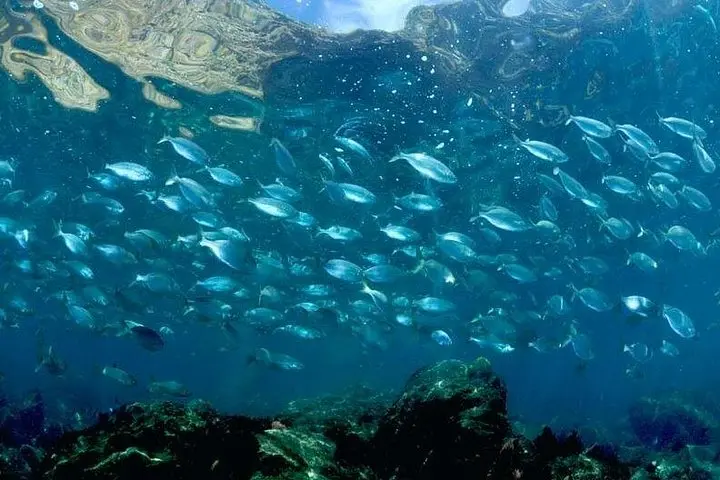
The early-morning boat cuts through a cool Atlantic chop and the granite silhouette of Berlenga Grande grows from blue haze into sheer cliffs. Salt stings the air; gulls wheel above the rock and a small motor trims speed as the captain points to a sheltered cove where the water turns from slate to glassy aquamarine. You’ll slip into warm, shallow water framed by weathered granite and seaweed forests — two separate snorkel stops give you time to read the subtidal world: wrasse grazing on algae, translucent jellyfish, and the darting flash of small bream.
Verified experiences and guided adventures in the surrounding area.
Operated by Haliotis · Peniche, Leiria
The early-morning boat cuts through a cool Atlantic chop and the granite silhouette of Berlenga Grande grows from blue haze into sheer cliffs. Salt stings the air; gulls wheel above the rock and a small motor trims speed as the captain points to a sheltered cove where the water turns from slate to glassy aquamarine. You’ll slip into warm, shallow water framed by weathered granite and seaweed forests — two separate snorkel stops give you time to read the subtidal world: wrasse grazing on algae, translucent jellyfish, and the darting flash of small bream.
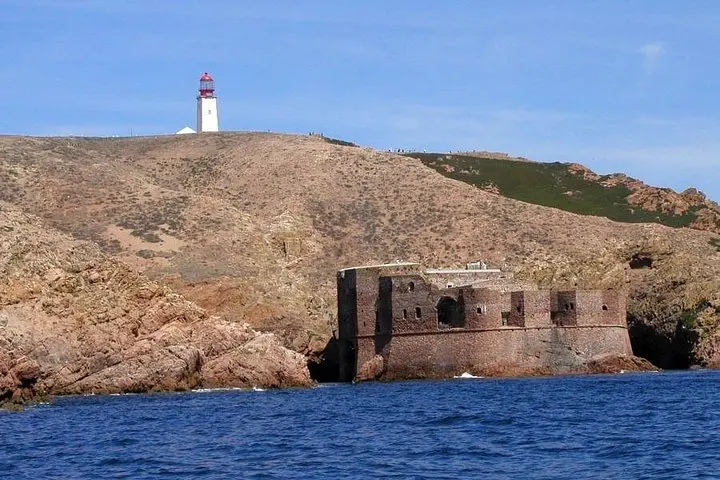
The Berlengas archipelago is a 10–12 kilometer offshore outcrop of resistant Precambrian rock, long used as a maritime refuge and fortified island (Forte de São João Baptista sits on a rocky islet). Declared a Natural Reserve to protect seabird colonies and marine habitats, its cliffs and coves reflect both human history and rugged geology shaped by waves and wind.
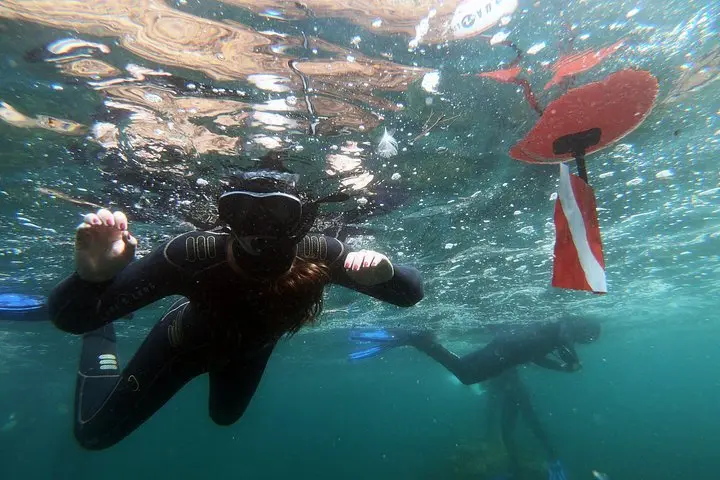
Expect calm, shallow snorkeling in sheltered bays rather than deep dives — the sites are chosen for visibility and safety. Guides brief you on marine life, currents and entry techniques, and stay aboard during sessions. Practical notes: arrive ready to change, leave valuables locked on the boat, and use reef‑safe sunscreen. Bring water and a small snack beyond the provided banana and pastel; shore facilities include changing rooms and hot showers on return.
Timing matters — morning crossings are usually flatter and clearer. If you’re comfortable in the water and curious about coastal ecology, this double-exit format balances relaxed surface observation with steady guidance, making the Berlengas’ nearshore life accessible and memorable.
Minimum age is 8 years; children must be supervised and able to follow guide instructions in the water.
Yes — masks, snorkels and fins are provided, and staff supervise entries and exits from the boat.
Trips are canceled in bad weather or if sea conditions are unsafe; you’ll receive a full refund if canceled at least 24 hours before departure or if conditions force cancellation.
No — the activity is designed for a range of abilities, but you should be comfortable in open water and able to swim short distances with a mask and snorkel.
Haliotis operates guided outdoor trips and adventures with an emphasis on safety, stewardship, and memorable experiences.
The early-morning boat cuts through a cool Atlantic chop and the granite silhouette of Berlenga Grande grows from blue haze into sheer cliffs. Salt stings the air; gulls wheel above the rock and a small motor trims speed as the captain points to a sheltered cove where the water turns from slate to glassy aquamarine. You’ll slip into warm, shallow water framed by weathered granite and seaweed forests — two separate snorkel stops give you time to read the subtidal world: wrasse grazing on algae, translucent jellyfish, and the darting flash of small bream.
The early-morning boat cuts through a cool Atlantic chop and the granite silhouette of Berlenga Grande grows from blue haze into sheer cliffs. Salt stings the air; gulls wheel above the rock and a small motor trims speed as the captain points to a sheltered cove where the water turns from slate to glassy aquamarine. You’ll slip into warm, shallow water framed by weathered granite and seaweed forests — two separate snorkel stops give you time to read the subtidal world: wrasse grazing on algae, translucent jellyfish, and the darting flash of small bream.
The Berlengas archipelago is a 10–12 kilometer offshore outcrop of resistant Precambrian rock, long used as a maritime refuge and fortified island (Forte de São João Baptista sits on a rocky islet). Declared a Natural Reserve to protect seabird colonies and marine habitats, its cliffs and coves reflect both human history and rugged geology shaped by waves and wind.
Expect calm, shallow snorkeling in sheltered bays rather than deep dives — the sites are chosen for visibility and safety. Guides brief you on marine life, currents and entry techniques, and stay aboard during sessions. Practical notes: arrive ready to change, leave valuables locked on the boat, and use reef‑safe sunscreen. Bring water and a small snack beyond the provided banana and pastel; shore facilities include changing rooms and hot showers on return.
Timing matters — morning crossings are usually flatter and clearer. If you’re comfortable in the water and curious about coastal ecology, this double-exit format balances relaxed surface observation with steady guidance, making the Berlengas’ nearshore life accessible and memorable.