THE ADVENTURE COLLECTIVE® · Independent discovery and booking for outdoor travel
Walk a mile through downtown Austin and uncover the city’s often-overlooked Black history, from convict-leasing at the State Capitol to the commercial hubs of early Sixth Street. This two-hour guided tour pairs clear historical context with accessible urban walking.
Walk a mile through downtown Austin and uncover the city’s often-overlooked Black history, from convict-leasing at the State Capitol to the commercial hubs of early Sixth Street. This two-hour guided tour pairs clear historical context with accessible urban walking.
You step off Congress Avenue into a city that still carries the footprints of its past: broad boulevards, limestone facades, and the persistent pulse of traffic softened by park squares. The Downtown Black History Walk moves deliberately—one mile of pavement and pause—pulling historic threads through sites that shaped Austin’s African American community.
Verified experiences and guided adventures in the surrounding area.
Operated by Black Austin Tours · Austin, Texas
You step off Congress Avenue into a city that still carries the footprints of its past: broad boulevards, limestone facades, and the persistent pulse of traffic softened by park squares. The Downtown Black History Walk moves deliberately—one mile of pavement and pause—pulling historic threads through sites that shaped Austin’s African American community.
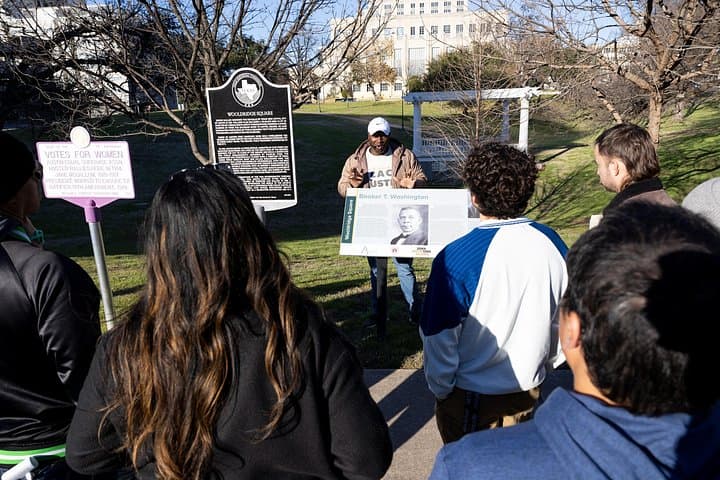
The route traces eras: Spanish colonial courts, antebellum labor systems, the convict-leasing teams that helped raise the Texas Capitol, and the migration that built churches, schools, and businesses around Wooldridge Square. Sweatt v. Painter and other Civil Rights battles surface at courthouse steps where law and lived experience collided, while Sixth Street’s entertainment district reveals a different history as an erstwhile center of Black commerce before displacement to east Austin.
Geology and urban form matter: Austin’s downtown rests on Edwards limestone and compacted Blackland soils, which dictated building styles and where communities first settled. Cultural artifacts—memorials, plaques, old storefronts—are compact but telling; they reward a slow pace and questions.
Practical guidance: expect two hours with multiple 10–30 minute stops, wear supportive shoes for city sidewalks, and bring water and a hat—Texas sun can be direct. The tour is suitable for most fitness levels, runs rain or shine (check the cancellation policy), and is accessible by public transit. Give yourself buffer time to explore the Texas African American History Memorial and nearby heritage sites after the walk—these add context and offer quieter moments to reflect on the stories you’ve been led through.
The route is roughly one mile with multiple stops; plan on 90–120 minutes to allow for discussion at each site.
Much of downtown is navigable by wheelchair, but confirm accessibility details with the operator for specific stop access and surface conditions.
Yes—content includes difficult historical topics; parents should consider age-appropriate readiness for discussions about enslavement and segregation.
Tours may be canceled in severe weather; light rain usually proceeds—bring a rain jacket and check cancellation policy at booking.
Black Austin Tours operates guided outdoor trips and adventures with an emphasis on safety, stewardship, and memorable experiences.
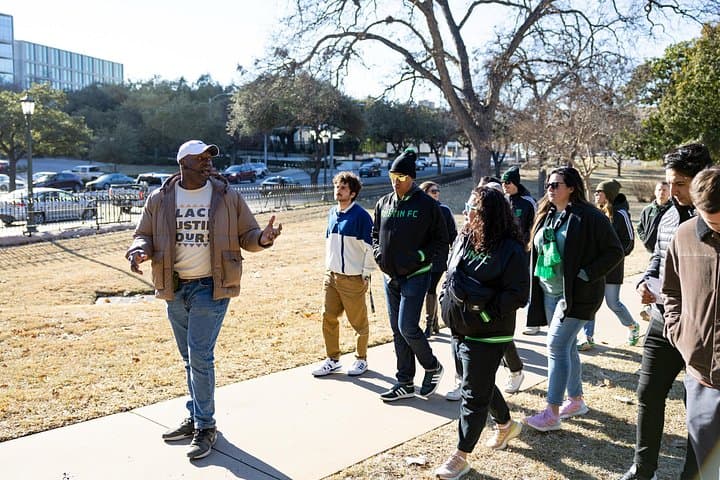


You step off Congress Avenue into a city that still carries the footprints of its past: broad boulevards, limestone facades, and the persistent pulse of traffic softened by park squares. The Downtown Black History Walk moves deliberately—one mile of pavement and pause—pulling historic threads through sites that shaped Austin’s African American community.
You step off Congress Avenue into a city that still carries the footprints of its past: broad boulevards, limestone facades, and the persistent pulse of traffic softened by park squares. The Downtown Black History Walk moves deliberately—one mile of pavement and pause—pulling historic threads through sites that shaped Austin’s African American community.
The route traces eras: Spanish colonial courts, antebellum labor systems, the convict-leasing teams that helped raise the Texas Capitol, and the migration that built churches, schools, and businesses around Wooldridge Square. Sweatt v. Painter and other Civil Rights battles surface at courthouse steps where law and lived experience collided, while Sixth Street’s entertainment district reveals a different history as an erstwhile center of Black commerce before displacement to east Austin.
Geology and urban form matter: Austin’s downtown rests on Edwards limestone and compacted Blackland soils, which dictated building styles and where communities first settled. Cultural artifacts—memorials, plaques, old storefronts—are compact but telling; they reward a slow pace and questions.
Practical guidance: expect two hours with multiple 10–30 minute stops, wear supportive shoes for city sidewalks, and bring water and a hat—Texas sun can be direct. The tour is suitable for most fitness levels, runs rain or shine (check the cancellation policy), and is accessible by public transit. Give yourself buffer time to explore the Texas African American History Memorial and nearby heritage sites after the walk—these add context and offer quieter moments to reflect on the stories you’ve been led through.
