THE ADVENTURE COLLECTIVE® · Independent discovery and booking for outdoor travel

Turn Miró’s circles into seismic traces and orbital arcs at a one-hour family workshop in Vic. Ideal for kids 6+, this hands-on session blends art, geology and astronomy for a playful museum visit.
Turn Miró’s circles into seismic traces and orbital arcs at a one-hour family workshop in Vic. Ideal for kids 6+, this hands-on session blends art, geology and astronomy for a playful museum visit.
Book with Museu Episcopal de Vic
Verified experiences and guided adventures in the surrounding area.
Operated by Museu Episcopal de Vic · Vic, Catalunya
Here in Vic, Catalonia, “Aquí i Allà. Terra i Cel al mateix temps” is a hands-on family workshop that folds together art, astronomy and geology in a bright room near the town center. Run in connection with the exhibition Joan Miró. Cercles, the session invites kids and adults to translate earthquake movements and planetary orbits—ideas Miró explored—into line, circle and motion on paper.
The workshop begins with a short presentation of Miró’s 1965 cover for the children’s magazine Cavall Fort and pieces from his Cercles portfolio. Participants use simple drawing tools to map seismic traces, sketch orbital arcs and create abstract compositions that echo both planetary motion and the stresses that shape Earth’s crust. That blending of scientific phenomena and Miró’s vocabulary—bold circles, playful lines and floating forms—makes the activity both an accessible art lesson and a tactile primer on geology and astronomy.
This family-friendly program is ideal for children aged six and up. Sessions typically last about an hour, focused on observation, experimentation and low-stakes making rather than formal instruction. Marta Ricart Masip, listed as the artist and co-curator in charge, guides the group through prompts that encourage close looking and playful problem-solving. Materials are basic—paper, pencils, ink and simple tools—so the emphasis stays on translation and imagination.
What sets this experience apart is its local cultural framing. Held in Vic, a Catalan town with a lively civic square and long craft traditions, the workshop connects Miró’s international language to local curiosity about the earth beneath our feet and the sky above. It’s an unusual way to visit an art exhibition: you do more than look, you make a physical record of forces that shape landscapes, from tectonic fault lines to orbital geometry.
Practical details are straightforward: plan for a one-hour block, bring a sketchbook if you have one, and come ready to experiment. The activity is a good pick for mixed-age families and for adults who want a short, interpretive art experience that doubles as a creative science primer. Whether you’re a visiting family seeking an engaging indoor activity on a rainy day or a local looking for a new way to read Miró’s forms, this workshop turns museum learning into a playful act of drawing the world—both terrestrial and celestial.
The workshop’s materials and prompts favor experimentation over precision, so participants of varied skill levels leave with striking abstract pieces and a clearer sense of geological and orbital processes. It’s a compact cultural stop that pairs well with a stroll through Vic’s historic center and a visit to nearby museums. If you’re planning a family itinerary in Catalonia, slot this session into a morning of exploration—bring layered clothing for variable indoor light and a sense of curiosity.
The program is recommended for children aged six and up; younger siblings may attend with supervision but activities are geared to school-age kids.
Sessions run approximately one hour, designed as a compact, family-friendly creative block.
Yes—paper, pencils, ink and simple drawing tools are provided as part of the workshop.
Advance booking is recommended, especially on weekends or during the Joan Miró exhibition run.
Absolutely—prompts emphasize experimentation over technique, so adults of all skill levels will find it accessible.
Meeting point details are not provided in the structured description; check your booking confirmation for the specific room and entry instructions.
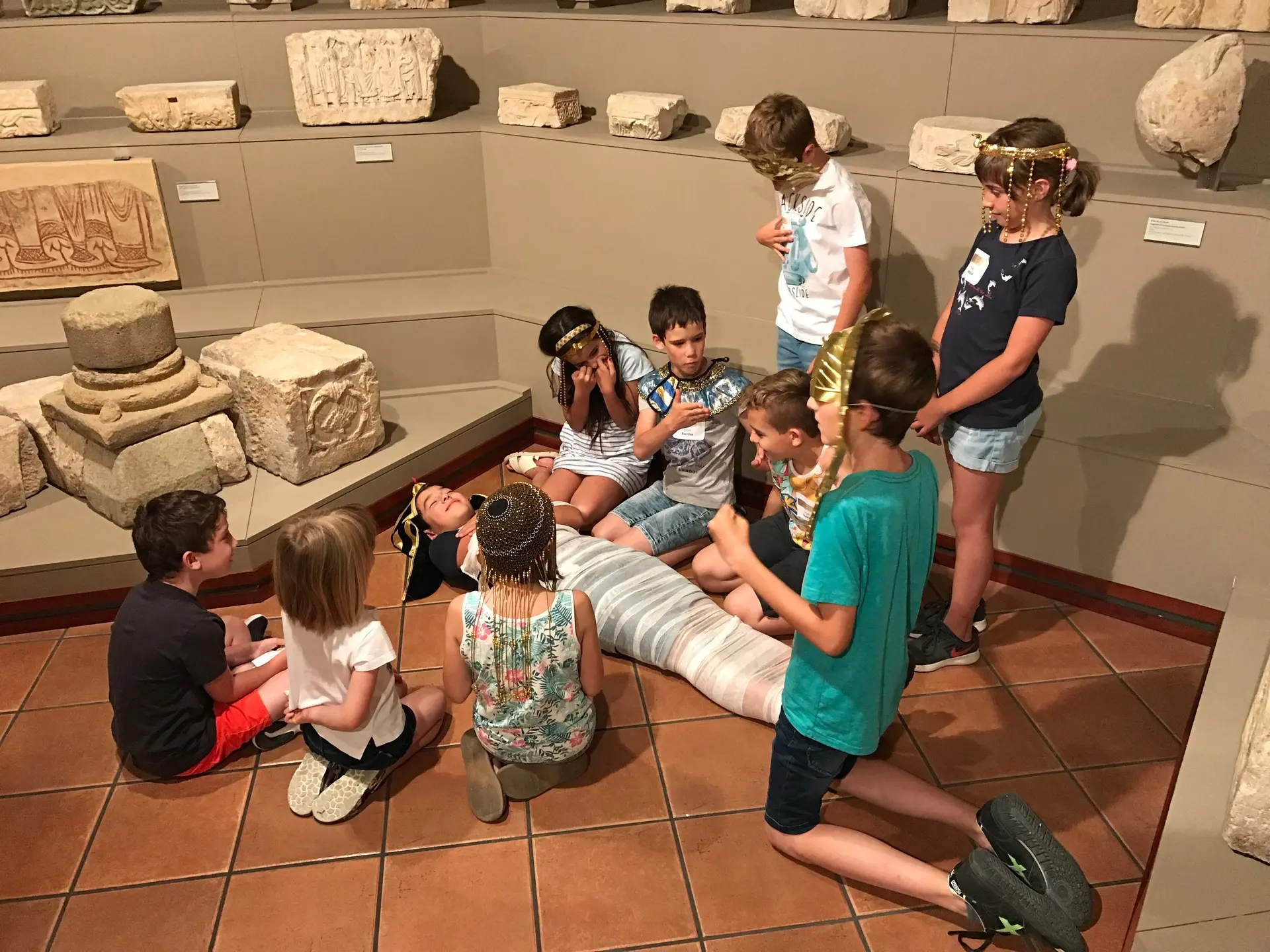
Museu Episcopal de Vic preserves and exhibits one of Catalonia’s most important collections of medieval art, with a particular focus on Romanesque and Gothic painting and decorative arts. Located in Vic, Catalunya, the museum presents altarpieces, retables, sculptures, and religious objects that illustrate medieval artistic techniques and regional identity. The MEV offers a range of visitor options including general admission, guided tours, family-oriented workshops, and an annual membership that provides unlimited access for a year. Exhibitions are displayed alongside interpretive labels and digital resources that help contextualize works of art and make medieval material culture accessible to diverse audiences. Guided experiences include themed tours such as studies of animals in medieval imagery, daily life in the Middle Ages, and masterworks of Catalan art. Family programs use storytelling, observation, and interactive activities to engage children aged 5–12, while specialty sessions explore topics such as ancient Egypt within a museum setting. The museum operates with professional curatorial staff and educational personnel who design programs for schools, families, and adult visitors. Conservation and presentation follow museum standards to preserve fragile works and communicate their historical significance. As a public cultural institution in Vic, the Museu Episcopal de Vic serves both residents and visitors seeking to explore Catalonia’s medieval heritage through original objects, careful interpretation, and hands-on learning opportunities. The Museu Episcopal de Vic integrates innovative digital experiences and multimedia displays that complement physical objects. Information is presented clearly to support research, school visits, tourist exploration, and independent study of medieval art and preservation.

Book with Museu Episcopal de Vic