THE ADVENTURE COLLECTIVE® · Independent discovery and booking for outdoor travel

Walk two hours through Queensland history at Drayton & Toowoomba Cemetery — a guided tour that reveals the people, customs and stone-carving that shaped the region. Expect close-up history, cultural insights and practical tips for a respectful visit.
Walk two hours through Queensland history at Drayton & Toowoomba Cemetery — a guided tour that reveals the people, customs and stone-carving that shaped the region. Expect close-up history, cultural insights and practical tips for a respectful visit.
The gravel path crunches underfoot and a line of weather-darkened headstones leans toward the sky like readers in an open-air archive. On this two-hour walk through Drayton & Toowoomba Cemetery you move through the lives of early settlers, miners and townspeople whose names still mark Toowoomba’s streets and institutions.
Verified experiences and guided adventures in the surrounding area.
Operated by Cemetery Tours Toowoomba · Toowoomba, Queensland
The gravel path crunches underfoot and a line of weather-darkened headstones leans toward the sky like readers in an open-air archive. On this two-hour walk through Drayton & Toowoomba Cemetery you move through the lives of early settlers, miners and townspeople whose names still mark Toowoomba’s streets and institutions.
Founded in the 19th century as the region expanded inland from Brisbane, the cemetery maps phases of growth: simple timber markers for early burials, ornate sandstone monuments from the Victorian boom and later Commonwealth war graves. The rolling basalt soils of the Darling Downs lend a sturdy feel underfoot and have preserved intricate stone carving that tells as much about craftsmanship as it does about grief.
Beyond monuments, the tour touches on local culture — Irish and German immigrant communities, the impact of the 1893 floods on burials, and stories of civic leaders and the occasional scandal. A lively guide highlights symbolism in carving and gives context to funerary customs that changed with prosperity and loss.
Practical guidance: the route is flat, suited to most fitness levels, and moves at a steady walking pace; wear supportive shoes and sun protection — the cemetery has areas with limited shade. Bring a water bottle and a small notebook if you like to jot names or sketch detail. The guide encourages respectful photography and staying on marked paths to protect turf and graves. Children under 12 are discouraged due to some graphic topics. The walk’s intimacy rewards curious listeners: expect local anecdotes, close-up views of stonework, and a quiet, reflective pace that makes history feel immediate.
The tour is rated easy — it’s primarily flat walking over about two hours with regular stops; suitable for most adults and older children (note: children under 12 are discouraged).
Service animals are allowed; other pets are not recommended to keep the experience respectful and undisturbed for other visitors.
Meeting and end points are at the cemetery entrance specified on your booking confirmation; exact meeting details are sent with your ticket.
Yes, photographing monuments and landscape is allowed, but the guide asks visitors to be respectful: avoid photographing people who are mourning and do not step on graves or flowerbeds.
Cemetery Tours Toowoomba operates guided outdoor trips and adventures with an emphasis on safety, stewardship, and memorable experiences.
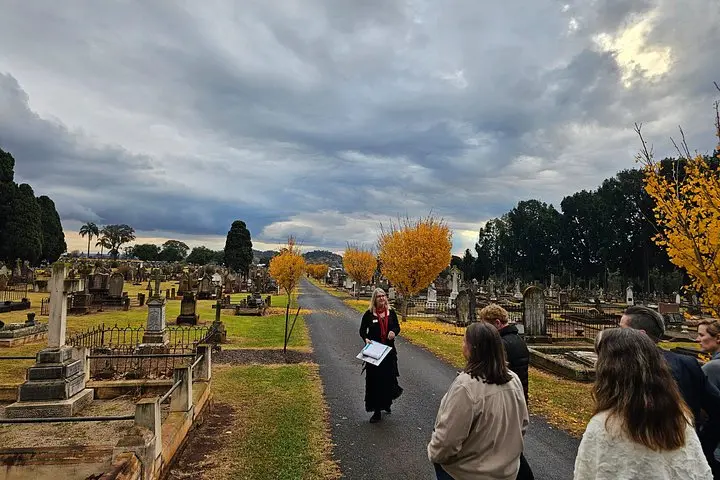
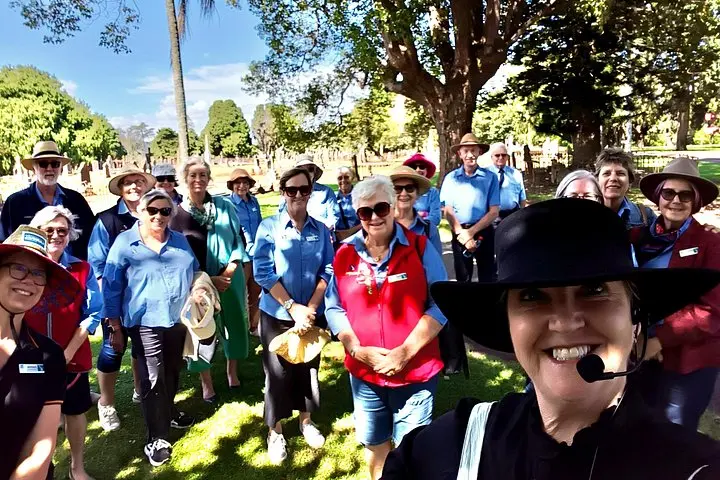
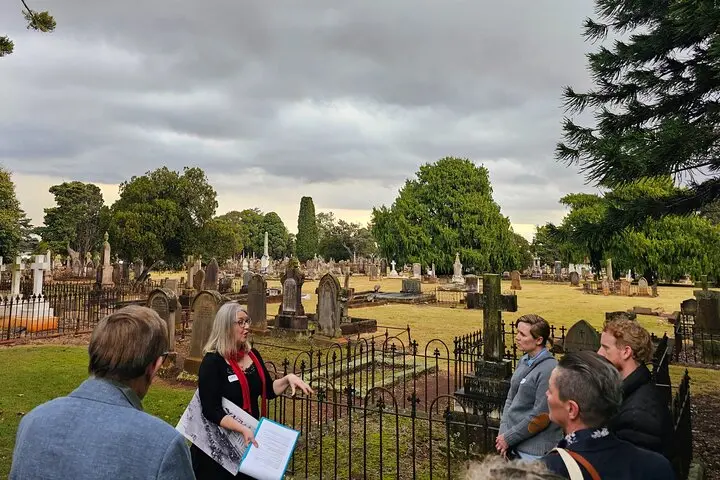
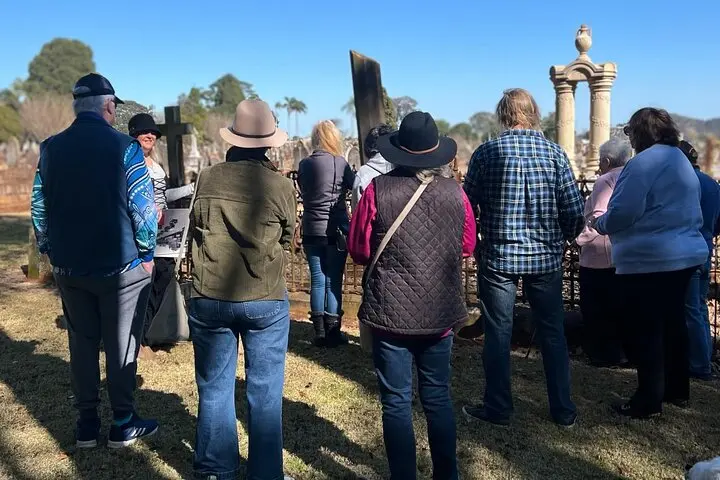
The gravel path crunches underfoot and a line of weather-darkened headstones leans toward the sky like readers in an open-air archive. On this two-hour walk through Drayton & Toowoomba Cemetery you move through the lives of early settlers, miners and townspeople whose names still mark Toowoomba’s streets and institutions.
The gravel path crunches underfoot and a line of weather-darkened headstones leans toward the sky like readers in an open-air archive. On this two-hour walk through Drayton & Toowoomba Cemetery you move through the lives of early settlers, miners and townspeople whose names still mark Toowoomba’s streets and institutions.
Founded in the 19th century as the region expanded inland from Brisbane, the cemetery maps phases of growth: simple timber markers for early burials, ornate sandstone monuments from the Victorian boom and later Commonwealth war graves. The rolling basalt soils of the Darling Downs lend a sturdy feel underfoot and have preserved intricate stone carving that tells as much about craftsmanship as it does about grief.
Beyond monuments, the tour touches on local culture — Irish and German immigrant communities, the impact of the 1893 floods on burials, and stories of civic leaders and the occasional scandal. A lively guide highlights symbolism in carving and gives context to funerary customs that changed with prosperity and loss.
Practical guidance: the route is flat, suited to most fitness levels, and moves at a steady walking pace; wear supportive shoes and sun protection — the cemetery has areas with limited shade. Bring a water bottle and a small notebook if you like to jot names or sketch detail. The guide encourages respectful photography and staying on marked paths to protect turf and graves. Children under 12 are discouraged due to some graphic topics. The walk’s intimacy rewards curious listeners: expect local anecdotes, close-up views of stonework, and a quiet, reflective pace that makes history feel immediate.