THE ADVENTURE COLLECTIVE® · Independent discovery and booking for outdoor travel

Pilot a Can-Am X3 Turbo across Baja’s desert washes, drop onto Playa Migriño for possible gray whale sightings, and finish with a local tequila tasting. This 2–3 hour family-friendly off-road loop blends adrenaline, coastal views, and cultural notes.
Pilot a Can-Am X3 Turbo across Baja’s desert washes, drop onto Playa Migriño for possible gray whale sightings, and finish with a local tequila tasting. This 2–3 hour family-friendly off-road loop blends adrenaline, coastal views, and cultural notes.
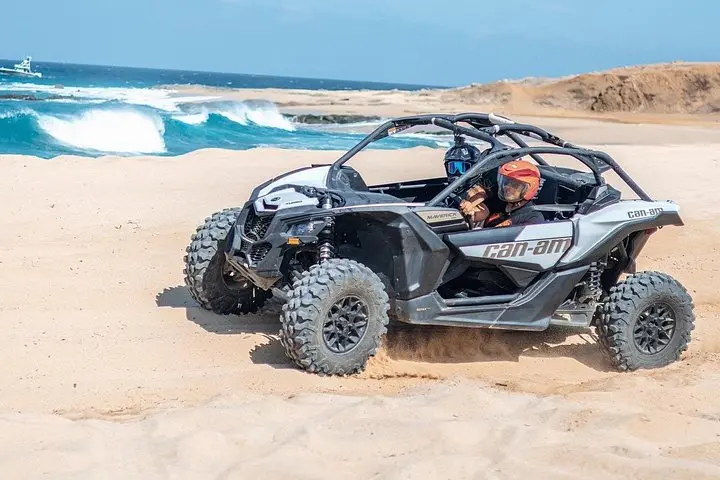
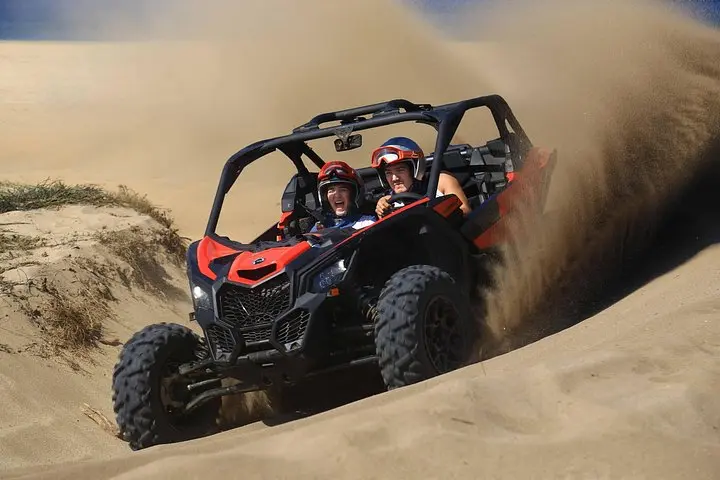
The engine rumbles to life and the desert opens in front of you — ochre dunes, creosote scrub, and a ribbon of white sand where the Pacific waits. On this half-day UTV excursion north of Cabo San Lucas you pilot a Can-Am X3 Turbo over bumpy washes and hardpan trails, then roll onto Playa Migriño where the ocean and desert meet and migratory gray whales can be spotted in winter.
Verified experiences and guided adventures in the surrounding area.
Operated by Tours Mexico · Cabo San Lucas, Baja California Sur
The engine rumbles to life and the desert opens in front of you — ochre dunes, creosote scrub, and a ribbon of white sand where the Pacific waits. On this half-day UTV excursion north of Cabo San Lucas you pilot a Can-Am X3 Turbo over bumpy washes and hardpan trails, then roll onto Playa Migriño where the ocean and desert meet and migratory gray whales can be spotted in winter.
Baja California Sur wears a recent human history: ranching and fishing villages gave way to tourism after mid-20th-century development, but the geology here is older — tectonic uplift and volcanic flows created the rocky foothills and broad alluvial fans you cross. Guides point out resilient flora adapted to arid soils and explain regional customs; the tour often finishes with a short tequila tasting, connecting foodways to agave culture from central Mexico.
Expect varied terrain: sandy strips, compacted desert trails and brief beach runs; the route is family-friendly but requires attention when negotiating soft sand. The experience is sensory — wind lifting grit, salt on the breeze, and the sudden hush when a whale exhales offshore. Photographers and first-time off-road drivers alike find memorable moments.
Practical notes: allow 2–3 hours, wear closed-toe shoes, bring sun protection and a light layer for ocean breezes. Follow guide instructions, secure loose items, and keep distance from wildlife. If visiting January–March, scan the horizon for whales and keep cameras ready — they can make a quiet day unforgettable.
Yes — drivers must present a valid government-issued driver’s license; guides will brief on vehicle operation before departure.
Gray whale season runs roughly January through March; mornings can be calmer for sightings, though whales can appear anytime during those months.
Yes — tours are family-friendly, but children must fit into the vehicle safely and follow guide instructions; check age/height rules with the operator when booking.
Tours may be canceled for unsafe conditions; the operator typically offers a full refund if canceled at least 24 hours before departure or if weather prevents safe operation.
Tours Mexico operates guided outdoor trips and adventures with an emphasis on safety, stewardship, and memorable experiences.


The engine rumbles to life and the desert opens in front of you — ochre dunes, creosote scrub, and a ribbon of white sand where the Pacific waits. On this half-day UTV excursion north of Cabo San Lucas you pilot a Can-Am X3 Turbo over bumpy washes and hardpan trails, then roll onto Playa Migriño where the ocean and desert meet and migratory gray whales can be spotted in winter.
The engine rumbles to life and the desert opens in front of you — ochre dunes, creosote scrub, and a ribbon of white sand where the Pacific waits. On this half-day UTV excursion north of Cabo San Lucas you pilot a Can-Am X3 Turbo over bumpy washes and hardpan trails, then roll onto Playa Migriño where the ocean and desert meet and migratory gray whales can be spotted in winter.
Baja California Sur wears a recent human history: ranching and fishing villages gave way to tourism after mid-20th-century development, but the geology here is older — tectonic uplift and volcanic flows created the rocky foothills and broad alluvial fans you cross. Guides point out resilient flora adapted to arid soils and explain regional customs; the tour often finishes with a short tequila tasting, connecting foodways to agave culture from central Mexico.
Expect varied terrain: sandy strips, compacted desert trails and brief beach runs; the route is family-friendly but requires attention when negotiating soft sand. The experience is sensory — wind lifting grit, salt on the breeze, and the sudden hush when a whale exhales offshore. Photographers and first-time off-road drivers alike find memorable moments.
Practical notes: allow 2–3 hours, wear closed-toe shoes, bring sun protection and a light layer for ocean breezes. Follow guide instructions, secure loose items, and keep distance from wildlife. If visiting January–March, scan the horizon for whales and keep cameras ready — they can make a quiet day unforgettable.