THE ADVENTURE COLLECTIVE® · Independent discovery and booking for outdoor travel

Trade the ship for an open-top convertible and a ribbon of coastal road that climbs toward Cap Canaille. This five-to-seven-hour drive from Marseille to Cassis combines panoramic viewpoints, short seaside walks, and a chance to taste Provençal harbor life.
Trade the ship for an open-top convertible and a ribbon of coastal road that climbs toward Cap Canaille. This five-to-seven-hour drive from Marseille to Cassis combines panoramic viewpoints, short seaside walks, and a chance to taste Provençal harbor life.
You slide out of Marseille’s shadow into wind and light—the roof of a VW Beetle folded back, the Mediterranean pressing blue at the horizon. The van that shepherds the convoy pulls away first, full of local stories: fishermen’s routes, wartime watchposts, and the odd Picasso brushstroke left on a cove. For five to seven hours you’ll trade cramped ship corridors for coastal hairpins, stopping where the road and sea demand a pause.
Verified experiences and guided adventures in the surrounding area.
Operated by Aixellcars ste · Marseille, Provence-Alpes-Côte d'Azur
You slide out of Marseille’s shadow into wind and light—the roof of a VW Beetle folded back, the Mediterranean pressing blue at the horizon. The van that shepherds the convoy pulls away first, full of local stories: fishermen’s routes, wartime watchposts, and the odd Picasso brushstroke left on a cove. For five to seven hours you’ll trade cramped ship corridors for coastal hairpins, stopping where the road and sea demand a pause.
The route threads history into limestone. Marseille, founded by Greek sailors in 600 BC, sends you off with a squawk of gulls and the scent of pastis. The Corniche Kennedy and the Auffes valley recall 19th-century promenades and working harbors; Cap Canaille, at 394 meters, is puddingstone and sandstone heaved by ancient tectonics and then polished by wind into sheer cliffs. The Calanques around Cassis are young geologically but brutal in appearance—white limestone cleaved into narrow coves where turquoise water dares you to get close.
Cassis itself remains a compact, working port: fishermen mending nets, terraces pouring rosé, and a market where cassis white wine comes from the slopes above town. Artists like Braque and Picasso found the light irresistible at Figuerolles; you’ll understand why when the cove glows late-afternoon. Be aware: the Route des Crêtes can close in high heat or strong wind, and authorities limit access to protect fragile calanque ecosystems.
Practical side: the tour departs from the Marseille cruise terminal with pickup in front of your ship or nearby hotels. Groups are small—two minivans escort a fleet of up to 16 participants, with a maximum of four people per car. Drivers must present a valid national driving license if they take the wheel of a convertible; children under eight are not permitted for safety. Expect return to the port between 15:00 and 16:30 depending on traffic and stops.
Pace your day around light—early departures beat crowds and heat on the cliffs. Carry a light jacket: wind at Cap Canaille can strip warmth fast even in summer. Footwear: sturdier shoes for short shore walks and the 87 steps down to Figuerolles. Bring sunscreen, a refillable bottle (the tour supplies a single small bottle), and a camera with a polarizer to cut glare on the water. If you want to linger in Cassis for lunch, tell your guide ahead—timing is flexible but the ship’s schedule is not.
This is a day of movement—engine hum and coastal views—and of small discoveries: a painted cove, a cliffside road that seems to have been carved for show, and a port town that still sells its morning catch. It’s Provence with the roof down and the map wide open.
Yes—if you intend to drive one of the convertibles you must present a valid national driving licence; otherwise you can join as a passenger.
The excursion lasts approximately 5–7 hours with return expected between 3:00 PM and 4:30 PM depending on traffic and stops—timings can vary by season.
Children under eight are generally not admitted for safety reasons; verify age restrictions with the operator before booking.
If the route is closed for wind or heat, the itinerary may be adjusted; local guides will choose an alternate scenic route or stops like La Ciotat or other viewpoints.
Food is not included beyond a small bottle of water; there is a planned stop in Cassis where you can purchase lunch at cafés or restaurants.
This is a day excursion from the cruise port—bring a small day pack; oversized luggage is not appropriate for convertibles and is not accommodated.
Aixellcars ste operates guided outdoor trips and adventures with an emphasis on safety, stewardship, and memorable experiences.
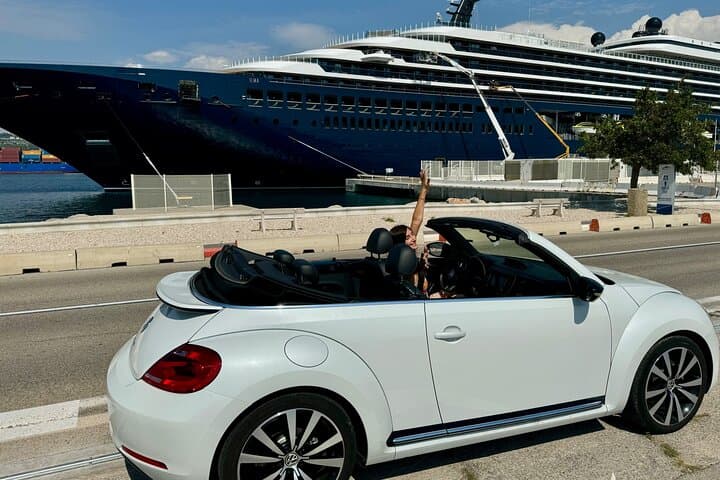


You slide out of Marseille’s shadow into wind and light—the roof of a VW Beetle folded back, the Mediterranean pressing blue at the horizon. The van that shepherds the convoy pulls away first, full of local stories: fishermen’s routes, wartime watchposts, and the odd Picasso brushstroke left on a cove. For five to seven hours you’ll trade cramped ship corridors for coastal hairpins, stopping where the road and sea demand a pause.
You slide out of Marseille’s shadow into wind and light—the roof of a VW Beetle folded back, the Mediterranean pressing blue at the horizon. The van that shepherds the convoy pulls away first, full of local stories: fishermen’s routes, wartime watchposts, and the odd Picasso brushstroke left on a cove. For five to seven hours you’ll trade cramped ship corridors for coastal hairpins, stopping where the road and sea demand a pause.
The route threads history into limestone. Marseille, founded by Greek sailors in 600 BC, sends you off with a squawk of gulls and the scent of pastis. The Corniche Kennedy and the Auffes valley recall 19th-century promenades and working harbors; Cap Canaille, at 394 meters, is puddingstone and sandstone heaved by ancient tectonics and then polished by wind into sheer cliffs. The Calanques around Cassis are young geologically but brutal in appearance—white limestone cleaved into narrow coves where turquoise water dares you to get close.
Cassis itself remains a compact, working port: fishermen mending nets, terraces pouring rosé, and a market where cassis white wine comes from the slopes above town. Artists like Braque and Picasso found the light irresistible at Figuerolles; you’ll understand why when the cove glows late-afternoon. Be aware: the Route des Crêtes can close in high heat or strong wind, and authorities limit access to protect fragile calanque ecosystems.
Practical side: the tour departs from the Marseille cruise terminal with pickup in front of your ship or nearby hotels. Groups are small—two minivans escort a fleet of up to 16 participants, with a maximum of four people per car. Drivers must present a valid national driving license if they take the wheel of a convertible; children under eight are not permitted for safety. Expect return to the port between 15:00 and 16:30 depending on traffic and stops.
Pace your day around light—early departures beat crowds and heat on the cliffs. Carry a light jacket: wind at Cap Canaille can strip warmth fast even in summer. Footwear: sturdier shoes for short shore walks and the 87 steps down to Figuerolles. Bring sunscreen, a refillable bottle (the tour supplies a single small bottle), and a camera with a polarizer to cut glare on the water. If you want to linger in Cassis for lunch, tell your guide ahead—timing is flexible but the ship’s schedule is not.
This is a day of movement—engine hum and coastal views—and of small discoveries: a painted cove, a cliffside road that seems to have been carved for show, and a port town that still sells its morning catch. It’s Provence with the roof down and the map wide open.