THE ADVENTURE COLLECTIVE® · Independent discovery and booking for outdoor travel

Leave the city behind for a long coastal ribbon that links Shanghai with Yangshan, the world’s largest deep-water port. This private transfer delivers close-up views of Donghai Bridge, industrial seascapes, and late-afternoon photo opportunities with hotel pickup and drop-off.
Leave the city behind for a long coastal ribbon that links Shanghai with Yangshan, the world’s largest deep-water port. This private transfer delivers close-up views of Donghai Bridge, industrial seascapes, and late-afternoon photo opportunities with hotel pickup and drop-off.
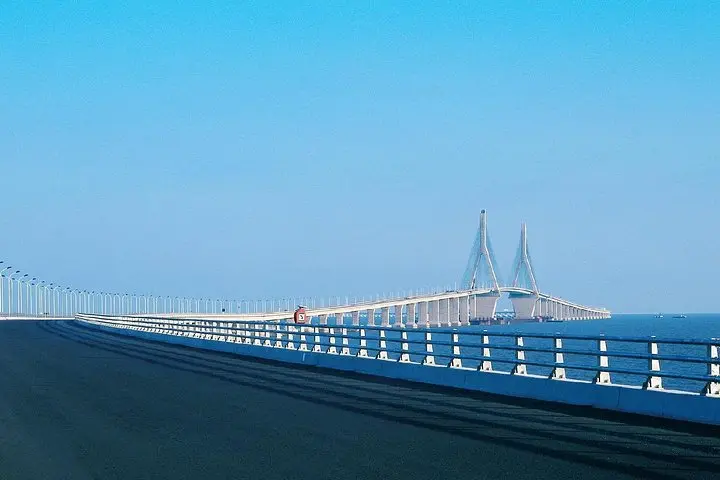
The road slides out of urban Shanghai, buildings thinning to salt-scented air and a long ribbon of concrete that dares you eastward: the Donghai Bridge. From the passenger seat you watch the city give way to wide sky and shipping lanes, the bridge curving like an engineered causeway over the East China Sea.
Verified experiences and guided adventures in the surrounding area.
Operated by Amazing Shanghai Trip · Shanghai, Shanghai
The road slides out of urban Shanghai, buildings thinning to salt-scented air and a long ribbon of concrete that dares you eastward: the Donghai Bridge. From the passenger seat you watch the city give way to wide sky and shipping lanes, the bridge curving like an engineered causeway over the East China Sea.
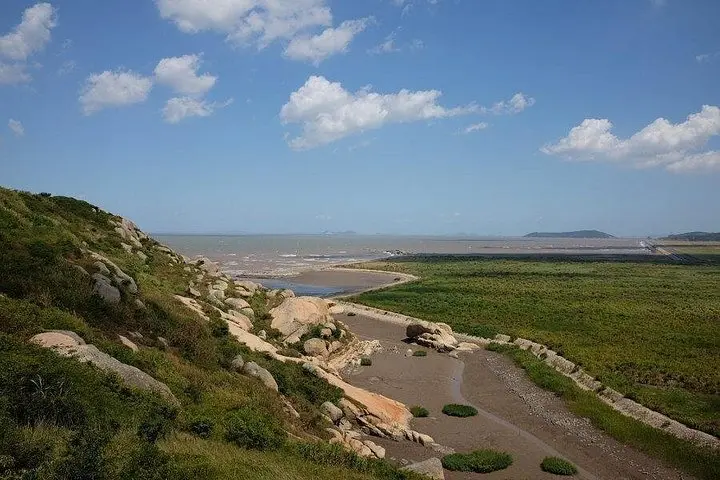
Opened in the early 2000s, Donghai was China’s first sea-crossing bridge, built to connect the mainland to Yangshan Deep-Water Port — now one of the world’s largest container hubs. Geology here is defined by shallow bays and reclaimed land; the port itself sits on man-made islands carved from mudflats and engineered fill. The scene is industrial but dramatic: cranes puncture the skyline, giant vessels move with machine-like choreography, and tides sketch temporary shorelines.
Culturally, this route represents modern China’s global trade reach; it’s a place where infrastructure meets oceanic logistics. Local drivers and workers keep a steady rhythm, and English may be limited, so patience and simple phrases go far.
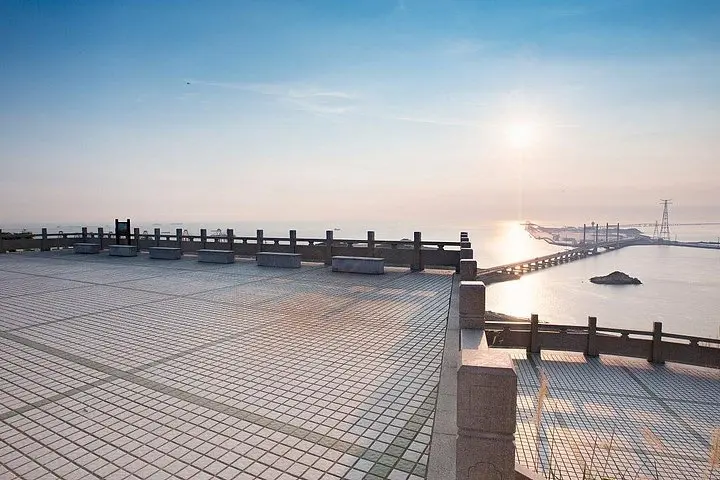
Practical guidance: plan for a 6–8 hour round trip from central Shanghai with hotel pickup and drop-off. Photography is best late afternoon when light softens metal and water; note that some port viewing areas can be closed during the day and access often improves after 17:00 but isn’t guaranteed. Wear comfortable shoes for short walks, bring a light windproof layer for exposed viewpoints, and carry your passport if you plan any formal check-ins. Expect basic English from drivers; use mobile translation or the operator’s contact if needed. This is an easy, low-effort way to witness one of the planet’s busiest maritime gateways up close.
Access policies vary; some areas are closed during daytime and access is sometimes only allowed after 17:00 — confirm with your operator before booking.
Drivers typically have basic English; the local operator can be contacted via the driver’s phone for translation or clarification.
Yes — the trip is categorized as easy with mostly seated time; children must be accompanied by an adult and short walks are flat and brief.
Stops are limited near the bridge and port; bring snacks and use hotel facilities before departure or ask the driver to stop where available.
Amazing Shanghai Trip operates guided outdoor trips and adventures with an emphasis on safety, stewardship, and memorable experiences.
The road slides out of urban Shanghai, buildings thinning to salt-scented air and a long ribbon of concrete that dares you eastward: the Donghai Bridge. From the passenger seat you watch the city give way to wide sky and shipping lanes, the bridge curving like an engineered causeway over the East China Sea.
The road slides out of urban Shanghai, buildings thinning to salt-scented air and a long ribbon of concrete that dares you eastward: the Donghai Bridge. From the passenger seat you watch the city give way to wide sky and shipping lanes, the bridge curving like an engineered causeway over the East China Sea.
Opened in the early 2000s, Donghai was China’s first sea-crossing bridge, built to connect the mainland to Yangshan Deep-Water Port — now one of the world’s largest container hubs. Geology here is defined by shallow bays and reclaimed land; the port itself sits on man-made islands carved from mudflats and engineered fill. The scene is industrial but dramatic: cranes puncture the skyline, giant vessels move with machine-like choreography, and tides sketch temporary shorelines.
Culturally, this route represents modern China’s global trade reach; it’s a place where infrastructure meets oceanic logistics. Local drivers and workers keep a steady rhythm, and English may be limited, so patience and simple phrases go far.
Practical guidance: plan for a 6–8 hour round trip from central Shanghai with hotel pickup and drop-off. Photography is best late afternoon when light softens metal and water; note that some port viewing areas can be closed during the day and access often improves after 17:00 but isn’t guaranteed. Wear comfortable shoes for short walks, bring a light windproof layer for exposed viewpoints, and carry your passport if you plan any formal check-ins. Expect basic English from drivers; use mobile translation or the operator’s contact if needed. This is an easy, low-effort way to witness one of the planet’s busiest maritime gateways up close.