THE ADVENTURE COLLECTIVE® · Independent discovery and booking for outdoor travel

Drive a Polaris RZR across Dubai’s red dunes, ride a camel, and try sandboarding on steep faces in a four-hour desert safari. Practical safety tips and what to expect for first-time dune drivers and sandboarders.
Drive a Polaris RZR across Dubai’s red dunes, ride a camel, and try sandboarding on steep faces in a four-hour desert safari. Practical safety tips and what to expect for first-time dune drivers and sandboarders.
You arrive on a wind-scrubbed ridge and the dunes ahead look alive—walls of red sand that shift and gleam as the sun moves. Engines purr, guides check helmets, and the Polaris RZR bites into the slope; the desert answers, daring you to follow its ridgelines.
Verified experiences and guided adventures in the surrounding area.
Operated by RedX Dubai Desert Safari · Dubai, Dubai
You arrive on a wind-scrubbed ridge and the dunes ahead look alive—walls of red sand that shift and gleam as the sun moves. Engines purr, guides check helmets, and the Polaris RZR bites into the slope; the desert answers, daring you to follow its ridgelines.
This excursion runs in the red-sand stretches outside Dubai, an environment shaped by aeolian forces and ancient trade routes. Bedouin history and camel culture are visible in simple ways: the slow, deliberate gait of a camel beside the raucous off-road craft, and the same dune forms travelers crossed for centuries. Geologically, the iron-stained sand comes from weathered ophiolite and offshore sediments, piled by wind into the steep faces that sandboarders seek.
Expect a program that mixes guided self-drive buggy time, a short camel ride, and sandboarding with photography stops. The route typically stays on established tracks to reduce environmental impact and to keep rides predictable for novice drivers.
Practically, go early or late to avoid heat; wear sun protection and closed shoes for sand traction; bring a light layer for post-sunset chill. Stay hydrated—the operators supply bottled water—and follow crew instructions during dune climbs and descents. If you’re driving, listen to the safety briefing and drive within the guide’s limits; passengers should brace for sudden gradients.
In four hours you’ll feel the desert’s pace: fast on a dune face, patient beside a tethered camel, and quiet while the sand settles after your tracks.
No formal license is usually required, but drivers should be comfortable with manual controls and receive an on-site safety briefing and guided route instructions.
Yes—short camel rides (typically 10–20 minutes) are included as a cultural element rather than a long trek.
Wear closed shoes and comfortable pants; operators often provide basic boards and instruction for beginners.
Children can usually join but infants must sit on laps; the operator advises against participation for those with spinal or serious cardiovascular conditions.
RedX Dubai Desert Safari operates guided outdoor trips and adventures with an emphasis on safety, stewardship, and memorable experiences.
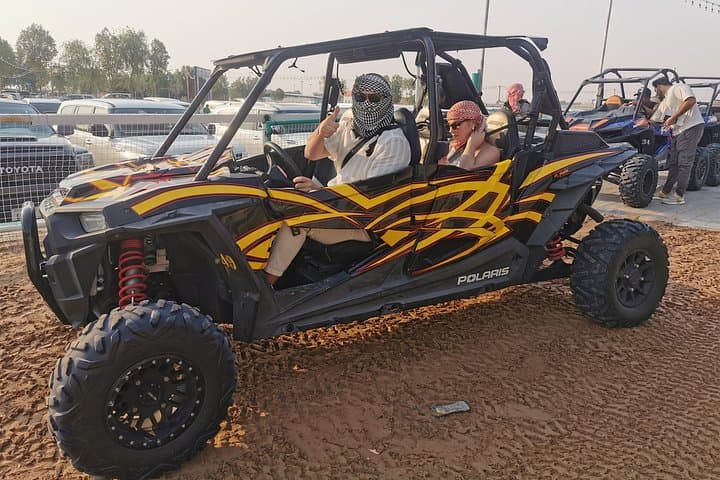
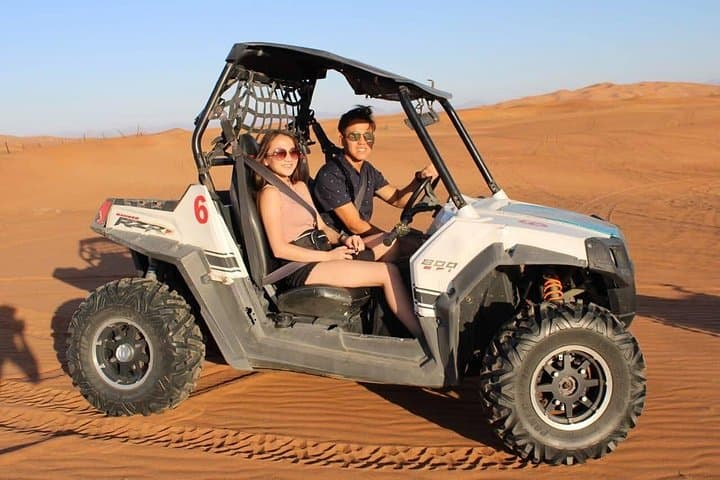
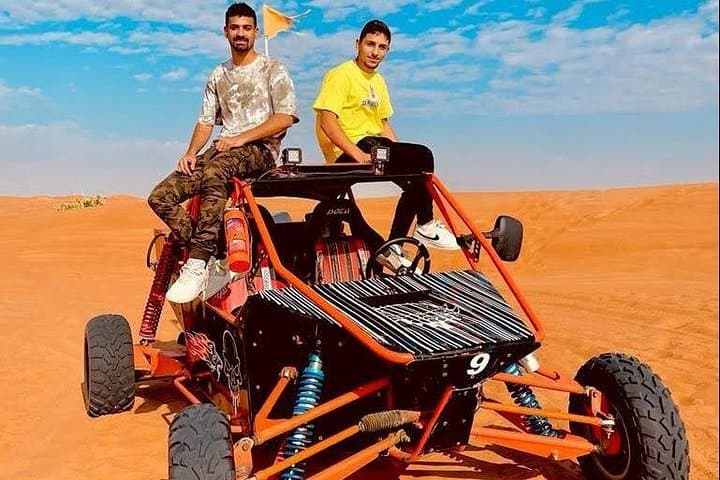
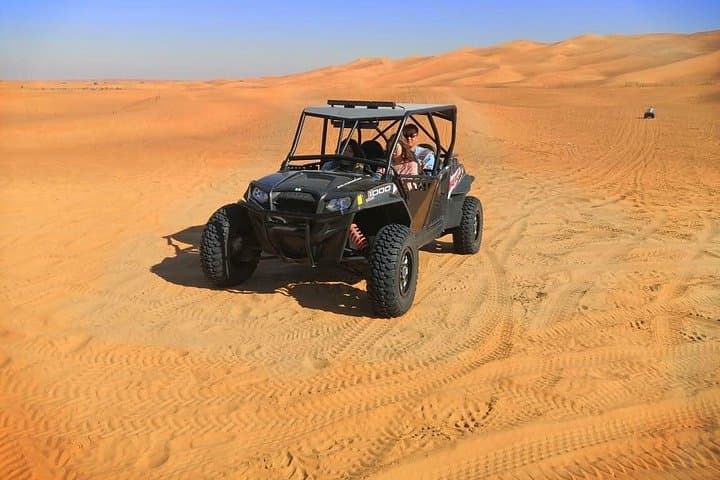
You arrive on a wind-scrubbed ridge and the dunes ahead look alive—walls of red sand that shift and gleam as the sun moves. Engines purr, guides check helmets, and the Polaris RZR bites into the slope; the desert answers, daring you to follow its ridgelines.
You arrive on a wind-scrubbed ridge and the dunes ahead look alive—walls of red sand that shift and gleam as the sun moves. Engines purr, guides check helmets, and the Polaris RZR bites into the slope; the desert answers, daring you to follow its ridgelines.
This excursion runs in the red-sand stretches outside Dubai, an environment shaped by aeolian forces and ancient trade routes. Bedouin history and camel culture are visible in simple ways: the slow, deliberate gait of a camel beside the raucous off-road craft, and the same dune forms travelers crossed for centuries. Geologically, the iron-stained sand comes from weathered ophiolite and offshore sediments, piled by wind into the steep faces that sandboarders seek.
Expect a program that mixes guided self-drive buggy time, a short camel ride, and sandboarding with photography stops. The route typically stays on established tracks to reduce environmental impact and to keep rides predictable for novice drivers.
Practically, go early or late to avoid heat; wear sun protection and closed shoes for sand traction; bring a light layer for post-sunset chill. Stay hydrated—the operators supply bottled water—and follow crew instructions during dune climbs and descents. If you’re driving, listen to the safety briefing and drive within the guide’s limits; passengers should brace for sudden gradients.
In four hours you’ll feel the desert’s pace: fast on a dune face, patient beside a tethered camel, and quiet while the sand settles after your tracks.