THE ADVENTURE COLLECTIVE® · Independent discovery and booking for outdoor travel

Stand between Old Dubai and the future at the Dubai Frame: a 150m-high picture of the city with galleries, a glass-bottom skybridge and panoramic views. Plan 1.5–2 hours and aim for morning or late afternoon for the best light.
Stand between Old Dubai and the future at the Dubai Frame: a 150m-high picture of the city with galleries, a glass-bottom skybridge and panoramic views. Plan 1.5–2 hours and aim for morning or late afternoon for the best light.
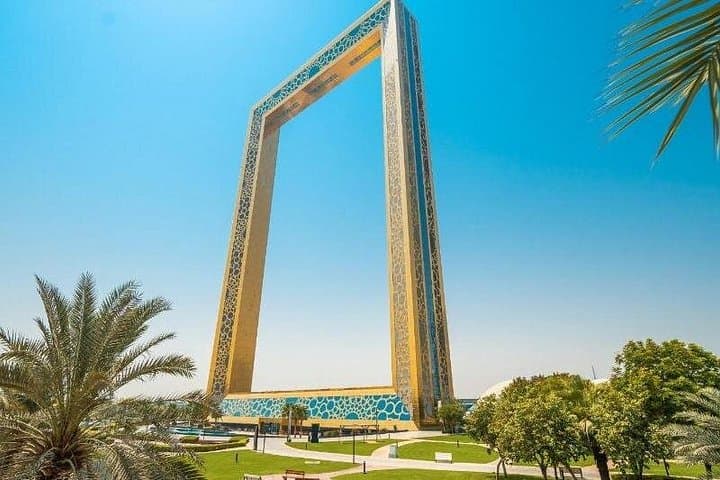
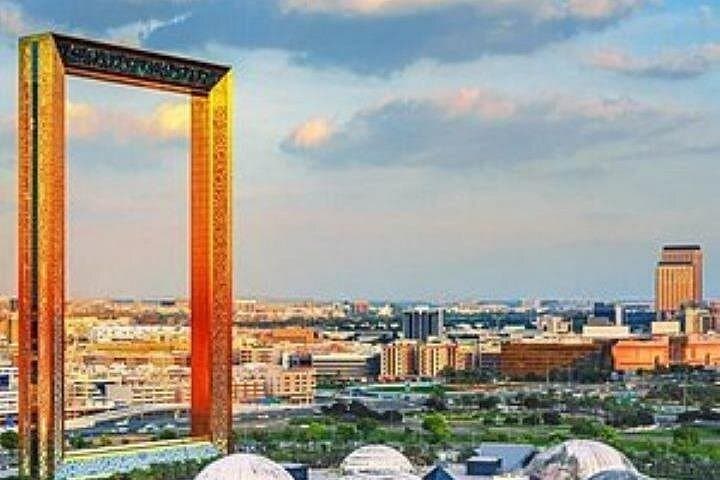
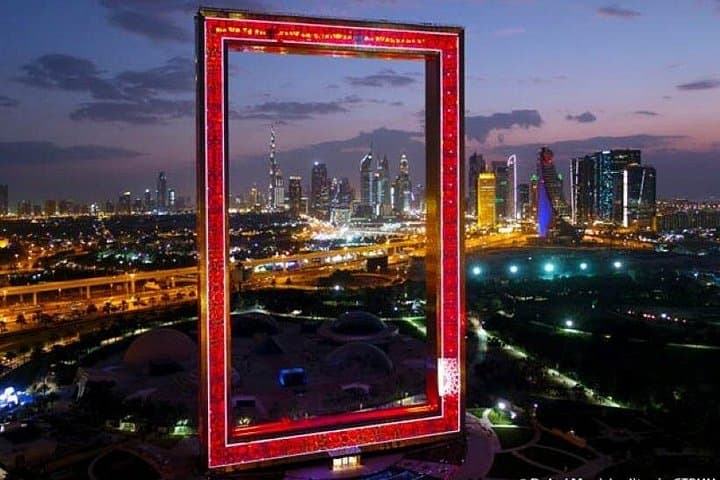
You step into Zabeel Park and the frame dominates the horizon—two golden towers joined by a 50-meter sky bridge that frames the city like a living photograph. An elevator accelerates you 48 floors in 75 seconds to the Sky Deck, where the city splits: to the north, low-rise Old Dubai and the meandering Dubai Creek; to the south, a forest of glass and steel led by the Burj Khalifa. The glass-bottomed bridge unwraps the vertigo, the mezzanine Old Dubai Gallery grounds the visit with multimedia on pearling, fishing and rapid urban growth, and a vortex tunnel gestures toward a future the city is actively constructing.
Verified experiences and guided adventures in the surrounding area.
Operated by Holidaysworld Tourism · Dubai, Dubai
You step into Zabeel Park and the frame dominates the horizon—two golden towers joined by a 50-meter sky bridge that frames the city like a living photograph. An elevator accelerates you 48 floors in 75 seconds to the Sky Deck, where the city splits: to the north, low-rise Old Dubai and the meandering Dubai Creek; to the south, a forest of glass and steel led by the Burj Khalifa. The glass-bottomed bridge unwraps the vertigo, the mezzanine Old Dubai Gallery grounds the visit with multimedia on pearling, fishing and rapid urban growth, and a vortex tunnel gestures toward a future the city is actively constructing.
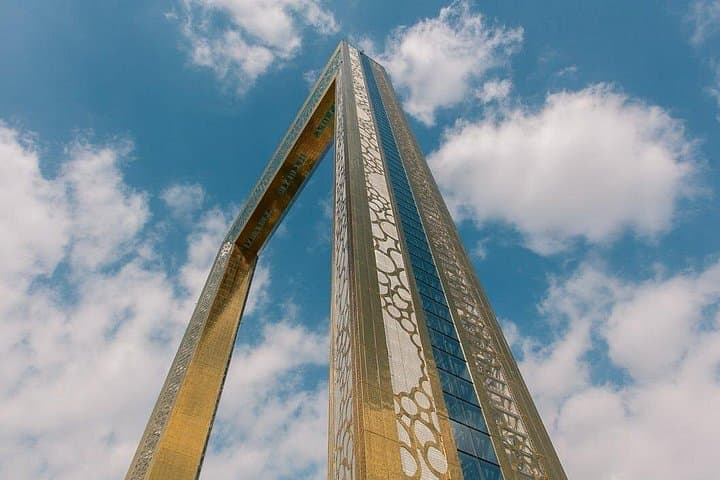
Architecturally conceived via an international competition and clad in more than 15,000 square meters of gold-colored stainless steel, the Frame stands 150.24 meters tall and 95.53 meters wide. Geologically, you're on Dubai’s flat coastal plain where the land meets the tidal creek—this is an engineered urban landscape more than natural topography. Culturally the attraction intentionally contrasts past and present, making it a compact primer on Emirati identity and the city's dramatic 20th–21st century transformation.
Practical notes: allow about 1.5–2 hours for the galleries and sky deck. Tickets are mobile- or paper-friendly, sales are final, and the site is wheelchair accessible. Visit early morning or late afternoon for cooler temperatures and softer light; midday in summer can be intense. Expect short elevator waits at peak times and occasional temporary closures of the glass walkway for safety or maintenance. Bring sun protection, stay hydrated between park strolls and the viewing levels, and leave plenty of time to photograph the changing skyline from both faces of the frame.
All sales are final per ticket policy; there are no refunds for cancellations.
Yes — elevators, ramps and accessible surfaces are provided throughout the attraction.
Plan about 90–120 minutes to see the mezzanine Old Dubai Gallery, the Sky Deck, the glass walkway and the Future Dubai exhibits.
Yes; the 50‑meter glass walkway is part of the Sky Deck experience, though staff may close it temporarily for safety, maintenance or crowd control.
Holidaysworld Tourism operates guided outdoor trips and adventures with an emphasis on safety, stewardship, and memorable experiences.
You step into Zabeel Park and the frame dominates the horizon—two golden towers joined by a 50-meter sky bridge that frames the city like a living photograph. An elevator accelerates you 48 floors in 75 seconds to the Sky Deck, where the city splits: to the north, low-rise Old Dubai and the meandering Dubai Creek; to the south, a forest of glass and steel led by the Burj Khalifa. The glass-bottomed bridge unwraps the vertigo, the mezzanine Old Dubai Gallery grounds the visit with multimedia on pearling, fishing and rapid urban growth, and a vortex tunnel gestures toward a future the city is actively constructing.
You step into Zabeel Park and the frame dominates the horizon—two golden towers joined by a 50-meter sky bridge that frames the city like a living photograph. An elevator accelerates you 48 floors in 75 seconds to the Sky Deck, where the city splits: to the north, low-rise Old Dubai and the meandering Dubai Creek; to the south, a forest of glass and steel led by the Burj Khalifa. The glass-bottomed bridge unwraps the vertigo, the mezzanine Old Dubai Gallery grounds the visit with multimedia on pearling, fishing and rapid urban growth, and a vortex tunnel gestures toward a future the city is actively constructing.
Architecturally conceived via an international competition and clad in more than 15,000 square meters of gold-colored stainless steel, the Frame stands 150.24 meters tall and 95.53 meters wide. Geologically, you're on Dubai’s flat coastal plain where the land meets the tidal creek—this is an engineered urban landscape more than natural topography. Culturally the attraction intentionally contrasts past and present, making it a compact primer on Emirati identity and the city's dramatic 20th–21st century transformation.
Practical notes: allow about 1.5–2 hours for the galleries and sky deck. Tickets are mobile- or paper-friendly, sales are final, and the site is wheelchair accessible. Visit early morning or late afternoon for cooler temperatures and softer light; midday in summer can be intense. Expect short elevator waits at peak times and occasional temporary closures of the glass walkway for safety or maintenance. Bring sun protection, stay hydrated between park strolls and the viewing levels, and leave plenty of time to photograph the changing skyline from both faces of the frame.