THE ADVENTURE COLLECTIVE® · Independent discovery and booking for outdoor travel

A private full-day tour from Dubrovnik that pairs medieval Ston and fortified Korčula with Pelješac’s dramatic vineyards. Expect seaside drives, a short ferry hop, guided walks, and a boutique wine tasting in the Dingač region.
A private full-day tour from Dubrovnik that pairs medieval Ston and fortified Korčula with Pelješac’s dramatic vineyards. Expect seaside drives, a short ferry hop, guided walks, and a boutique wine tasting in the Dingač region.
You step onto the coast as the Adriatic opens before you — a ribbon of slate-blue between steep vineyard terraces and island silhouettes. The day begins with a quiet drive out of Dubrovnik toward Ston, where saltworks and 5.5 km of medieval walls slice across the low peninsula. From there the road climbs into Pelješac’s sun-baked hills, vines clinging to terraced slopes that dare the wind and sea.
Verified experiences and guided adventures in the surrounding area.
Operated by taxiGo.online - Booking Transfer & Taxi · Korčula, Dubrovnik-Neretva
You step onto the coast as the Adriatic opens before you — a ribbon of slate-blue between steep vineyard terraces and island silhouettes. The day begins with a quiet drive out of Dubrovnik toward Ston, where saltworks and 5.5 km of medieval walls slice across the low peninsula. From there the road climbs into Pelješac’s sun-baked hills, vines clinging to terraced slopes that dare the wind and sea.
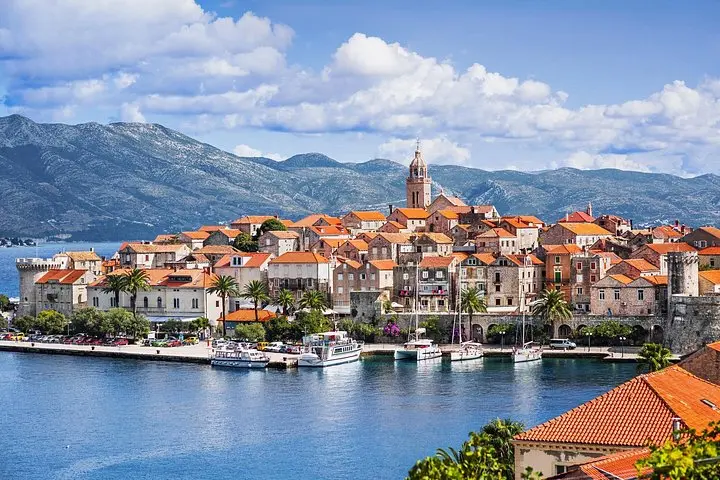
History settles into the streets in Korčula’s Old Town: Venetian facades and a 15th-century grid that funnels light and sea breeze through narrow lanes. Marco Polo’s birthplace and the Cathedral of St. Mark anchor the story of maritime trade and island life; nearby, Dingac’s rocky escarpments explain why Plavac Mali produces a tannic, coastal red. Geology here is karst — limestone bedrock carved by millennia of sea and rain, producing dry soils ideal for grapes and scrubby maquis.
Culturally the route reads as a working coast: salt pans, fishing coves, family-run wineries and fortified towns built for both commerce and defense. Expect cobbled walking, short boat hops (Orebić–Korčula), and tight lanes with steps; terrain is mostly easy but uneven underfoot.
Practical guidance: wear sturdy, grippy shoes for cobbles and winery slopes, carry a light waterproof layer for coastal gusts, and bring water and sunscreen — summer sun is intense. Timing matters: start early to avoid crowds in Korčula and reserve winery tastings in advance. With a private guide and door-to-door transport, the day flows from scenic drives to seaside walks and tasting rooms, offering a compact immersion in Dalmatia’s landscape and flavors.
Expect several short walking segments: a 30–60 minute stroll in Ston, 1–2 hours of walking in Korčula’s Old Town interspersed with seated tastings and transfers.
Lunch is not explicitly included but you’ll have free time in Korčula to eat at local cafés or restaurants; guide recommendations are usually available.
Yes — this is a private tour; communicate dietary restrictions or mobility requirements at booking so the guide can adapt stops and timing.
The ferry crossing from Orebić to Korčula town is short, typically 15–25 minutes depending on the vessel and sea conditions.
taxiGo.online - Booking Transfer & Taxi operates guided outdoor trips and adventures with an emphasis on safety, stewardship, and memorable experiences.
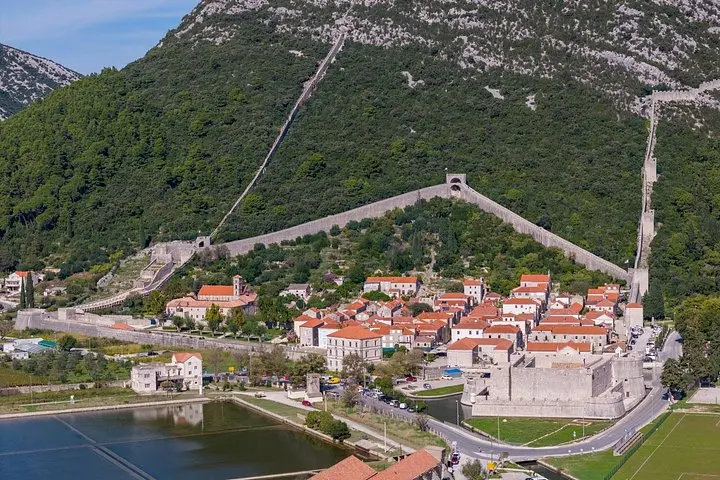

You step onto the coast as the Adriatic opens before you — a ribbon of slate-blue between steep vineyard terraces and island silhouettes. The day begins with a quiet drive out of Dubrovnik toward Ston, where saltworks and 5.5 km of medieval walls slice across the low peninsula. From there the road climbs into Pelješac’s sun-baked hills, vines clinging to terraced slopes that dare the wind and sea.
You step onto the coast as the Adriatic opens before you — a ribbon of slate-blue between steep vineyard terraces and island silhouettes. The day begins with a quiet drive out of Dubrovnik toward Ston, where saltworks and 5.5 km of medieval walls slice across the low peninsula. From there the road climbs into Pelješac’s sun-baked hills, vines clinging to terraced slopes that dare the wind and sea.
History settles into the streets in Korčula’s Old Town: Venetian facades and a 15th-century grid that funnels light and sea breeze through narrow lanes. Marco Polo’s birthplace and the Cathedral of St. Mark anchor the story of maritime trade and island life; nearby, Dingac’s rocky escarpments explain why Plavac Mali produces a tannic, coastal red. Geology here is karst — limestone bedrock carved by millennia of sea and rain, producing dry soils ideal for grapes and scrubby maquis.
Culturally the route reads as a working coast: salt pans, fishing coves, family-run wineries and fortified towns built for both commerce and defense. Expect cobbled walking, short boat hops (Orebić–Korčula), and tight lanes with steps; terrain is mostly easy but uneven underfoot.
Practical guidance: wear sturdy, grippy shoes for cobbles and winery slopes, carry a light waterproof layer for coastal gusts, and bring water and sunscreen — summer sun is intense. Timing matters: start early to avoid crowds in Korčula and reserve winery tastings in advance. With a private guide and door-to-door transport, the day flows from scenic drives to seaside walks and tasting rooms, offering a compact immersion in Dalmatia’s landscape and flavors.