THE ADVENTURE COLLECTIVE® · Independent discovery and booking for outdoor travel

A long day and a lot of reward: travel from Dubrovnik into the karst heart of Croatia to walk wooden boardwalks above turquoise cascades at Plitvice Lakes National Park. Expect dramatic falls, living travertine dams, and a full day of travel and exploration.
A long day and a lot of reward: travel from Dubrovnik into the karst heart of Croatia to walk wooden boardwalks above turquoise cascades at Plitvice Lakes National Park. Expect dramatic falls, living travertine dams, and a full day of travel and exploration.
The day begins before dawn in Dubrovnik. Streetlights still halo the Old Town walls as the minibus fills with yawning travelers and the engine clicks into the long coastal run north. Daylight pulls the limestone coast into focus, then the Adriatic slips away as the road angles inland and the karst country opens. By midmorning the air feels different — cooler, moss-sweet — and the first pale blues of Plitvice Lakes appear through beech and pine: a string of lakes descending like spilled glass.
Verified experiences and guided adventures in the surrounding area.
Operated by Smiley Transfer Service · Plitvička Jezera, Lika-Senj County
The day begins before dawn in Dubrovnik. Streetlights still halo the Old Town walls as the minibus fills with yawning travelers and the engine clicks into the long coastal run north. Daylight pulls the limestone coast into focus, then the Adriatic slips away as the road angles inland and the karst country opens. By midmorning the air feels different — cooler, moss-sweet — and the first pale blues of Plitvice Lakes appear through beech and pine: a string of lakes descending like spilled glass.
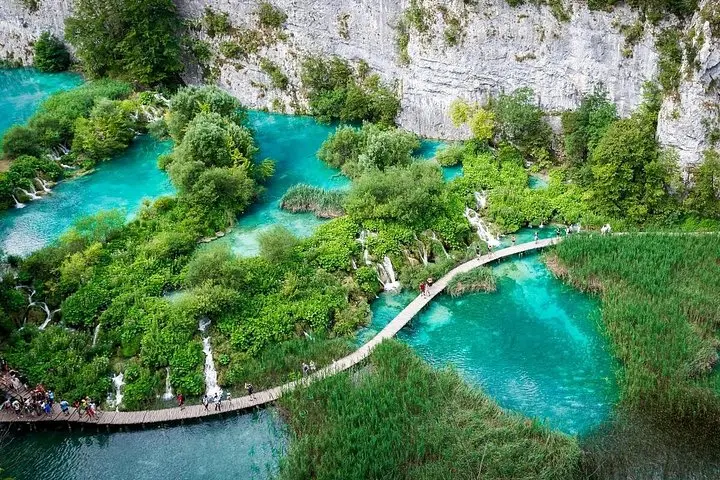
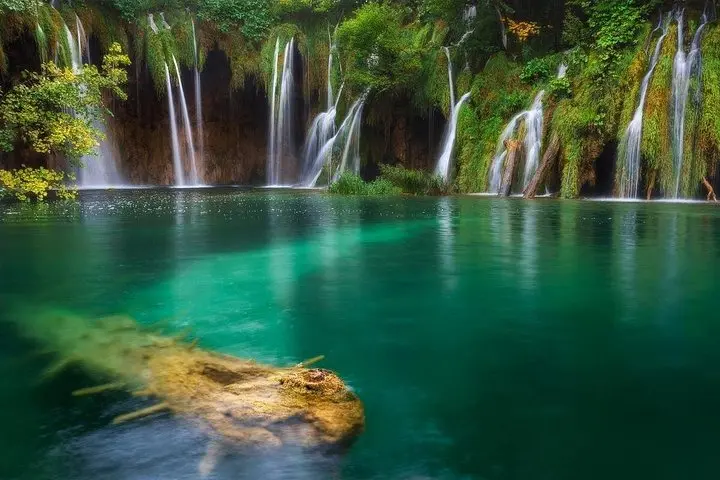
Plitvička Jezera is older than many modern nations; its travertine dams are living architecture, built millimeter by millimeter by algae, moss and mineral-rich water. The park, on the UNESCO World Heritage List since 1979, is a study in geology and time. Underground rivers vanish and reappear, springs braid into cascades, and 16 surface lakes step down through a rugged limestone bowl. Human history here is quieter but present — shepherding across the Lika plateau, Austro-Hungarian naturalists who catalogued the falls, and a park shaped by 20th-century conservation efforts.
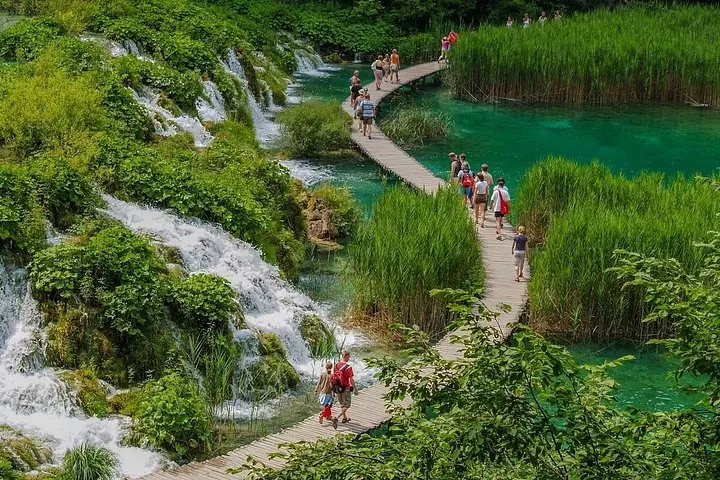
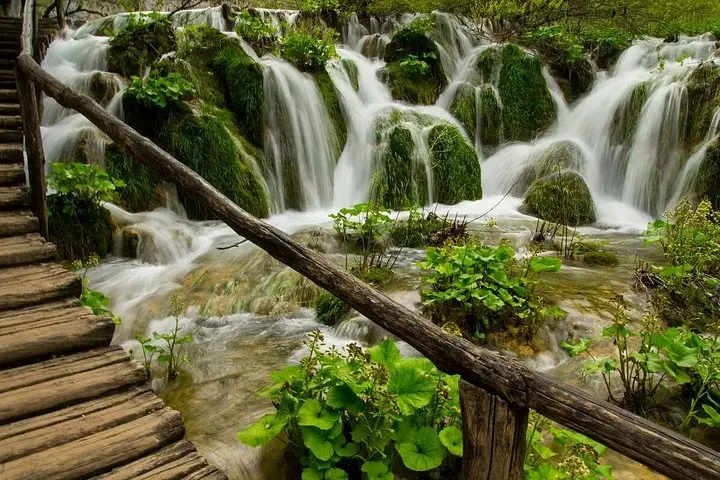
On the trail the place takes over: wooden boardwalks thread inches above jade pools, currents push foam into tiny whirlpools, and the largest waterfall — Veliki Slap — throws a constant, thundering curtain. The terrain is mostly boardwalk and well-maintained paths with short stair sections; expect uneven planks and occasional wet rocks. Most shared tours give you about four hours inside the park, enough to do a core loop across the upper and lower lakes, take the short boat across Lake Kozjak, and reach the main viewpoints.
Practicalities matter on a trip of this length. The drive from Dubrovnik is long — plan on roughly 4.5–5 hours each way depending on traffic and stops — so this is a true full-day outing. Bring layers, waterproof footwear, and a daypack with water and snacks. Park admission is not always included with transfer-only tours; confirm in advance. If mobility or time is limited, the Kozjak boat plus the lower-lake promenades deliver big scenery with less walking.
Local tips: arrive as early as possible to dodge tour crowds, buy tickets online if available, and allow time for the return trip; day trips typically require a minimum number of passengers to operate. The region is quiet and sparsely populated, so treat trails and travertine barriers gently — they grow at the pace of centuries. With a little planning, this long day from Dubrovnik rewards you with some of Croatia's most elemental water and rock — place, movement, and time made visible.
Expect roughly 4.5–5 hours each way depending on traffic and stops — plan for a very long day.
Not always; this transfer includes transport but admission is usually paid separately unless specified.
Typical shared tours allot about four hours of park time covering 3–6 miles on boardwalks and trails with short stair sections.
Some lower-lake sections and the Kozjak boat are accessible, but many boardwalks have steps or uneven sections — check specifics if mobility is a concern.
No — swimming is prohibited to protect the fragile travertine formations and water quality.
Yes for older children who can tolerate long travel days and walking; bring snacks and plan for rest breaks.
Smiley Transfer Service operates guided outdoor trips and adventures with an emphasis on safety, stewardship, and memorable experiences.
The day begins before dawn in Dubrovnik. Streetlights still halo the Old Town walls as the minibus fills with yawning travelers and the engine clicks into the long coastal run north. Daylight pulls the limestone coast into focus, then the Adriatic slips away as the road angles inland and the karst country opens. By midmorning the air feels different — cooler, moss-sweet — and the first pale blues of Plitvice Lakes appear through beech and pine: a string of lakes descending like spilled glass.
The day begins before dawn in Dubrovnik. Streetlights still halo the Old Town walls as the minibus fills with yawning travelers and the engine clicks into the long coastal run north. Daylight pulls the limestone coast into focus, then the Adriatic slips away as the road angles inland and the karst country opens. By midmorning the air feels different — cooler, moss-sweet — and the first pale blues of Plitvice Lakes appear through beech and pine: a string of lakes descending like spilled glass.
Plitvička Jezera is older than many modern nations; its travertine dams are living architecture, built millimeter by millimeter by algae, moss and mineral-rich water. The park, on the UNESCO World Heritage List since 1979, is a study in geology and time. Underground rivers vanish and reappear, springs braid into cascades, and 16 surface lakes step down through a rugged limestone bowl. Human history here is quieter but present — shepherding across the Lika plateau, Austro-Hungarian naturalists who catalogued the falls, and a park shaped by 20th-century conservation efforts.
On the trail the place takes over: wooden boardwalks thread inches above jade pools, currents push foam into tiny whirlpools, and the largest waterfall — Veliki Slap — throws a constant, thundering curtain. The terrain is mostly boardwalk and well-maintained paths with short stair sections; expect uneven planks and occasional wet rocks. Most shared tours give you about four hours inside the park, enough to do a core loop across the upper and lower lakes, take the short boat across Lake Kozjak, and reach the main viewpoints.
Practicalities matter on a trip of this length. The drive from Dubrovnik is long — plan on roughly 4.5–5 hours each way depending on traffic and stops — so this is a true full-day outing. Bring layers, waterproof footwear, and a daypack with water and snacks. Park admission is not always included with transfer-only tours; confirm in advance. If mobility or time is limited, the Kozjak boat plus the lower-lake promenades deliver big scenery with less walking.
Local tips: arrive as early as possible to dodge tour crowds, buy tickets online if available, and allow time for the return trip; day trips typically require a minimum number of passengers to operate. The region is quiet and sparsely populated, so treat trails and travertine barriers gently — they grow at the pace of centuries. With a little planning, this long day from Dubrovnik rewards you with some of Croatia's most elemental water and rock — place, movement, and time made visible.