THE ADVENTURE COLLECTIVE® · Independent discovery and booking for outdoor travel

Swap the long, solo drive for a private transfer that threads Dubrovnik and Zagreb through Plitvice Lakes National Park. Spend a few hours on the park’s boardwalks and boat before continuing to Zagreb—perfect for time-conscious travelers who want maximum impact in a single day.
Swap the long, solo drive for a private transfer that threads Dubrovnik and Zagreb through Plitvice Lakes National Park. Spend a few hours on the park’s boardwalks and boat before continuing to Zagreb—perfect for time-conscious travelers who want maximum impact in a single day.
Morning light lifts off the Adriatic as the minivan eases out of Dubrovnik; the city’s red roofs recede and the road climbs, trading sea salt for the damp green of karst hills. After a short coffee stop in Neum and a reflective pause at the Homeland War Memorial, the landscape opens onto one of Croatia’s most literal wonders: Plitvice Lakes. Here water moves like a living thing—cascades daring you to follow their sound—over terraces of travertine and through beech-and-fir forest.
Verified experiences and guided adventures in the surrounding area.
Operated by Smiley Transfer Service · Plitvička Jezera, Lika-Senj County
Morning light lifts off the Adriatic as the minivan eases out of Dubrovnik; the city’s red roofs recede and the road climbs, trading sea salt for the damp green of karst hills. After a short coffee stop in Neum and a reflective pause at the Homeland War Memorial, the landscape opens onto one of Croatia’s most literal wonders: Plitvice Lakes. Here water moves like a living thing—cascades daring you to follow their sound—over terraces of travertine and through beech-and-fir forest.
Plitvice’s geology reads as an active catalogue: limestone bedrock, mineral-rich springs and the slow build of travertine dams that create sixteen linked lakes and dozens of waterfalls. The area has long been a cultural crossroads in the Lika region; Rastoke’s mill-lined creek villages preserve small-scale industry and Austro-Hungarian echoes along rural roads. Visitors commonly pair a panoramic drive and short boat crossing with boardwalk walks that thread close to tumbling falls.
Practically, the transfer runs 12–14 hours door-to-door with a 4-hour window for self-guided exploration. Plan for variable weather, uneven boardwalks and some steep steps. Wear grippy shoes, layered clothing and a light rain shell; carry water and ID for the brief border crossing near Neum. The driver handles luggage and offers local orientation, but park entry, walks and the electric boat are self-paced. Photographers should protect gear from spray and be ready for steep viewpoints.
This itinerary suits travelers who want a comfortable, single-day connection between coastal Dubrovnik and Zagreb with an immersive stop at one of Europe’s most dynamic freshwater landscapes.
The itinerary typically allows about 4 hours for independent exploration, including a short boat ride and walking along the main boardwalk loops.
Tickets can be purchased at the park entrance but buying in advance is recommended during high season to avoid long lines and limited entry windows.
Yes—the service is a private transfer with a scheduled stop; the driver will park and return at the agreed time, but you should confirm exact pick-up details before entering the park.
Yes, the level of mobility required is low to moderate; some paths are stroller-accessible, but many boardwalk sections include steps and rough surfaces.
Smiley Transfer Service operates guided outdoor trips and adventures with an emphasis on safety, stewardship, and memorable experiences.
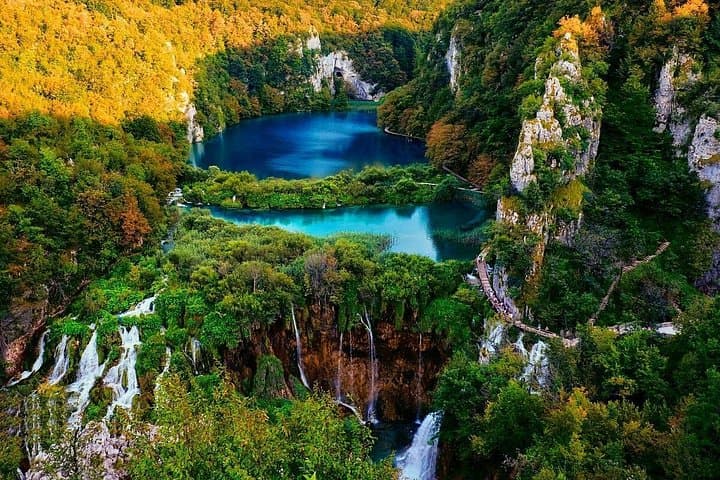

Morning light lifts off the Adriatic as the minivan eases out of Dubrovnik; the city’s red roofs recede and the road climbs, trading sea salt for the damp green of karst hills. After a short coffee stop in Neum and a reflective pause at the Homeland War Memorial, the landscape opens onto one of Croatia’s most literal wonders: Plitvice Lakes. Here water moves like a living thing—cascades daring you to follow their sound—over terraces of travertine and through beech-and-fir forest.
Morning light lifts off the Adriatic as the minivan eases out of Dubrovnik; the city’s red roofs recede and the road climbs, trading sea salt for the damp green of karst hills. After a short coffee stop in Neum and a reflective pause at the Homeland War Memorial, the landscape opens onto one of Croatia’s most literal wonders: Plitvice Lakes. Here water moves like a living thing—cascades daring you to follow their sound—over terraces of travertine and through beech-and-fir forest.
Plitvice’s geology reads as an active catalogue: limestone bedrock, mineral-rich springs and the slow build of travertine dams that create sixteen linked lakes and dozens of waterfalls. The area has long been a cultural crossroads in the Lika region; Rastoke’s mill-lined creek villages preserve small-scale industry and Austro-Hungarian echoes along rural roads. Visitors commonly pair a panoramic drive and short boat crossing with boardwalk walks that thread close to tumbling falls.
Practically, the transfer runs 12–14 hours door-to-door with a 4-hour window for self-guided exploration. Plan for variable weather, uneven boardwalks and some steep steps. Wear grippy shoes, layered clothing and a light rain shell; carry water and ID for the brief border crossing near Neum. The driver handles luggage and offers local orientation, but park entry, walks and the electric boat are self-paced. Photographers should protect gear from spray and be ready for steep viewpoints.
This itinerary suits travelers who want a comfortable, single-day connection between coastal Dubrovnik and Zagreb with an immersive stop at one of Europe’s most dynamic freshwater landscapes.