THE ADVENTURE COLLECTIVE® · Independent discovery and booking for outdoor travel

Spend a day volunteering at the Dujiangyan Panda Base and exploring Mount Qingcheng’s Taoist trails. This private tour pairs hands-on conservation work with forested hiking and cultural sites, all on a full-day drive from Chengdu.
Spend a day volunteering at the Dujiangyan Panda Base and exploring Mount Qingcheng’s Taoist trails. This private tour pairs hands-on conservation work with forested hiking and cultural sites, all on a full-day drive from Chengdu.
Morning light slices through Sichuan bamboo as the minivan climbs away from Chengdu toward Dujiangyan, the city where water engineering and Taoist peaks meet. By midmorning volunteers step into the Dujiangyan Panda Base and into a day paced by keepers: preparing bamboo, cleaning enclosures and recording simple behavioral observations under staff supervision. The work is quiet and deliberate, with the animals’ slow foraging punctuating the routine.
Verified experiences and guided adventures in the surrounding area.
Operated by happychinatours · Dujiangyan, Sichuan
Morning light slices through Sichuan bamboo as the minivan climbs away from Chengdu toward Dujiangyan, the city where water engineering and Taoist peaks meet. By midmorning volunteers step into the Dujiangyan Panda Base and into a day paced by keepers: preparing bamboo, cleaning enclosures and recording simple behavioral observations under staff supervision. The work is quiet and deliberate, with the animals’ slow foraging punctuating the routine.
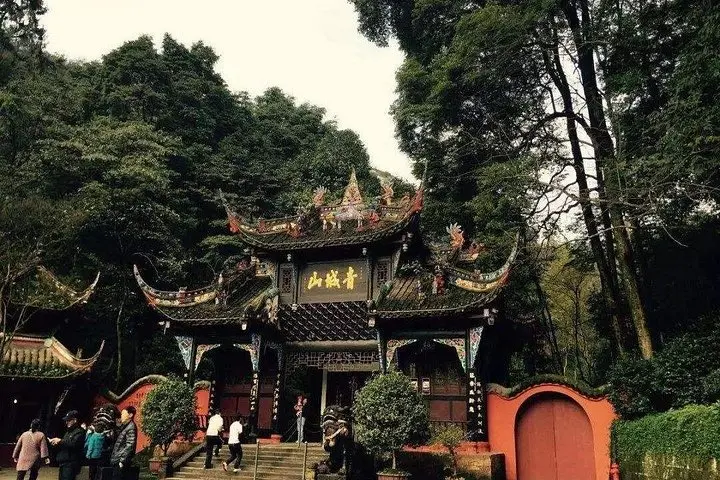
The afternoon shifts gear. Mount Qingcheng’s forested slopes and temple terraces carry a history of Taoist practice that dates back more than a millennium; the mountain’s rounded granite ridges and cool, shaded gullies tell a gentler geological story than the nearby Min River’s engineered channel. Front Mountain contains the main cultural sites—pavilions, small caves and old stone steps—while Back Mountain opens onto steeper trails and quieter viewpoints.
Expect humid, evergreen woodlands, stone staircases that test the calves, and pockets of shrine activity where incense curls like a small weather system. Guides typically manage logistics: entrance tickets, a short cable car or shuttle options, and a hot lunch between sites.
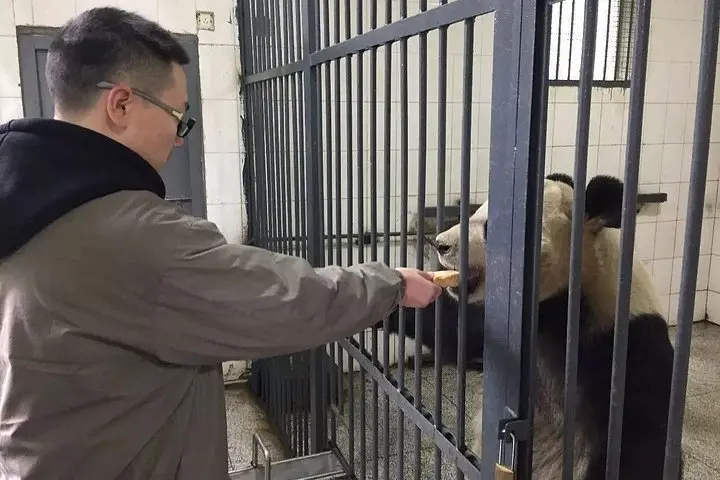
Practical notes: the day runs roughly eight hours with about 1.5 hours driving each way from Chengdu; bring sturdy walking shoes, a reusable water bottle, and a light rain layer. The panda volunteer portion requires following staff instructions closely to minimize stress on animals—no sudden movements, no outside food—and basic fitness for short, repeated tasks. Timing your visit for early morning panda sessions and a late-afternoon Qingcheng ascent gives the best balance of activity and calm.
Interactions are supervised and limited—volunteering focuses on husbandry and observation rather than close handling; staff set boundaries to protect both animals and visitors.
Families with older children may participate, but the panda volunteer program and some Qingcheng steps require responsible behavior and moderate fitness—check age restrictions with the operator.
Expect several hours of walking with stone steps and short uphill stretches; cable car options shorten the climb on Front Mountain for reduced exertion.
Yes—private guides typically provide translation and local context throughout the day, and panda base staff will offer on-site instruction.
happychinatours operates guided outdoor trips and adventures with an emphasis on safety, stewardship, and memorable experiences.
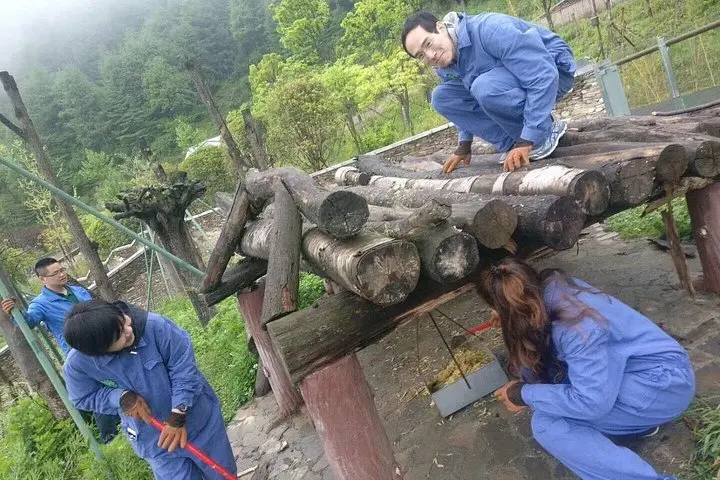
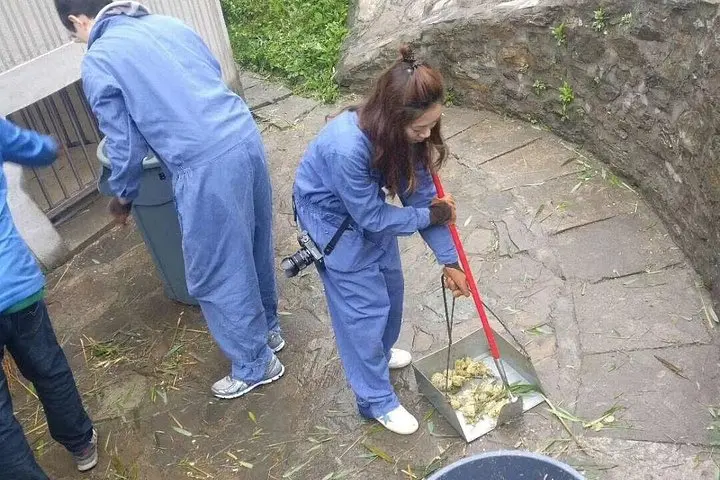
Morning light slices through Sichuan bamboo as the minivan climbs away from Chengdu toward Dujiangyan, the city where water engineering and Taoist peaks meet. By midmorning volunteers step into the Dujiangyan Panda Base and into a day paced by keepers: preparing bamboo, cleaning enclosures and recording simple behavioral observations under staff supervision. The work is quiet and deliberate, with the animals’ slow foraging punctuating the routine.
Morning light slices through Sichuan bamboo as the minivan climbs away from Chengdu toward Dujiangyan, the city where water engineering and Taoist peaks meet. By midmorning volunteers step into the Dujiangyan Panda Base and into a day paced by keepers: preparing bamboo, cleaning enclosures and recording simple behavioral observations under staff supervision. The work is quiet and deliberate, with the animals’ slow foraging punctuating the routine.
The afternoon shifts gear. Mount Qingcheng’s forested slopes and temple terraces carry a history of Taoist practice that dates back more than a millennium; the mountain’s rounded granite ridges and cool, shaded gullies tell a gentler geological story than the nearby Min River’s engineered channel. Front Mountain contains the main cultural sites—pavilions, small caves and old stone steps—while Back Mountain opens onto steeper trails and quieter viewpoints.
Expect humid, evergreen woodlands, stone staircases that test the calves, and pockets of shrine activity where incense curls like a small weather system. Guides typically manage logistics: entrance tickets, a short cable car or shuttle options, and a hot lunch between sites.
Practical notes: the day runs roughly eight hours with about 1.5 hours driving each way from Chengdu; bring sturdy walking shoes, a reusable water bottle, and a light rain layer. The panda volunteer portion requires following staff instructions closely to minimize stress on animals—no sudden movements, no outside food—and basic fitness for short, repeated tasks. Timing your visit for early morning panda sessions and a late-afternoon Qingcheng ascent gives the best balance of activity and calm.