THE ADVENTURE COLLECTIVE® · Independent discovery and booking for outdoor travel

Spend a day cycling from Hanoi to Duong Lam Ancient Village to explore 1,200 years of rural Vietnamese life. Discover laterite houses, temples and rice-field lanes with a guide and a local lunch.
Spend a day cycling from Hanoi to Duong Lam Ancient Village to explore 1,200 years of rural Vietnamese life. Discover laterite houses, temples and rice-field lanes with a guide and a local lunch.
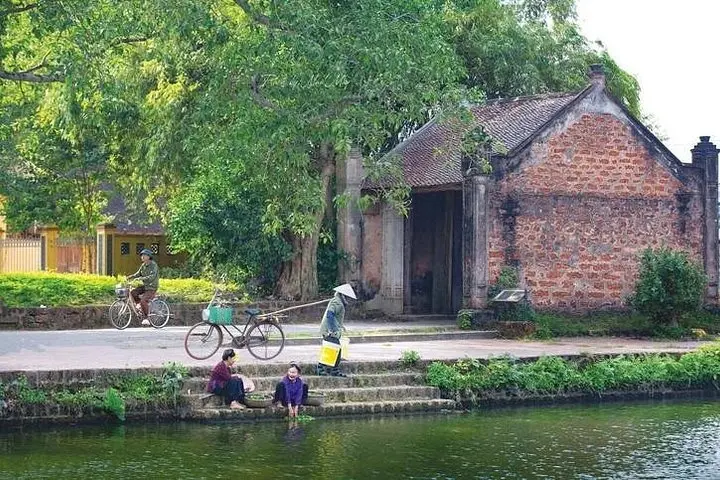
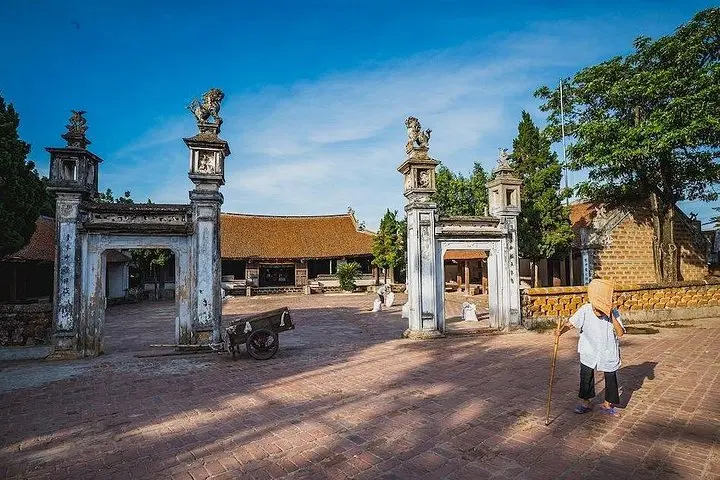
Morning light hits a patchwork of rice paddies as your minivan eases out of Hanoi’s Old Quarter; by the time the city’s traffic noise thins you’re breathing air shaped by river and field. Duong Lam Ancient Village arrives not as a single sightline but as a collection of lanes, laterite houses and banyan-rooted courtyards that keep time at a quieter rhythm.
Verified experiences and guided adventures in the surrounding area.
Operated by Authentic HALONG · Sơn Tây, Hanoi
Morning light hits a patchwork of rice paddies as your minivan eases out of Hanoi’s Old Quarter; by the time the city’s traffic noise thins you’re breathing air shaped by river and field. Duong Lam Ancient Village arrives not as a single sightline but as a collection of lanes, laterite houses and banyan-rooted courtyards that keep time at a quieter rhythm.
The village stretches back more than a millennium and preserves a rural layout that predates modern urban planning—mud walls, communal houses and small family temples mark social life as clearly as the surrounding levees mark the rice. Geologically the area is the Red River delta: flat, fertile, seasonally inundated soil that has made intensive wet-rice agriculture possible for centuries and lent local homes their laterite stone facades.
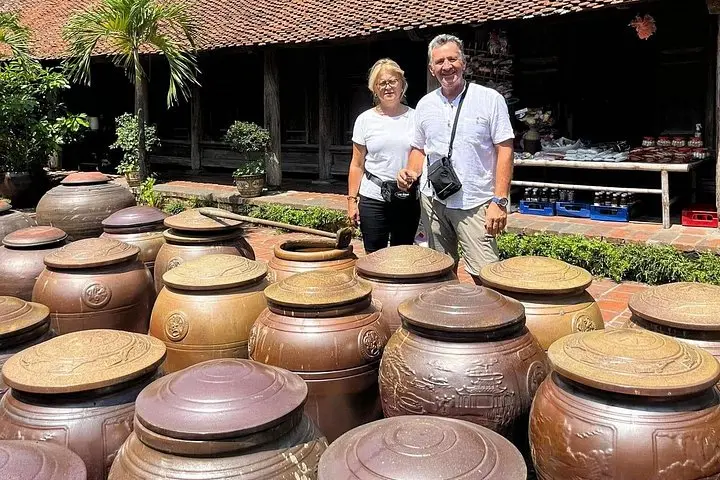
Culture here is tactile: craftspeople still work wood and bamboo, elders maintain ancestral altars, and local temples map a community’s lineage. Guides will point out colonial-era churches and communal houses where village decisions were once taken.
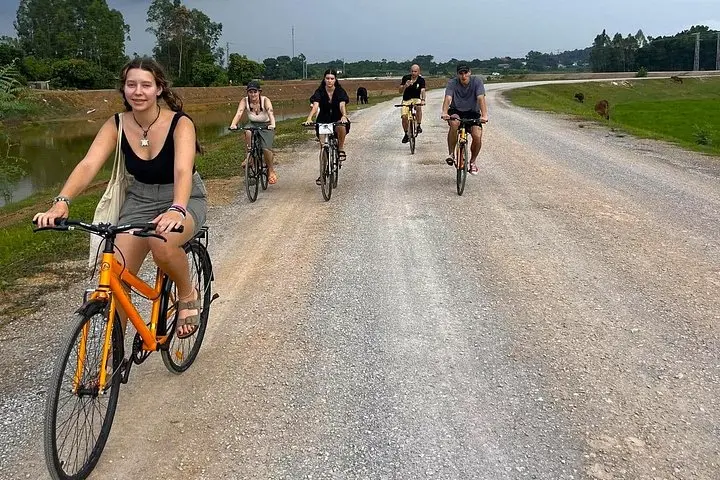
Practically, the day is built around gentle walking and a leisurely bicycle ride through lanes and along small irrigation canals—expect 6–12 km of easy pedaling and several short walks between houses and temples. Bring sun protection and a light rain layer in shoulder seasons; wear shoes that can handle dusty lanes and occasional muddy patches after rain. Lunch is typically a family-style Vietnamese spread; mention dietary needs in advance. Timing your visit in the late dry season gives the clearest skies and the rice at its greenest. This trip rewards slow attention: look up, listen to the river channels calling, and let the countryside set the pace.
The drive from Hanoi’s Old Quarter typically takes about 45–75 minutes depending on traffic and exact pickup location.
Yes, the tour provides city-style bicycles suited to casual riders; the cycling is low-intensity on mostly flat lanes.
Yes—paths are generally flat but can be narrow and uneven; those with mobility limitations should notify the operator ahead of time.
Yes, operators can usually accommodate vegetarian, vegan and gluten-free requests if informed when booking.
Authentic HALONG operates guided outdoor trips and adventures with an emphasis on safety, stewardship, and memorable experiences.
Morning light hits a patchwork of rice paddies as your minivan eases out of Hanoi’s Old Quarter; by the time the city’s traffic noise thins you’re breathing air shaped by river and field. Duong Lam Ancient Village arrives not as a single sightline but as a collection of lanes, laterite houses and banyan-rooted courtyards that keep time at a quieter rhythm.
Morning light hits a patchwork of rice paddies as your minivan eases out of Hanoi’s Old Quarter; by the time the city’s traffic noise thins you’re breathing air shaped by river and field. Duong Lam Ancient Village arrives not as a single sightline but as a collection of lanes, laterite houses and banyan-rooted courtyards that keep time at a quieter rhythm.
The village stretches back more than a millennium and preserves a rural layout that predates modern urban planning—mud walls, communal houses and small family temples mark social life as clearly as the surrounding levees mark the rice. Geologically the area is the Red River delta: flat, fertile, seasonally inundated soil that has made intensive wet-rice agriculture possible for centuries and lent local homes their laterite stone facades.
Culture here is tactile: craftspeople still work wood and bamboo, elders maintain ancestral altars, and local temples map a community’s lineage. Guides will point out colonial-era churches and communal houses where village decisions were once taken.
Practically, the day is built around gentle walking and a leisurely bicycle ride through lanes and along small irrigation canals—expect 6–12 km of easy pedaling and several short walks between houses and temples. Bring sun protection and a light rain layer in shoulder seasons; wear shoes that can handle dusty lanes and occasional muddy patches after rain. Lunch is typically a family-style Vietnamese spread; mention dietary needs in advance. Timing your visit in the late dry season gives the clearest skies and the rice at its greenest. This trip rewards slow attention: look up, listen to the river channels calling, and let the countryside set the pace.