THE ADVENTURE COLLECTIVE® · Independent discovery and booking for outdoor travel

Walk beyond the Rhine promenade and the Altstadt’s main strip to find Düsseldorf’s quieter courtyards, neighborhood stories, and local tastes. This two‑hour guided tour blends iconic sights with off‑beat recommendations so you leave with more than postcards.
Walk beyond the Rhine promenade and the Altstadt’s main strip to find Düsseldorf’s quieter courtyards, neighborhood stories, and local tastes. This two‑hour guided tour blends iconic sights with off‑beat recommendations so you leave with more than postcards.
The Rhine presses against Düsseldorf’s stone embankment and dares you to slow down; the city answers with narrow alleys branching off monumental boulevards. Start on the Rheinpromenade where river breezes push through crowds of cyclists and office workers, then let your guide pull you into the quieter courtyards and side streets that reveal the city's everyday rhythm.
Verified experiences and guided adventures in the surrounding area.
Operated by Free Tour Expert · Düsseldorf, North Rhine-Westphalia
The Rhine presses against Düsseldorf’s stone embankment and dares you to slow down; the city answers with narrow alleys branching off monumental boulevards. Start on the Rheinpromenade where river breezes push through crowds of cyclists and office workers, then let your guide pull you into the quieter courtyards and side streets that reveal the city's everyday rhythm.
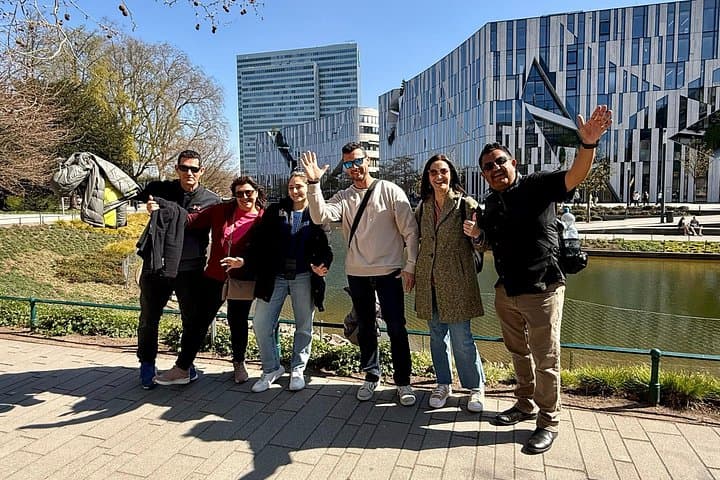
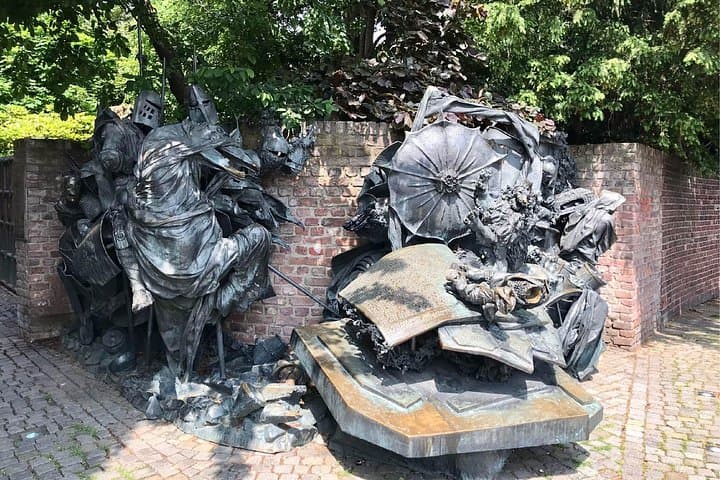
Düsseldorf’s story is written in its architecture and festivals: a medieval core reborn into a 19th-century commercial hub and, more recently, Germany’s fashion capital. The Königsallee — a canal flanked by plane trees and luxury storefronts — tells the economic chapter, while the Altstadt’s compact blocks host centuries of civic life, from City Hall ceremonies to the riotous Carnival that erupts each February.
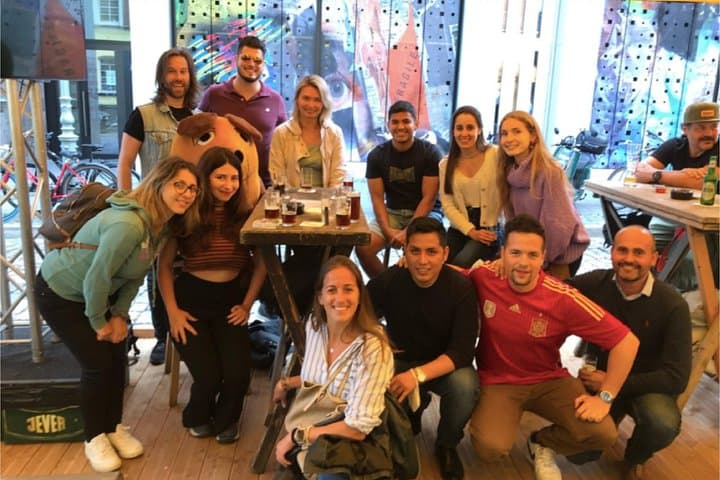
Geology here is simple: the broad Rhine plain, reclaimed and shaped by river engineering, creates long promenades and accessible waterfronts. Culture shows up in small pleasures: a dram of Killepitsch after a market stop, Altbier in a crowded tavern, or a detour through MediaHafen’s modernist docks.
Practical guidance: the tour runs about two hours on mostly flat, paved surfaces — comfortable shoes suffice. Expect frequent stops for 10–20 minutes at key sights; groups are capped around 15. Public transport links are close to meeting points, and the route is suitable for most fitness levels and families. Pack a light rain layer in spring/fall, a water bottle in summer, and arrive 10 minutes early to confirm meeting details.
Meeting details are provided on booking; commonly tours begin near a central Rheinpromenade access or a tram stop — arrive 10 minutes early.
Much of the route is flat and on paved promenades, but some historic streets have cobblestones; contact the operator ahead to confirm accessibility accommodations.
Most public tours run in English; private or special-language tours may be available on request — check booking options.
No — the tour includes commentary and stops but not meals; guides will recommend local spots to try Altbier and Killepitsch.
Free Tour Expert operates guided outdoor trips and adventures with an emphasis on safety, stewardship, and memorable experiences.

The Rhine presses against Düsseldorf’s stone embankment and dares you to slow down; the city answers with narrow alleys branching off monumental boulevards. Start on the Rheinpromenade where river breezes push through crowds of cyclists and office workers, then let your guide pull you into the quieter courtyards and side streets that reveal the city's everyday rhythm.
The Rhine presses against Düsseldorf’s stone embankment and dares you to slow down; the city answers with narrow alleys branching off monumental boulevards. Start on the Rheinpromenade where river breezes push through crowds of cyclists and office workers, then let your guide pull you into the quieter courtyards and side streets that reveal the city's everyday rhythm.
Düsseldorf’s story is written in its architecture and festivals: a medieval core reborn into a 19th-century commercial hub and, more recently, Germany’s fashion capital. The Königsallee — a canal flanked by plane trees and luxury storefronts — tells the economic chapter, while the Altstadt’s compact blocks host centuries of civic life, from City Hall ceremonies to the riotous Carnival that erupts each February.
Geology here is simple: the broad Rhine plain, reclaimed and shaped by river engineering, creates long promenades and accessible waterfronts. Culture shows up in small pleasures: a dram of Killepitsch after a market stop, Altbier in a crowded tavern, or a detour through MediaHafen’s modernist docks.
Practical guidance: the tour runs about two hours on mostly flat, paved surfaces — comfortable shoes suffice. Expect frequent stops for 10–20 minutes at key sights; groups are capped around 15. Public transport links are close to meeting points, and the route is suitable for most fitness levels and families. Pack a light rain layer in spring/fall, a water bottle in summer, and arrive 10 minutes early to confirm meeting details.