THE ADVENTURE COLLECTIVE® · Independent discovery and booking for outdoor travel

Pedal an e-bike along one of Rome’s oldest roads, passing mausoleums, catacombs and aqueduct arches before ending with an authentic Italian aperitif. This 3–4 hour guided ride blends easy cycling with focused history and local flavors.
Pedal an e-bike along one of Rome’s oldest roads, passing mausoleums, catacombs and aqueduct arches before ending with an authentic Italian aperitif. This 3–4 hour guided ride blends easy cycling with focused history and local flavors.
You push off beneath low, leaning cypress and the road ahead breathes history—ancient basalt under your tires, the low hum of the e-bike answering the distant traffic of modern Rome. The Appia Antica stretches out like a living archive: mausoleums and aqueduct arches punctuate fields, and the air smells of grass, dust and espresso drifting from a roadside café.
Verified experiences and guided adventures in the surrounding area.
Operated by Giampiero casseri · Rome, Lazio
You push off beneath low, leaning cypress and the road ahead breathes history—ancient basalt under your tires, the low hum of the e-bike answering the distant traffic of modern Rome. The Appia Antica stretches out like a living archive: mausoleums and aqueduct arches punctuate fields, and the air smells of grass, dust and espresso drifting from a roadside café.
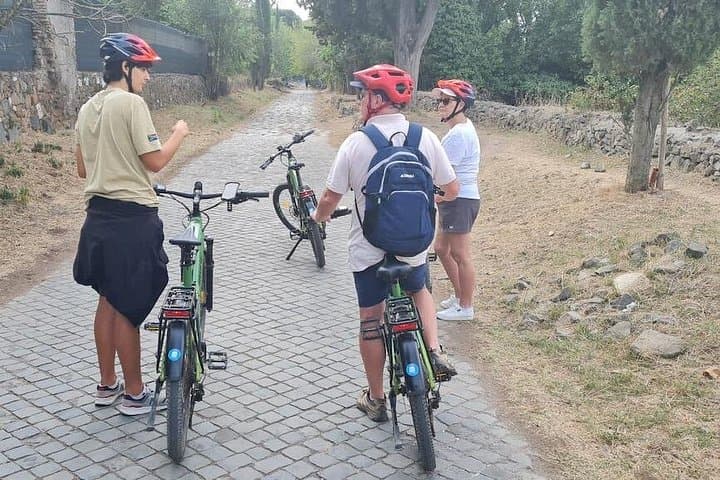
Built in 312 BCE by Appius Claudius, the Appian Way was Rome’s arterial road; today it threads archaeological giants—the Mausoleum of Cecilia Metella, the Villa dei Quintili and early Christian catacombs—through parkland and neighbourhoods. Geologically, the route sits on Roman travertine and basalt paving with stretches of compacted earth and gravel; aqueduct remains loop across low ridges and wells mark old springs. Local culture here is pragmatic—farm plots, weekend cyclists and picnickers share space with slow tourism.
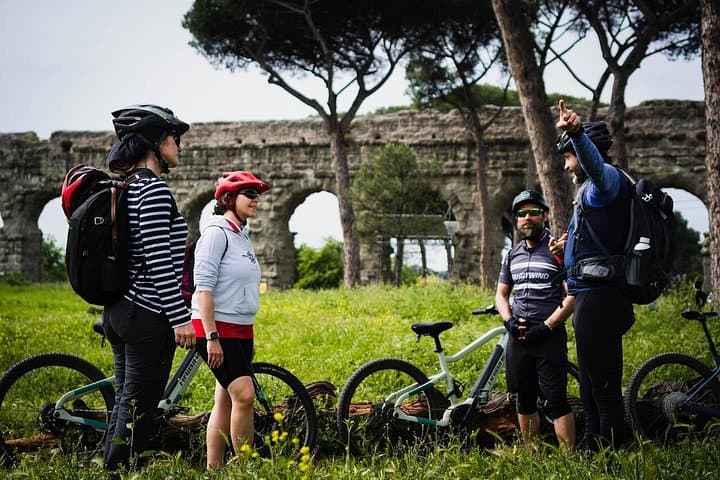
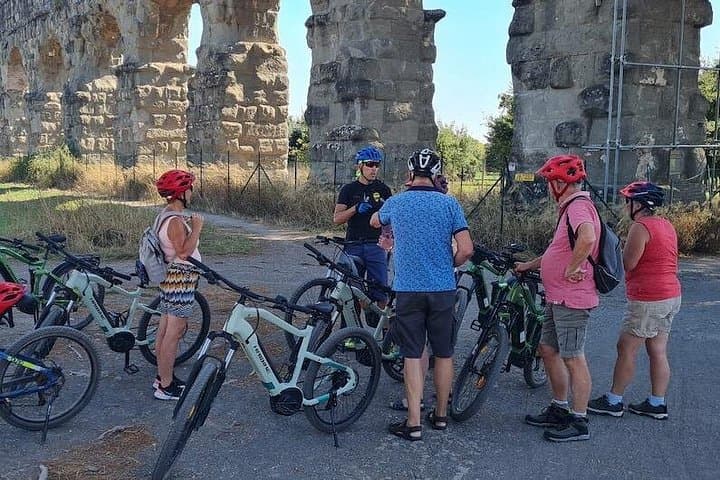
Expect a 3–4 hour guided loop covering roughly 15–25 km of mostly flat, rolling terrain with short cobbled sections and occasional traffic near gates. Guides point out the catacombs, the Nymphaeum of Egeria and aqueduct arches while managing pace on the e-bikes; the ride ends at a trattoria-style stop for an aperitif of cheeses, cured meats and wine.
Practical: bring a helmet (usually provided), closed-toe shoes and a refillable water bottle, and be ready to dismount on narrow or archaeological stretches. Start early in summer to avoid heat and keep your camera ready—this is history you move through, not just pass by.
Most tours meet near the Appia Antica park gates south-east of the city center; confirmations include the exact meeting point and public transport options.
E-bike use is included; they provide pedal-assist to level hills and make the 15–25 km route accessible to riders of varying fitness.
Tours typically allow teens and adults and ask for height/weight during booking to fit bikes safely; infant seats may be available on request.
No—many sections run over uneven cobbles, steps and narrow archaeological paths and are not suitable for wheelchairs or limited mobility.
Giampiero casseri operates guided outdoor trips and adventures with an emphasis on safety, stewardship, and memorable experiences.
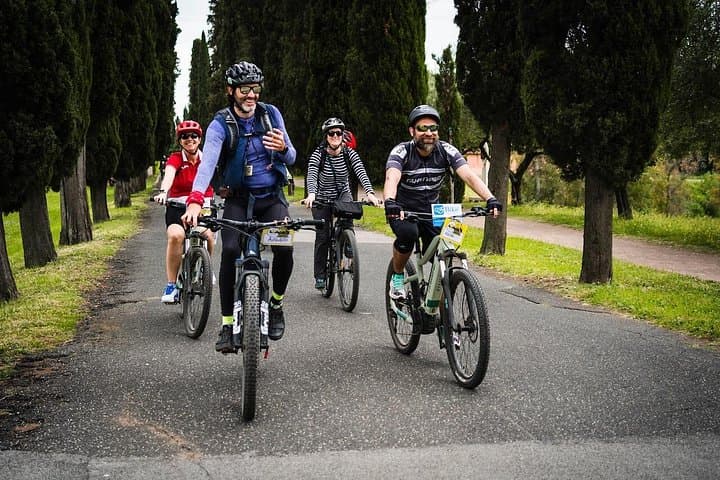
You push off beneath low, leaning cypress and the road ahead breathes history—ancient basalt under your tires, the low hum of the e-bike answering the distant traffic of modern Rome. The Appia Antica stretches out like a living archive: mausoleums and aqueduct arches punctuate fields, and the air smells of grass, dust and espresso drifting from a roadside café.
You push off beneath low, leaning cypress and the road ahead breathes history—ancient basalt under your tires, the low hum of the e-bike answering the distant traffic of modern Rome. The Appia Antica stretches out like a living archive: mausoleums and aqueduct arches punctuate fields, and the air smells of grass, dust and espresso drifting from a roadside café.
Built in 312 BCE by Appius Claudius, the Appian Way was Rome’s arterial road; today it threads archaeological giants—the Mausoleum of Cecilia Metella, the Villa dei Quintili and early Christian catacombs—through parkland and neighbourhoods. Geologically, the route sits on Roman travertine and basalt paving with stretches of compacted earth and gravel; aqueduct remains loop across low ridges and wells mark old springs. Local culture here is pragmatic—farm plots, weekend cyclists and picnickers share space with slow tourism.
Expect a 3–4 hour guided loop covering roughly 15–25 km of mostly flat, rolling terrain with short cobbled sections and occasional traffic near gates. Guides point out the catacombs, the Nymphaeum of Egeria and aqueduct arches while managing pace on the e-bikes; the ride ends at a trattoria-style stop for an aperitif of cheeses, cured meats and wine.
Practical: bring a helmet (usually provided), closed-toe shoes and a refillable water bottle, and be ready to dismount on narrow or archaeological stretches. Start early in summer to avoid heat and keep your camera ready—this is history you move through, not just pass by.