THE ADVENTURE COLLECTIVE® · Independent discovery and booking for outdoor travel

Ride electric through Arashiyama’s bamboo corridors, historic Tenryuji and tranquil rice paddies with a local guide who unlocks hidden corners of Kyoto. Practical tips inside for timing, gear, and etiquette.
Ride electric through Arashiyama’s bamboo corridors, historic Tenryuji and tranquil rice paddies with a local guide who unlocks hidden corners of Kyoto. Practical tips inside for timing, gear, and etiquette.
Morning light threads through towering moso bamboo as soft electric motors hum—riders move through a corridor of green that feels both ancient and immediate.
Verified experiences and guided adventures in the surrounding area.
Operated by Discovery Bicycle Tours Okinawa / e-CHARIty Naha · Kyoto, Kyoto Prefecture
Morning light threads through towering moso bamboo as soft electric motors hum—riders move through a corridor of green that feels both ancient and immediate.
This four-hour loop begins at Arashiyama Station and threads past the bamboo grove, Tenryuji Temple, Hirosawa Pond and rice paddies that still define the Sagano plain. Geologically the area is shaped by the Katsura River and low volcanic foothills; culturally it has long been a retreat for Kyoto’s elite—Tenryuji is part of the Historic Monuments of Ancient Kyoto (a UNESCO listing) and the lane-side farms reflect centuries of rice cultivation.
Guides local to Kyoto translate place, practice and season into context: they’ll explain bamboo ecology (moso grows rapidly and regenerates via rhizomes), point out period temple architecture, and route you where crowds thin and reflections hold like glass.
Practical notes: e-bikes remove most of the elevation strain but expect short steeper pitches and narrow pedestrian stretches. Start early to avoid peak tour buses; wear flat-soled shoes for short dismounts and be ready to walk across crowded temple approaches. Carry water, a compact rain layer, and bring cash for small shrine offerings or tea houses. Helmets are provided but bring sunglasses and a light pack to stow layers. Respect local traffic rules and yield to pedestrians—Arashiyama’s lanes are shared and often lined with rice paddies and farm access.
The ride balances calm waterways, temple gardens, and small-town life—an easy, sensory way to see Kyoto beyond the postcard photos.
No—e-bikes provide pedal assist and the guide covers basic operation and hand signals; basic balance and ability to stop/start on a bike are sufficient.
Yes, helmets are included with the tour but you may bring your own if you prefer a specific fit.
The grove can be busy mid-day; booking an early tour reduces crowds and offers better light for photos.
Children over about 140 cm who can ride a bike may join; the operator charges the same fee as adults—confirm at booking for exact age and size requirements.
Discovery Bicycle Tours Okinawa / e-CHARIty Naha operates guided outdoor trips and adventures with an emphasis on safety, stewardship, and memorable experiences.
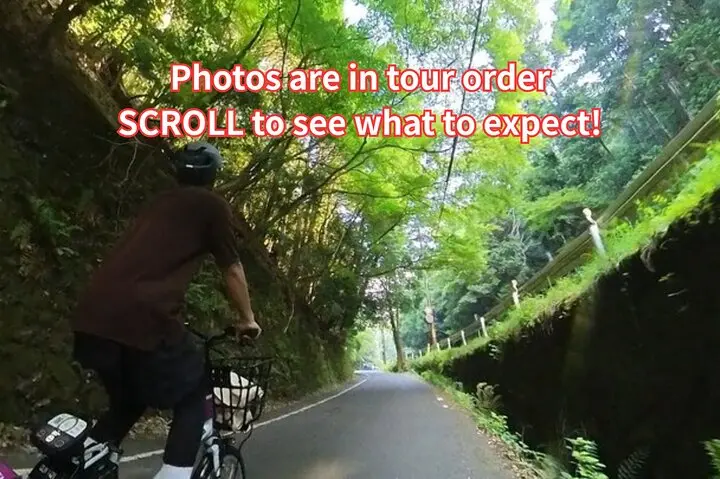
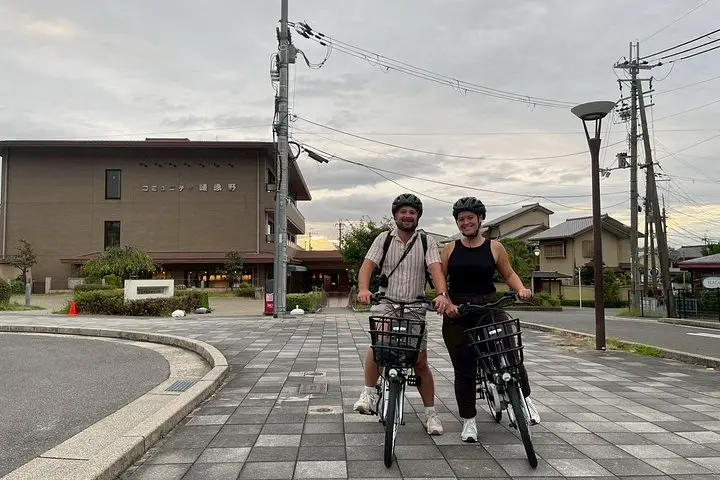
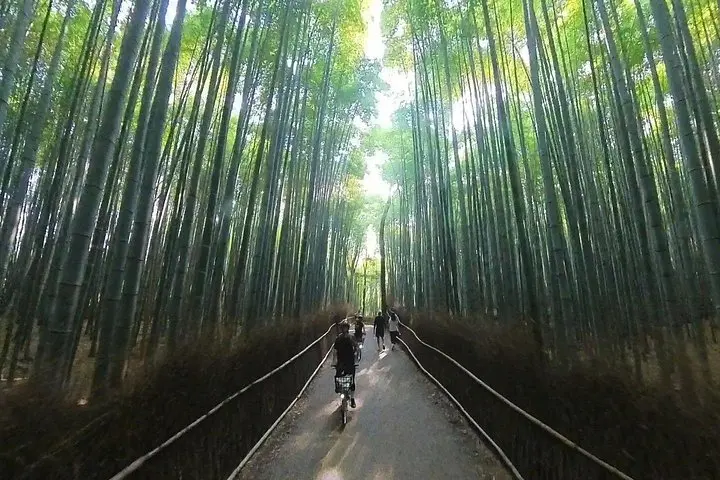
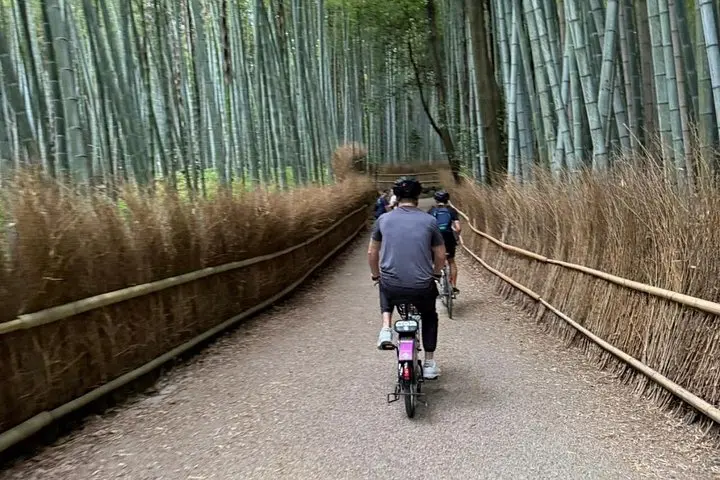
Morning light threads through towering moso bamboo as soft electric motors hum—riders move through a corridor of green that feels both ancient and immediate.
Morning light threads through towering moso bamboo as soft electric motors hum—riders move through a corridor of green that feels both ancient and immediate.
This four-hour loop begins at Arashiyama Station and threads past the bamboo grove, Tenryuji Temple, Hirosawa Pond and rice paddies that still define the Sagano plain. Geologically the area is shaped by the Katsura River and low volcanic foothills; culturally it has long been a retreat for Kyoto’s elite—Tenryuji is part of the Historic Monuments of Ancient Kyoto (a UNESCO listing) and the lane-side farms reflect centuries of rice cultivation.
Guides local to Kyoto translate place, practice and season into context: they’ll explain bamboo ecology (moso grows rapidly and regenerates via rhizomes), point out period temple architecture, and route you where crowds thin and reflections hold like glass.
Practical notes: e-bikes remove most of the elevation strain but expect short steeper pitches and narrow pedestrian stretches. Start early to avoid peak tour buses; wear flat-soled shoes for short dismounts and be ready to walk across crowded temple approaches. Carry water, a compact rain layer, and bring cash for small shrine offerings or tea houses. Helmets are provided but bring sunglasses and a light pack to stow layers. Respect local traffic rules and yield to pedestrians—Arashiyama’s lanes are shared and often lined with rice paddies and farm access.
The ride balances calm waterways, temple gardens, and small-town life—an easy, sensory way to see Kyoto beyond the postcard photos.