THE ADVENTURE COLLECTIVE® · Independent discovery and booking for outdoor travel

Pedal through Barcelona’s sporting landmarks on an assisted e-bike, from the Olympic heights of Montjuïc to the halls of Camp Nou. This four-hour small-group tour pairs easy riding with museum access and local stories about La Masia and Barça culture.
Pedal through Barcelona’s sporting landmarks on an assisted e-bike, from the Olympic heights of Montjuïc to the halls of Camp Nou. This four-hour small-group tour pairs easy riding with museum access and local stories about La Masia and Barça culture.
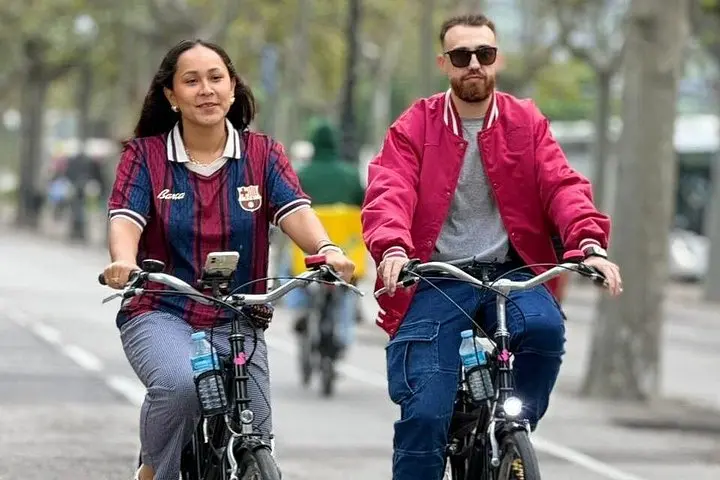
Morning on Avinguda de la Reina Maria Cristina: the city hums, tires whisper, and a compact fleet of Pink Ducks e-bikes waits under a ribbon of blue sky. Riders roll out from the shop, guided through traffic-calmed avenues toward Montjuïc’s green sweep, then descend into the stadium boulevards where football banners and museum façades mark Barça’s public stage.
Verified experiences and guided adventures in the surrounding area.
Operated by Pink Ducks Bike Tours · Barcelona, Catalonia
Morning on Avinguda de la Reina Maria Cristina: the city hums, tires whisper, and a compact fleet of Pink Ducks e-bikes waits under a ribbon of blue sky. Riders roll out from the shop, guided through traffic-calmed avenues toward Montjuïc’s green sweep, then descend into the stadium boulevards where football banners and museum façades mark Barça’s public stage.
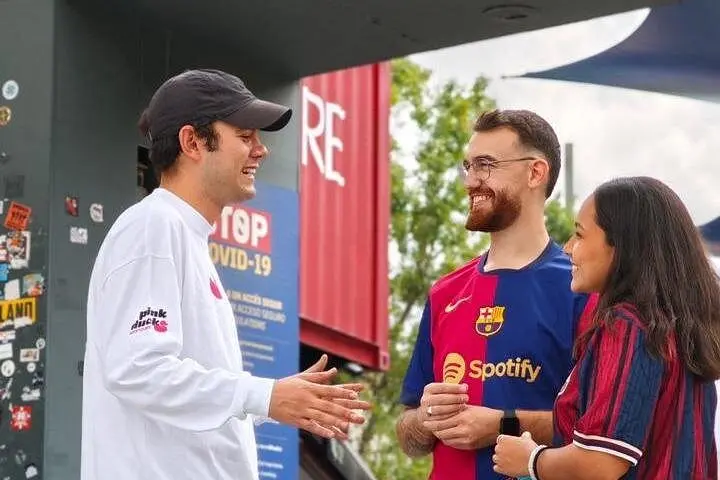
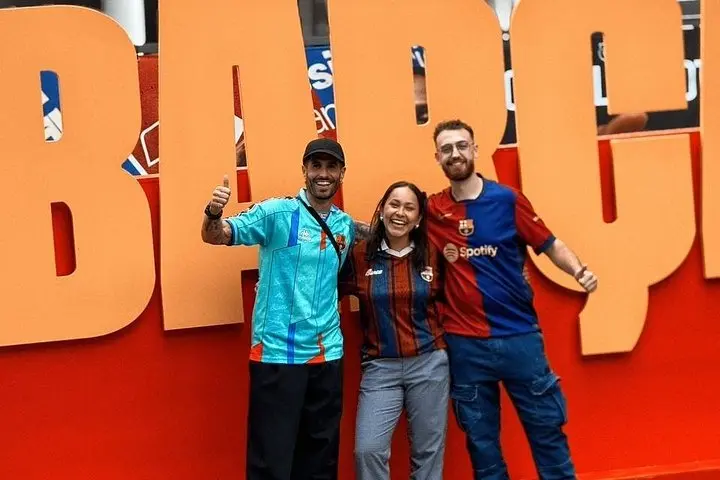
The route links two distinct sporting epochs: Montjuïc’s Estadi Lluís Companys, rebuilt for the 1992 Olympic Games and set on volcanic slopes, and Camp Nou, Barcelona’s expansive home ground and museum chronicling decades of club culture and La Masia’s youth legacy. The city’s grid yields to parkland on the climb up Montjuïc; stone terraces and Olympic installations punctuate the way. Local guides frame moments — from the tactical schooling at La Masia to the museum’s interactive exhibits that let supporters stand amid archived jerseys and matchday sound.
Practically, expect about four hours on an assisted e-bike, covering roughly 12–18 km with 120–220 m of cumulative climbing depending on route choices. Helmets and bottled water are provided; small groups (max 8) keep the pace social. Basic bike handling is required, and riders should be comfortable in mixed urban traffic. Morning departures avoid heat and reduce pedestrian congestion.
Bring a charged phone for photos, a light layer for breezy climbs, and any museum vouchers you selected at booking. The tour balances city cycling with cultural stops — it’s as much about movement as the stories that sport leaves on Barcelona’s streets.
No advanced experience is required, but you should be comfortable riding in city traffic and on short hills; e-bikes provide motor assistance.
Museum access is included only if selected at booking — check your voucher and bring ID for entry.
Small-group format with a maximum of eight riders; guides may operate in English, Spanish, French, or German depending on the group.
Specialized infant seats are available but confirm at booking; the tour is not recommended for pregnant travelers or those with serious back or heart conditions.
Pink Ducks Bike Tours operates guided outdoor trips and adventures with an emphasis on safety, stewardship, and memorable experiences.

Morning on Avinguda de la Reina Maria Cristina: the city hums, tires whisper, and a compact fleet of Pink Ducks e-bikes waits under a ribbon of blue sky. Riders roll out from the shop, guided through traffic-calmed avenues toward Montjuïc’s green sweep, then descend into the stadium boulevards where football banners and museum façades mark Barça’s public stage.
Morning on Avinguda de la Reina Maria Cristina: the city hums, tires whisper, and a compact fleet of Pink Ducks e-bikes waits under a ribbon of blue sky. Riders roll out from the shop, guided through traffic-calmed avenues toward Montjuïc’s green sweep, then descend into the stadium boulevards where football banners and museum façades mark Barça’s public stage.
The route links two distinct sporting epochs: Montjuïc’s Estadi Lluís Companys, rebuilt for the 1992 Olympic Games and set on volcanic slopes, and Camp Nou, Barcelona’s expansive home ground and museum chronicling decades of club culture and La Masia’s youth legacy. The city’s grid yields to parkland on the climb up Montjuïc; stone terraces and Olympic installations punctuate the way. Local guides frame moments — from the tactical schooling at La Masia to the museum’s interactive exhibits that let supporters stand amid archived jerseys and matchday sound.
Practically, expect about four hours on an assisted e-bike, covering roughly 12–18 km with 120–220 m of cumulative climbing depending on route choices. Helmets and bottled water are provided; small groups (max 8) keep the pace social. Basic bike handling is required, and riders should be comfortable in mixed urban traffic. Morning departures avoid heat and reduce pedestrian congestion.
Bring a charged phone for photos, a light layer for breezy climbs, and any museum vouchers you selected at booking. The tour balances city cycling with cultural stops — it’s as much about movement as the stories that sport leaves on Barcelona’s streets.