THE ADVENTURE COLLECTIVE® · Independent discovery and booking for outdoor travel

Pedal an electric bike along the Appian Way, explore Caffarella Valley’s ponds and ruins, then pause for a picnic of local cheeses and salumi. This accessible half-day tour mixes Roman history, gentle geology and regional flavors for a compact countryside escape from Rome.
Pedal an electric bike along the Appian Way, explore Caffarella Valley’s ponds and ruins, then pause for a picnic of local cheeses and salumi. This accessible half-day tour mixes Roman history, gentle geology and regional flavors for a compact countryside escape from Rome.
Early morning light slips between umbrella pines as riders push off on electric bikes, tires whispering over ancient basalt and modern asphalt alike. The air smells of grass, warm stone and espresso; the Appian Way stretches ahead, a paved spine that has carried people, armies and merchants for two millennia.
Verified experiences and guided adventures in the surrounding area.
Operated by Walkingourmet · Rome, Lazio
Early morning light slips between umbrella pines as riders push off on electric bikes, tires whispering over ancient basalt and modern asphalt alike. The air smells of grass, warm stone and espresso; the Appian Way stretches ahead, a paved spine that has carried people, armies and merchants for two millennia.
This route threads the Caffarella Valley and the Appia Antica, where Roman engineering meets fertile lowlands. Geologically the area sits on Pleistocene deposits overlying tufa and travertine outcrops, and the rolling fields preserve traces of Roman villas, aqueducts and road engineering. Visitors pass Capo di Bove’s mosaic floors and the Circus of Maxentius—structures that reveal imperial leisure carved into the countryside.
Cultural life here remains quietly agricultural: farmhouse casali, seasonal cheeses and salumi produced on small nearby properties. The tour’s picnic-style tasting follows that local rhythm—sit beneath a shaded oak, sample aged pecorino or fresh ricotta, and sip a regional wine while the countryside goes on its slow work.
Practical guidance: the e-bike levels the gradient so moderate fitness suffices, but wear closed-toe shoes and bring 1–2 liters of water. Expect mixed surfaces—paved Roman stones, packed dirt and short paved stretches—and a few cobbled patches that require steady handling. Midday can be hot in summer; plan tastings in late morning or late afternoon. Respect archaeological sites by staying on marked paths, and carry a light rain layer in spring or autumn. This day ride balances history, geology and gastronomy into a single, accessible Roman escape.
No—e-bikes provide pedal assist and most operators give a brief orientation; basic balance and confidence on a bike is sufficient.
Operators typically offer a variety of snacks—inform them of dietary needs at booking and vegetarian options can usually be arranged.
The tour visits key sites' exteriors and nearby viewpoints; some areas are protected and guests are asked to remain on designated paths.
Tours may be canceled in heavy rain for safety and site protection; light rain is manageable but expect slippery cobbles and muddy tracks.
Walkingourmet operates guided outdoor trips and adventures with an emphasis on safety, stewardship, and memorable experiences.
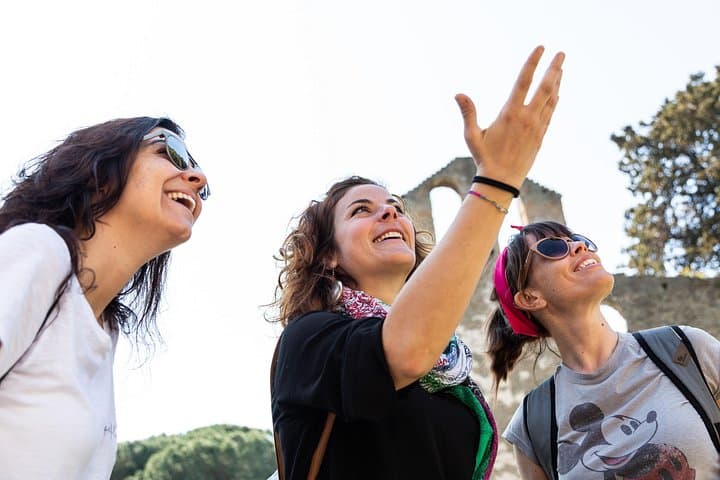
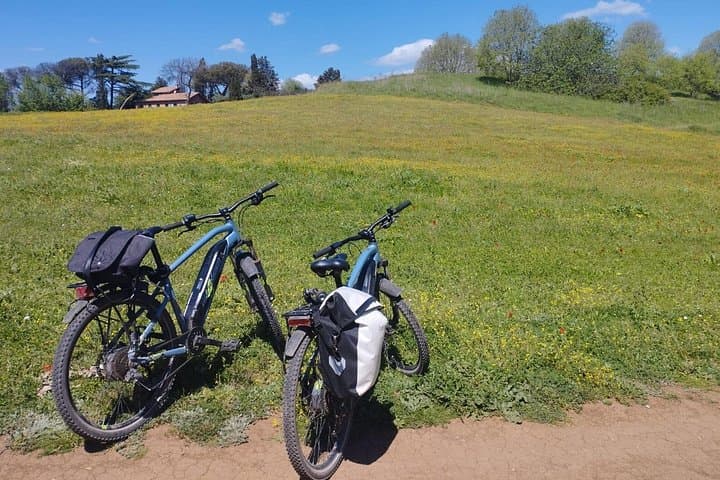
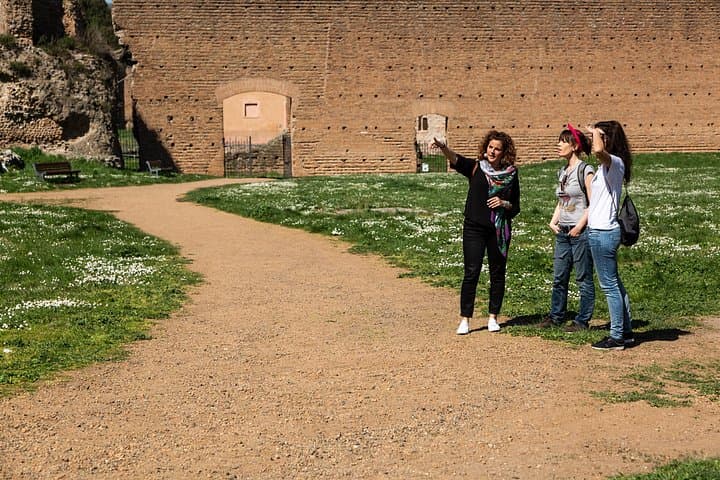
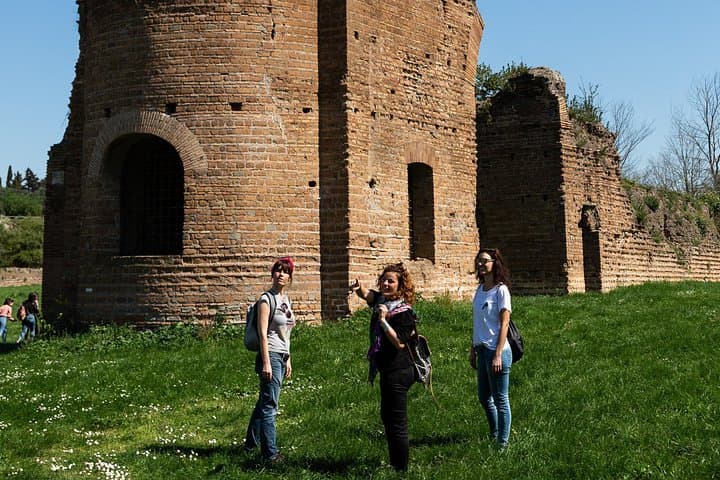
Early morning light slips between umbrella pines as riders push off on electric bikes, tires whispering over ancient basalt and modern asphalt alike. The air smells of grass, warm stone and espresso; the Appian Way stretches ahead, a paved spine that has carried people, armies and merchants for two millennia.
Early morning light slips between umbrella pines as riders push off on electric bikes, tires whispering over ancient basalt and modern asphalt alike. The air smells of grass, warm stone and espresso; the Appian Way stretches ahead, a paved spine that has carried people, armies and merchants for two millennia.
This route threads the Caffarella Valley and the Appia Antica, where Roman engineering meets fertile lowlands. Geologically the area sits on Pleistocene deposits overlying tufa and travertine outcrops, and the rolling fields preserve traces of Roman villas, aqueducts and road engineering. Visitors pass Capo di Bove’s mosaic floors and the Circus of Maxentius—structures that reveal imperial leisure carved into the countryside.
Cultural life here remains quietly agricultural: farmhouse casali, seasonal cheeses and salumi produced on small nearby properties. The tour’s picnic-style tasting follows that local rhythm—sit beneath a shaded oak, sample aged pecorino or fresh ricotta, and sip a regional wine while the countryside goes on its slow work.
Practical guidance: the e-bike levels the gradient so moderate fitness suffices, but wear closed-toe shoes and bring 1–2 liters of water. Expect mixed surfaces—paved Roman stones, packed dirt and short paved stretches—and a few cobbled patches that require steady handling. Midday can be hot in summer; plan tastings in late morning or late afternoon. Respect archaeological sites by staying on marked paths, and carry a light rain layer in spring or autumn. This day ride balances history, geology and gastronomy into a single, accessible Roman escape.