THE ADVENTURE COLLECTIVE® · Independent discovery and booking for outdoor travel

Ride an electric bicycle from Bravães through the Lima Valley into Peneda-Gerês, mixing reservoir views, granite granaries at Soajo and medieval village stops into a 3–4 hour guided loop. Ideal for riders with basic cycling experience who want scenery, culture and a possible summer swim.
Ride an electric bicycle from Bravães through the Lima Valley into Peneda-Gerês, mixing reservoir views, granite granaries at Soajo and medieval village stops into a 3–4 hour guided loop. Ideal for riders with basic cycling experience who want scenery, culture and a possible summer swim.
The river smells faintly of wet stone as you clip into the saddle at Bravães Kayak Park. Early light slices across the Lima and the first pedal strokes feel easy thanks to the electric assist; soon the valley opens, a patchwork of terraces, chestnut groves and slate roofs receding while the road climbs toward the serrated silhouette of Peneda-Gerês. By the time the path narrows to a dirt track, the e-bike is doing the heavy work and you can afford to look: Touvêdo reservoir pockets the valley below like a dark eye; stone walls and mill ruins press close; shepherd dogs watch you pass with lazy interest.
Verified experiences and guided adventures in the surrounding area.
Operated by Centro Aventura Park · Ponte da Barca, Viana do Castelo District
The river smells faintly of wet stone as you clip into the saddle at Bravães Kayak Park. Early light slices across the Lima and the first pedal strokes feel easy thanks to the electric assist; soon the valley opens, a patchwork of terraces, chestnut groves and slate roofs receding while the road climbs toward the serrated silhouette of Peneda-Gerês. By the time the path narrows to a dirt track, the e-bike is doing the heavy work and you can afford to look: Touvêdo reservoir pockets the valley below like a dark eye; stone walls and mill ruins press close; shepherd dogs watch you pass with lazy interest.
This ride threads together layers of human history and Atlantic geology. The Lima Valley was shaped by volcanic intrusions and glacial meltwater, leaving rounded granite outcrops that locals turned into the espigueiros—granite granaries—of Soajo, perched like small stone villages above terraced fields. The park itself, Portugal’s only national park established in 1971, protects traditional transhumant routes and remote villages whose architecture and farming patterns have changed little in centuries.
Culturally the route sings a simple song: medieval monasteries in Ermelo, river crossings at Ponte da Barca, communal ovens and cafés where riders stop for coffee and bolo. Nature puts on a different show: oak forests, peat bogs on higher ridges, and reservoirs that attract raptors and migratory waterfowl.
Practical guide: the operator meets at Bravães Kayak Park (GPS 41.809615, -8.444108). Expect a 3–4 hour outing covering roughly 20–30 km with cumulative climbs in the 400–700 m range—manageable on an e-bike but involving some unpaved, rocky sections and short, steep pitches. The itinerary includes viewpoints over the Touvêdo reservoir, a photo stop in a traditional village, and time at Soajo to inspect the stone granaries; in summer there’s usually a seasonal swim in natural pools.
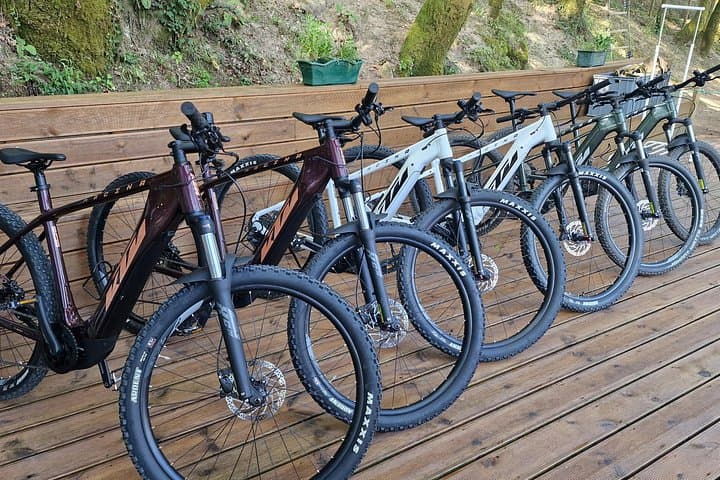
Wear sturdy trainers or light mountain bike shoes, bring layered clothing and a light waterproof—weather on the northern slopes can turn quickly. Hydrate before you start; carry at least 1–1.5 liters and a compact snack. Battery concerns are real: ensure the guide checks charge before leaving and discuss assist levels on climbs. Bring a small repair kit and know how to use the throttle and gears—basic bike handling is required. The company supplies high-quality e-bikes, helmets and insurance, and return transport is included if needed.
Best time is late spring through early fall for comfortable temperatures and open swimming. Move deliberately through the villages, respect private fields, and take the quiet lanes: the Lima Valley rewards patients with views and small, human-scale encounters that make the ride feel like a timed conversation with the landscape.
The tour runs about 3–4 hours, covering roughly 20–30 km with 400–700 m of cumulative climbing—moderate effort aided by the e-bike.
Yes, batteries are sized for the tour, but confirm charge before departure and use lower assist on flats to conserve juice for climbs.
Seasonal stops at natural pools in Soajo are usually available in warmer months—bring swimwear and a quick-dry towel.
Return transport is available on request; the meeting point is Bravães Kayak Park (GPS 41.809615, -8.444108) and Ponte da Barca is a short taxi away.
Basic cycling experience and comfort on mixed-surface tracks is required; steep short pitches will be easier with e-assist but require balance.
Not recommended for travelers with serious heart or spinal conditions or for pregnant guests; operators typically ask for age and emergency details at booking.
Centro Aventura Park operates guided outdoor trips and adventures with an emphasis on safety, stewardship, and memorable experiences.
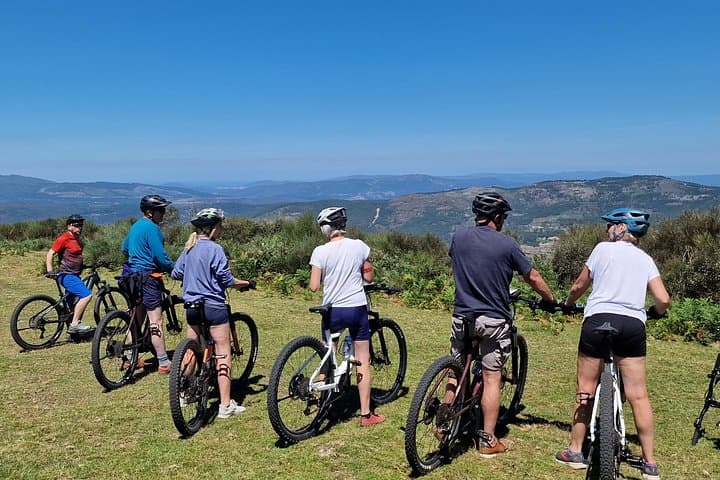

The river smells faintly of wet stone as you clip into the saddle at Bravães Kayak Park. Early light slices across the Lima and the first pedal strokes feel easy thanks to the electric assist; soon the valley opens, a patchwork of terraces, chestnut groves and slate roofs receding while the road climbs toward the serrated silhouette of Peneda-Gerês. By the time the path narrows to a dirt track, the e-bike is doing the heavy work and you can afford to look: Touvêdo reservoir pockets the valley below like a dark eye; stone walls and mill ruins press close; shepherd dogs watch you pass with lazy interest.
The river smells faintly of wet stone as you clip into the saddle at Bravães Kayak Park. Early light slices across the Lima and the first pedal strokes feel easy thanks to the electric assist; soon the valley opens, a patchwork of terraces, chestnut groves and slate roofs receding while the road climbs toward the serrated silhouette of Peneda-Gerês. By the time the path narrows to a dirt track, the e-bike is doing the heavy work and you can afford to look: Touvêdo reservoir pockets the valley below like a dark eye; stone walls and mill ruins press close; shepherd dogs watch you pass with lazy interest.
This ride threads together layers of human history and Atlantic geology. The Lima Valley was shaped by volcanic intrusions and glacial meltwater, leaving rounded granite outcrops that locals turned into the espigueiros—granite granaries—of Soajo, perched like small stone villages above terraced fields. The park itself, Portugal’s only national park established in 1971, protects traditional transhumant routes and remote villages whose architecture and farming patterns have changed little in centuries.
Culturally the route sings a simple song: medieval monasteries in Ermelo, river crossings at Ponte da Barca, communal ovens and cafés where riders stop for coffee and bolo. Nature puts on a different show: oak forests, peat bogs on higher ridges, and reservoirs that attract raptors and migratory waterfowl.
Practical guide: the operator meets at Bravães Kayak Park (GPS 41.809615, -8.444108). Expect a 3–4 hour outing covering roughly 20–30 km with cumulative climbs in the 400–700 m range—manageable on an e-bike but involving some unpaved, rocky sections and short, steep pitches. The itinerary includes viewpoints over the Touvêdo reservoir, a photo stop in a traditional village, and time at Soajo to inspect the stone granaries; in summer there’s usually a seasonal swim in natural pools.
Wear sturdy trainers or light mountain bike shoes, bring layered clothing and a light waterproof—weather on the northern slopes can turn quickly. Hydrate before you start; carry at least 1–1.5 liters and a compact snack. Battery concerns are real: ensure the guide checks charge before leaving and discuss assist levels on climbs. Bring a small repair kit and know how to use the throttle and gears—basic bike handling is required. The company supplies high-quality e-bikes, helmets and insurance, and return transport is included if needed.
Best time is late spring through early fall for comfortable temperatures and open swimming. Move deliberately through the villages, respect private fields, and take the quiet lanes: the Lima Valley rewards patients with views and small, human-scale encounters that make the ride feel like a timed conversation with the landscape.