THE ADVENTURE COLLECTIVE® · Independent discovery and booking for outdoor travel

Swap city traffic for tuff cliffs and vineyard roads on a private E‑bike day trip from Rome to Orvieto and Civita di Bagnoregio. This guided ride combines a comfortable transfer, expert local narration, and scenic e‑biking on secondary roads.
Swap city traffic for tuff cliffs and vineyard roads on a private E‑bike day trip from Rome to Orvieto and Civita di Bagnoregio. This guided ride combines a comfortable transfer, expert local narration, and scenic e‑biking on secondary roads.
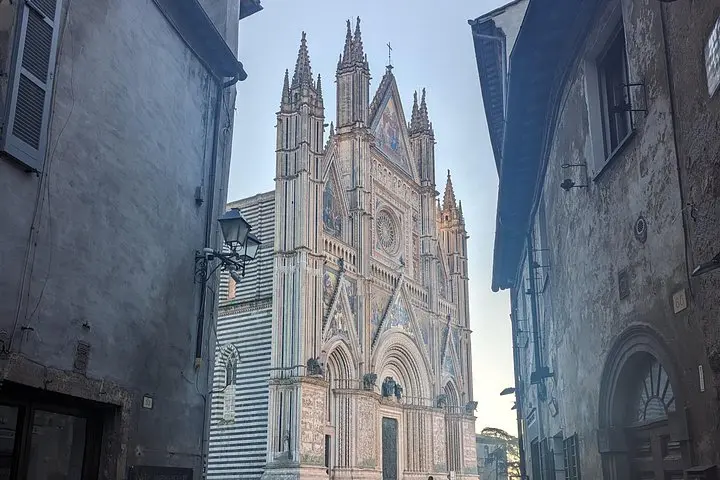
The day opens in a quiet hotel lobby in Rome: an 8-seater minivan idles, bikes clink on the trailer, and the road unspools toward Umbria's weathered cliffs. You arrive at Orvieto to mount an electric bike and immediately feel the landscape pulling you—tuff plateaus rising like living bedrock, fields folding into calanchi gullies, and the cathedral's mosaic façade catching the light.
Verified experiences and guided adventures in the surrounding area.
Operated by Bicycle Roma · Orvieto, Umbria
The day opens in a quiet hotel lobby in Rome: an 8-seater minivan idles, bikes clink on the trailer, and the road unspools toward Umbria's weathered cliffs. You arrive at Orvieto to mount an electric bike and immediately feel the landscape pulling you—tuff plateaus rising like living bedrock, fields folding into calanchi gullies, and the cathedral's mosaic façade catching the light.
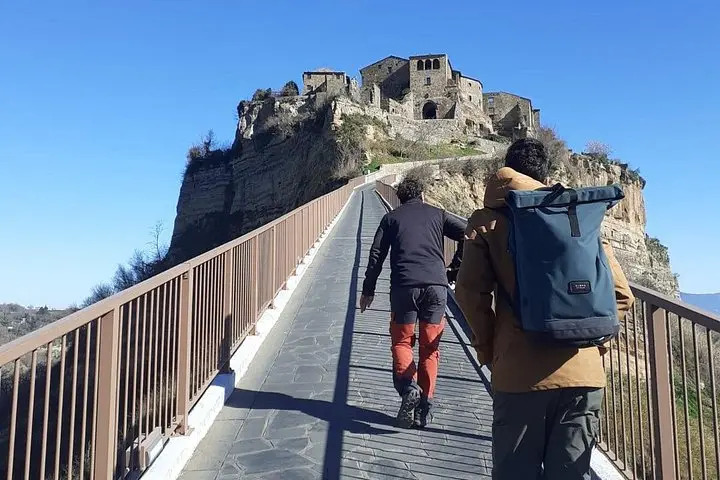
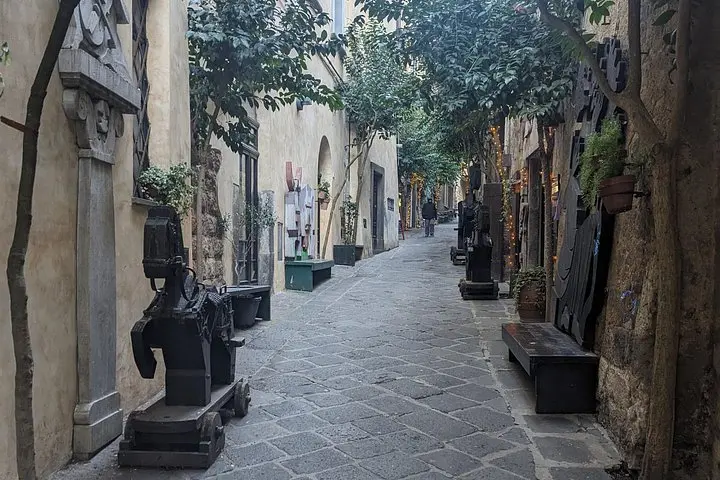
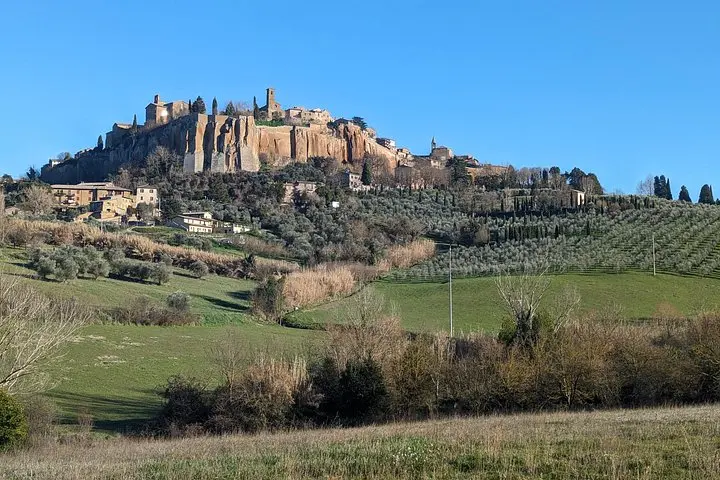
Orvieto sits on volcanic tuff formed millions of years ago; its Duomo is a Gothic page in a much older Etruscan book. Down-valley, Civita di Bagnoregio perches on an eroding plug of tuff and earns the nickname “The Dying City” from centuries of geological wear. The route between them follows secondary roads and village lanes through olive groves and vineyards, passing medieval villages and lookout points where the badlands reach toward the horizon.
Expect three to five hours of on-bike time depending on stops, with short pushes of elevation as you climb to viewpoints and descend toward Lubriano. Roads are mostly paved but narrow and open to light traffic; a pre-ride assessment confirms e-bike handling ability. Your guide steers logistics: helmet fitted, entrance ticket to Civita arranged, and stories about local wine, volcanic soils, and civic history woven between pedal strokes.
Practical note: bring layered clothing for stiff morning winds, carry 1–2 liters of water, and wear sturdy shoes for the pedestrian bridge into Civita. The transfer eliminates logistics stress—so you can focus on the riding, the views, and the geology daring you to look over the cliff edge.
The tour requires moderate fitness: expect 25–35 km of easy-to-moderate riding with short climbs; a pre-ride skills check is performed and guides can exclude participants not meeting safety standards.
Yes—round-trip private transfer in an 8-seater minivan with a bike trailer is included, removing the need for separate transport arrangements.
Yes—high-quality electric bikes and safety helmets are included; you should still bring appropriate clothing and shoes.
No—Civita’s access is a pedestrian bridge; bikes are locked at the entry point and you walk into the village; entrance ticket is included.
Bicycle Roma operates guided outdoor trips and adventures with an emphasis on safety, stewardship, and memorable experiences.
The day opens in a quiet hotel lobby in Rome: an 8-seater minivan idles, bikes clink on the trailer, and the road unspools toward Umbria's weathered cliffs. You arrive at Orvieto to mount an electric bike and immediately feel the landscape pulling you—tuff plateaus rising like living bedrock, fields folding into calanchi gullies, and the cathedral's mosaic façade catching the light.
The day opens in a quiet hotel lobby in Rome: an 8-seater minivan idles, bikes clink on the trailer, and the road unspools toward Umbria's weathered cliffs. You arrive at Orvieto to mount an electric bike and immediately feel the landscape pulling you—tuff plateaus rising like living bedrock, fields folding into calanchi gullies, and the cathedral's mosaic façade catching the light.
Orvieto sits on volcanic tuff formed millions of years ago; its Duomo is a Gothic page in a much older Etruscan book. Down-valley, Civita di Bagnoregio perches on an eroding plug of tuff and earns the nickname “The Dying City” from centuries of geological wear. The route between them follows secondary roads and village lanes through olive groves and vineyards, passing medieval villages and lookout points where the badlands reach toward the horizon.
Expect three to five hours of on-bike time depending on stops, with short pushes of elevation as you climb to viewpoints and descend toward Lubriano. Roads are mostly paved but narrow and open to light traffic; a pre-ride assessment confirms e-bike handling ability. Your guide steers logistics: helmet fitted, entrance ticket to Civita arranged, and stories about local wine, volcanic soils, and civic history woven between pedal strokes.
Practical note: bring layered clothing for stiff morning winds, carry 1–2 liters of water, and wear sturdy shoes for the pedestrian bridge into Civita. The transfer eliminates logistics stress—so you can focus on the riding, the views, and the geology daring you to look over the cliff edge.