THE ADVENTURE COLLECTIVE® · Independent discovery and booking for outdoor travel

Pedal between Dutch and French St Maarten on a 4‑hour e‑bike tour that climbs Cay Hill, crosses the Causeway and finishes with panoramic views from Fort Louis. Expect busy roads, powerful e‑bike assist and lively market stops in Marigot.
Pedal between Dutch and French St Maarten on a 4‑hour e‑bike tour that climbs Cay Hill, crosses the Causeway and finishes with panoramic views from Fort Louis. Expect busy roads, powerful e‑bike assist and lively market stops in Marigot.
A harbor breeze lifts the salt and engine hum as you clip in at the cruise terminal and set off on a hardtail Cube Acid e‑bike. The town slips behind you, palms and corrugated roofs giving way to a road that climbs and opens onto a wide lagoon and scattered islets—views that reward the short, steeper pitches.
Verified experiences and guided adventures in the surrounding area.
Operated by Tri-Sport · Philipsburg, Sint Maarten
A harbor breeze lifts the salt and engine hum as you clip in at the cruise terminal and set off on a hardtail Cube Acid e‑bike. The town slips behind you, palms and corrugated roofs giving way to a road that climbs and opens onto a wide lagoon and scattered islets—views that reward the short, steeper pitches.
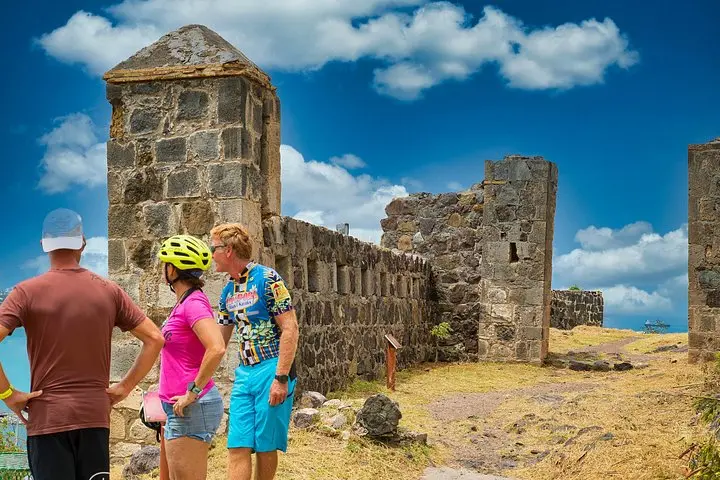
The ride threads Dutch Philipsburg and the French Marigot, crossing a modern border that still recalls 17th–18th century colonial rivalry. The island’s backbone is a mix of volcanic ridges and near‑shore limestone, which gives its slopes quick, exposed climbs and hardpack roads. Fort Louis looms above Marigot, a late‑18th‑century artillery site that now offers sweeping panoramas and a reminder of the island’s strategic past.
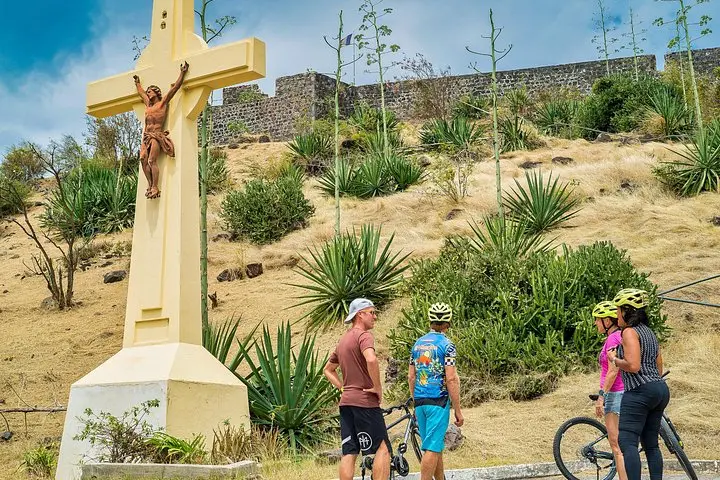
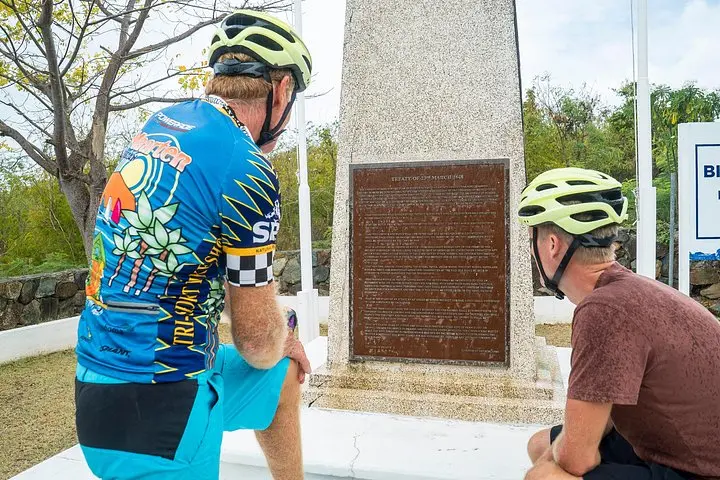
Culturally the route is bilingual and bicultural: Dutch storefronts and duty‑free shops blend into French cafés and an open market where fresh fish and spices change the air. Stops include Cay Hill lookout, The Causeway, the Border Monument, Marigot market place and Fort Louis—each a snapshot of local life.
Practical notes: the tour lasts about four hours and covers roughly 12–15 miles (20–25 km) of paved, open roads with several short steep sections—expect cumulative ascent around 150–300 m (500–1,000 ft). There are no dedicated cycle lanes; you’ll ride with vehicular traffic, so steady bike handling is essential. Helmets are provided; bring sunscreen, a refillable water bottle and shoes suitable for short climbs and stairs at viewpoints. Morning departures avoid midday heat and give cleaner light for photos. For cruise passengers the meeting point is the Peter Stuyvesant statue in the terminal; land guests meet at the EDC parking white tent.
Yes—Hardtail Cube Acid e‑bikes provide pedal assist that makes short steep climbs manageable, but you’ll still be pedaling and should be comfortable using gears.
Participants must know how to ride a geared bike and be at least 5' tall; moderate fitness and confidence riding in traffic are recommended.
Yes—the tour meets at the Peter Stuyvesant statue inside the cruise terminal; allow time for tendering and terminal procedures before the start time.
The route visits both Dutch and French areas; while day crossings are routine, carry ID or passport per cruise or travel guidelines and follow local instructions from your guide.
Tri-Sport operates guided outdoor trips and adventures with an emphasis on safety, stewardship, and memorable experiences.
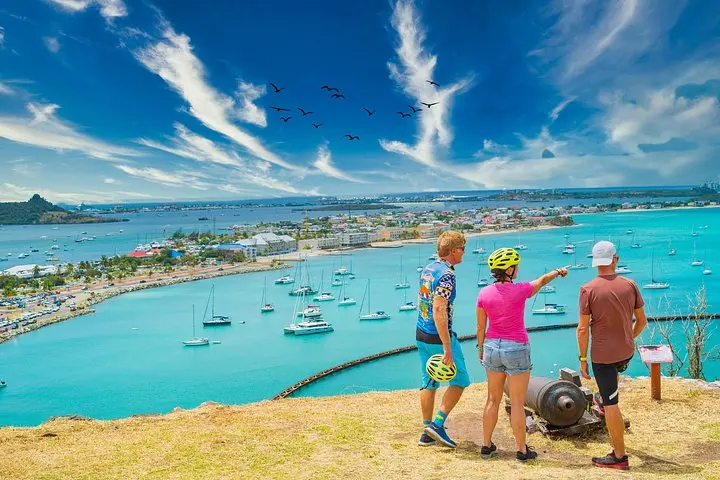
A harbor breeze lifts the salt and engine hum as you clip in at the cruise terminal and set off on a hardtail Cube Acid e‑bike. The town slips behind you, palms and corrugated roofs giving way to a road that climbs and opens onto a wide lagoon and scattered islets—views that reward the short, steeper pitches.
A harbor breeze lifts the salt and engine hum as you clip in at the cruise terminal and set off on a hardtail Cube Acid e‑bike. The town slips behind you, palms and corrugated roofs giving way to a road that climbs and opens onto a wide lagoon and scattered islets—views that reward the short, steeper pitches.
The ride threads Dutch Philipsburg and the French Marigot, crossing a modern border that still recalls 17th–18th century colonial rivalry. The island’s backbone is a mix of volcanic ridges and near‑shore limestone, which gives its slopes quick, exposed climbs and hardpack roads. Fort Louis looms above Marigot, a late‑18th‑century artillery site that now offers sweeping panoramas and a reminder of the island’s strategic past.
Culturally the route is bilingual and bicultural: Dutch storefronts and duty‑free shops blend into French cafés and an open market where fresh fish and spices change the air. Stops include Cay Hill lookout, The Causeway, the Border Monument, Marigot market place and Fort Louis—each a snapshot of local life.
Practical notes: the tour lasts about four hours and covers roughly 12–15 miles (20–25 km) of paved, open roads with several short steep sections—expect cumulative ascent around 150–300 m (500–1,000 ft). There are no dedicated cycle lanes; you’ll ride with vehicular traffic, so steady bike handling is essential. Helmets are provided; bring sunscreen, a refillable water bottle and shoes suitable for short climbs and stairs at viewpoints. Morning departures avoid midday heat and give cleaner light for photos. For cruise passengers the meeting point is the Peter Stuyvesant statue in the terminal; land guests meet at the EDC parking white tent.