THE ADVENTURE COLLECTIVE® · Independent discovery and booking for outdoor travel

Escape Rome’s bustle on an e-bike along the Via Appia Antica—ride past aqueducts, mausoleums and ancient catacombs on a half-day tour that combines history, easy cycling, and parkland views. Learn what to expect, when to go, and how to prepare for mixed surfaces and timed underground visits.
Escape Rome’s bustle on an e-bike along the Via Appia Antica—ride past aqueducts, mausoleums and ancient catacombs on a half-day tour that combines history, easy cycling, and parkland views. Learn what to expect, when to go, and how to prepare for mixed surfaces and timed underground visits.
Pedal away from Rome’s frenetic center and into a landscape where road stones keep the memory of Roman carts. The ride opens with the city’s silhouette shrinking behind you while the Via Appia Antica stretches ahead—long lines of pines and grass-grown slabs that push riders into a different tempo. E-bikes add a steady push; the ancient pavement demands attention and rewards it with quiet turns and unexpected views.
Verified experiences and guided adventures in the surrounding area.
Operated by GOLF CART TOUR ROME · Rome, Lazio
Pedal away from Rome’s frenetic center and into a landscape where road stones keep the memory of Roman carts. The ride opens with the city’s silhouette shrinking behind you while the Via Appia Antica stretches ahead—long lines of pines and grass-grown slabs that push riders into a different tempo. E-bikes add a steady push; the ancient pavement demands attention and rewards it with quiet turns and unexpected views.
This corridor of road was begun in 312 BCE under Appius Claudius Caecus to link Rome to southern Italy. Along the route, funerary monuments like the Mausoleum of Cecilia Metella and the Circus of Maxentius read like chapters of imperial life, while the underground catacombs record Rome’s early Christian communities and funerary practices. Geologically, the low rolling hills here are capped by volcanic tufa and travertine fragments—materials Romans quarried for buildings and tombs. Local culture today blends pastoral parkland with archaeological stewardship: shepherded fields, restored aqueducts, and small churches that kept community rhythms alive through centuries.
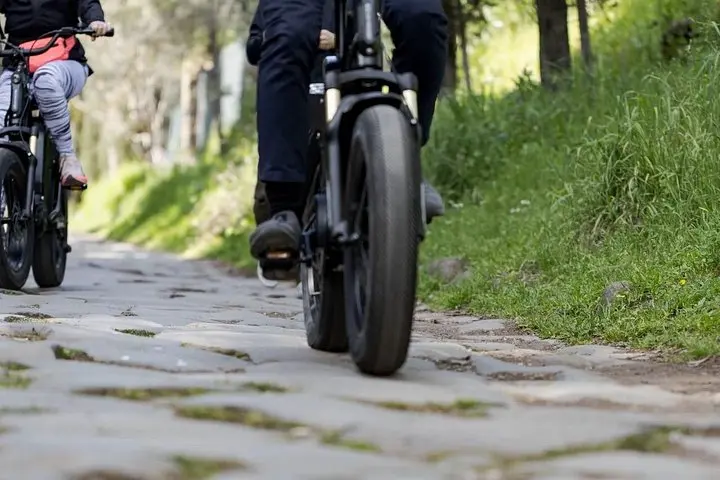
Practical guidance: expect roughly a half-day ride (about 4–5 hours) on mixed surfaces—paved stretches, packed dirt, and uneven basalt cobbles. Bring a charged phone and a small pump; helmet use is mandatory even if provided. Hydrate frequently; water fountains are sparse between sites. Time your visit for morning or late afternoon to avoid the hottest sun and to see light fall across ruins. Keep to marked paths, respect restricted areas around monuments, and allow extra time for the guided catacombs visit—entry is timed and well worth it.
The guided itinerary lasts about 4–5 hours with frequent stops; electric assist reduces continuous effort though riders still pedal on mixed surfaces.
Yes—e-bikes and helmets are provided as part of the tour price.
The catacombs include narrow corridors and dim lighting; those with severe claustrophobia should skip the underground section or consult the guide beforehand.
Many operators allow older children who are comfortable cycling; check age and height restrictions with the provider when booking.
GOLF CART TOUR ROME operates guided outdoor trips and adventures with an emphasis on safety, stewardship, and memorable experiences.
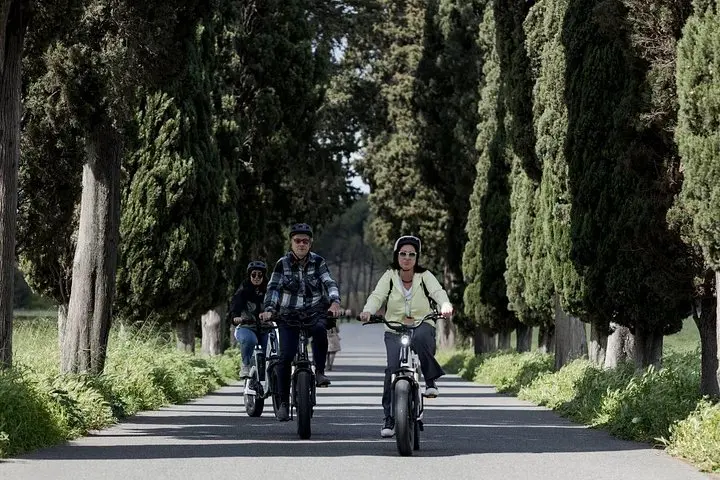
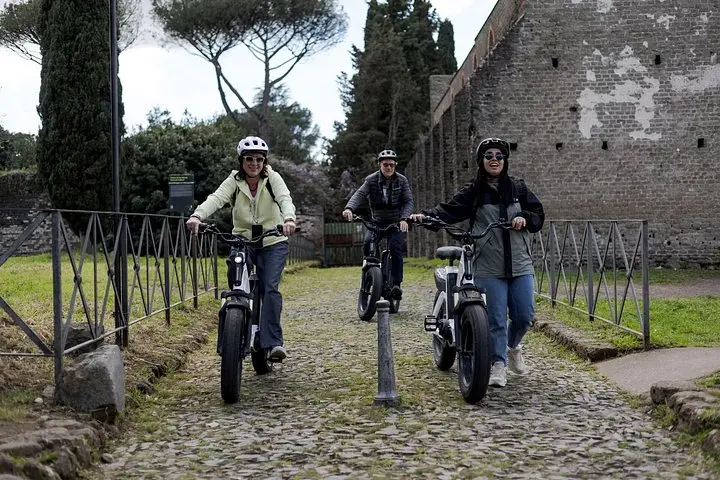

Pedal away from Rome’s frenetic center and into a landscape where road stones keep the memory of Roman carts. The ride opens with the city’s silhouette shrinking behind you while the Via Appia Antica stretches ahead—long lines of pines and grass-grown slabs that push riders into a different tempo. E-bikes add a steady push; the ancient pavement demands attention and rewards it with quiet turns and unexpected views.
Pedal away from Rome’s frenetic center and into a landscape where road stones keep the memory of Roman carts. The ride opens with the city’s silhouette shrinking behind you while the Via Appia Antica stretches ahead—long lines of pines and grass-grown slabs that push riders into a different tempo. E-bikes add a steady push; the ancient pavement demands attention and rewards it with quiet turns and unexpected views.
This corridor of road was begun in 312 BCE under Appius Claudius Caecus to link Rome to southern Italy. Along the route, funerary monuments like the Mausoleum of Cecilia Metella and the Circus of Maxentius read like chapters of imperial life, while the underground catacombs record Rome’s early Christian communities and funerary practices. Geologically, the low rolling hills here are capped by volcanic tufa and travertine fragments—materials Romans quarried for buildings and tombs. Local culture today blends pastoral parkland with archaeological stewardship: shepherded fields, restored aqueducts, and small churches that kept community rhythms alive through centuries.
Practical guidance: expect roughly a half-day ride (about 4–5 hours) on mixed surfaces—paved stretches, packed dirt, and uneven basalt cobbles. Bring a charged phone and a small pump; helmet use is mandatory even if provided. Hydrate frequently; water fountains are sparse between sites. Time your visit for morning or late afternoon to avoid the hottest sun and to see light fall across ruins. Keep to marked paths, respect restricted areas around monuments, and allow extra time for the guided catacombs visit—entry is timed and well worth it.