THE ADVENTURE COLLECTIVE® · Independent discovery and booking for outdoor travel

Ride quiet vineyard lanes on a high-end electric bike, taste 5–7 Chablis wines, and learn how Kimmeridgian limestone shapes each bottle. A three-hour guided loop visits 1er crus, the village and a working winery.
Ride quiet vineyard lanes on a high-end electric bike, taste 5–7 Chablis wines, and learn how Kimmeridgian limestone shapes each bottle. A three-hour guided loop visits 1er crus, the village and a working winery.
You push off from the village and the road unfurls between narrow rows of vines; the e-bike gives the first, quiet push and suddenly the slopes feel reachable. Sunlight skates across pale limestone soils, and the guide—half cycling coach, half wine professional—points out the contour lines that make Chablis’s 1er cru and Grand cru sites distinct.
Verified experiences and guided adventures in the surrounding area.
Operated by Cycle Divin · Chablis, Bourgogne-Franche-Comté
You push off from the village and the road unfurls between narrow rows of vines; the e-bike gives the first, quiet push and suddenly the slopes feel reachable. Sunlight skates across pale limestone soils, and the guide—half cycling coach, half wine professional—points out the contour lines that make Chablis’s 1er cru and Grand cru sites distinct.
Chablis sits on Kimmeridgian limestone and marl, its geology shaping the high-acid, flinty character of the wine. The town’s medieval streets and the stone church speak to a long rural wine culture; here, small family domaines still manage steep parcels by hand. The tour threads secure vineyard tracks and quiet country lanes, climbing to viewpoints used by growers to assess frost and ripeness.
Expect about 15–20 km covered in roughly three hours, with stops for on-site explanation of viticulture, a walk through a winery from vat room to cellar, and a tasting of 5–7 Chablis wines that highlights differences between village, 1er cru and Grand cru expressions.
Practicalities: the operator supplies high-end electric VTC bikes, helmets and water bottles; riders should bring ID for tastings, sturdy shoes, layered clothing and a charged phone. Rides run best in calm weather—wind can expose the exposed slopes—and groups are kept small to preserve orchard and vineyard tracks. For an accessible way to read the land while sampling its product, this tour delivers context, terrain and tasting in a compact, rideable package.
The guided route covers roughly 15–20 km over about three hours, with multiple stops for explanation and wine tastings.
Yes—tastings of approximately 5–7 Chablis wines, including a visit to a wine estate, are included in the tour.
No; the electric bikes provide assistance and the tour is suitable for most fitness levels, though basic bike balance is necessary.
Trailer bikes and child trailers are available—confirm at booking and provide ages/weights so the operator can prepare appropriate equipment.
Cycle Divin operates guided outdoor trips and adventures with an emphasis on safety, stewardship, and memorable experiences.
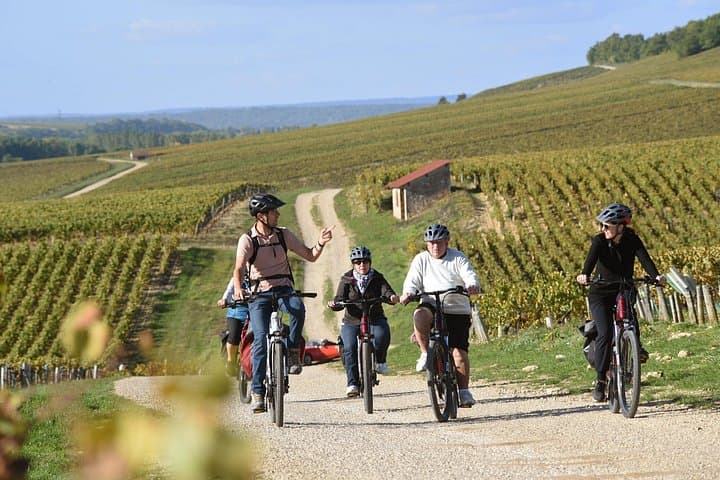
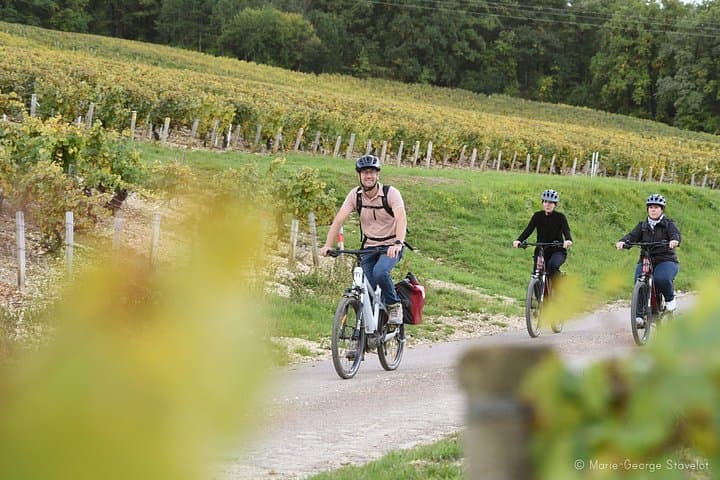
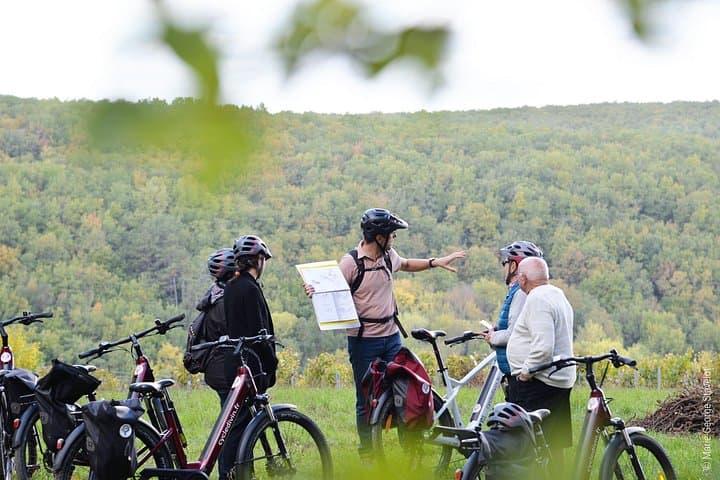
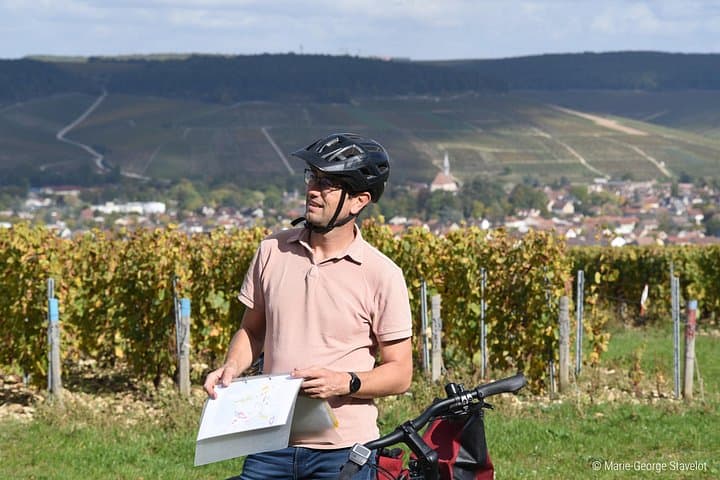
You push off from the village and the road unfurls between narrow rows of vines; the e-bike gives the first, quiet push and suddenly the slopes feel reachable. Sunlight skates across pale limestone soils, and the guide—half cycling coach, half wine professional—points out the contour lines that make Chablis’s 1er cru and Grand cru sites distinct.
You push off from the village and the road unfurls between narrow rows of vines; the e-bike gives the first, quiet push and suddenly the slopes feel reachable. Sunlight skates across pale limestone soils, and the guide—half cycling coach, half wine professional—points out the contour lines that make Chablis’s 1er cru and Grand cru sites distinct.
Chablis sits on Kimmeridgian limestone and marl, its geology shaping the high-acid, flinty character of the wine. The town’s medieval streets and the stone church speak to a long rural wine culture; here, small family domaines still manage steep parcels by hand. The tour threads secure vineyard tracks and quiet country lanes, climbing to viewpoints used by growers to assess frost and ripeness.
Expect about 15–20 km covered in roughly three hours, with stops for on-site explanation of viticulture, a walk through a winery from vat room to cellar, and a tasting of 5–7 Chablis wines that highlights differences between village, 1er cru and Grand cru expressions.
Practicalities: the operator supplies high-end electric VTC bikes, helmets and water bottles; riders should bring ID for tastings, sturdy shoes, layered clothing and a charged phone. Rides run best in calm weather—wind can expose the exposed slopes—and groups are kept small to preserve orchard and vineyard tracks. For an accessible way to read the land while sampling its product, this tour delivers context, terrain and tasting in a compact, rideable package.