THE ADVENTURE COLLECTIVE® · Independent discovery and booking for outdoor travel

Ride quiet village tracks on an e-bike, learn basket-weaving from local artisans, then glide by floating houses on Tonle Sap. This half-day tour pairs easy electric-assisted cycling with a revealing boat trip into Cambodia’s largest freshwater lake.
Ride quiet village tracks on an e-bike, learn basket-weaving from local artisans, then glide by floating houses on Tonle Sap. This half-day tour pairs easy electric-assisted cycling with a revealing boat trip into Cambodia’s largest freshwater lake.
Wheels whisper over packed dirt as an e-bike lifts you through villages where wooden stilt houses balance above the wet season’s memory. Children wave from shaded porches; rice paddies fan out like green fields marked by narrow irrigation channels. The ride finishes at the river mouth, where a small boat pushes into Tonle Sap’s flooded forest and drifting houses.
Verified experiences and guided adventures in the surrounding area.
Operated by Camouflage Adventures Cambodia · Kompong Phluke, Siem Reap Province
Wheels whisper over packed dirt as an e-bike lifts you through villages where wooden stilt houses balance above the wet season’s memory. Children wave from shaded porches; rice paddies fan out like green fields marked by narrow irrigation channels. The ride finishes at the river mouth, where a small boat pushes into Tonle Sap’s flooded forest and drifting houses.
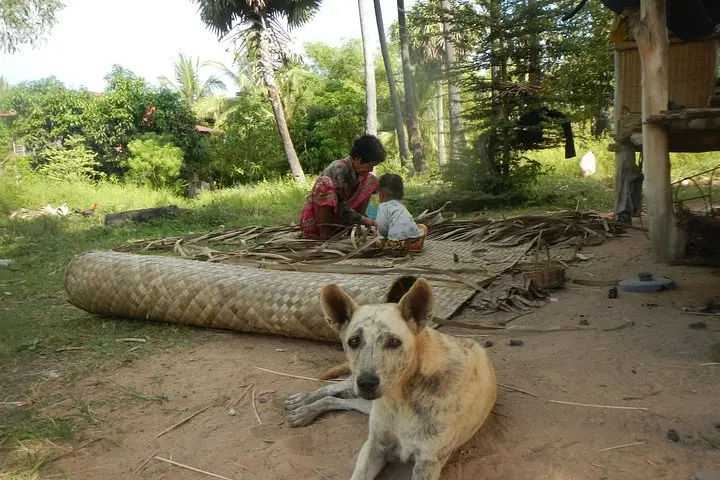
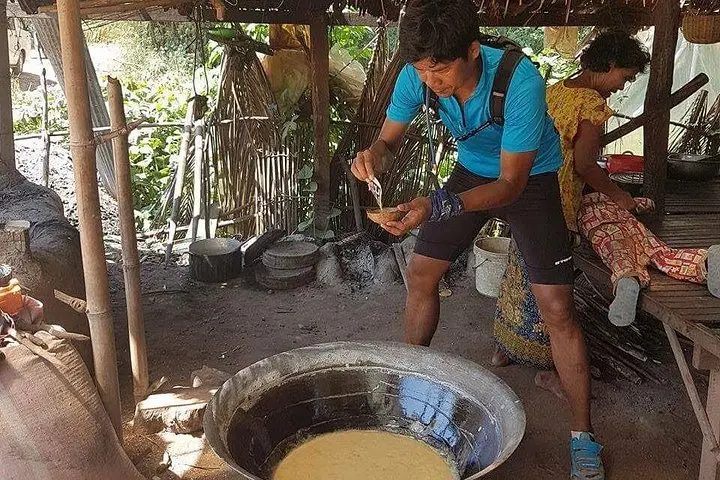
This corridor around Kompong Phluke sits at the eastern fringe of Tonle Sap — Southeast Asia’s largest freshwater lake — and close to the Roluos group of 9th-century temples that were part of Hariharalaya, an early Khmer capital. Geologically the plain is riverine: sediment layers from the Mekong Delta feed seasonal floods that swell the lake and give rise to floating villages and mangrove stands. Culturally, the route is everyday Cambodia: markets, basket weaving, pagoda life and boat operators whose livelihoods follow the lake’s pulse.
Expect 5 hours of mixed riding and short walks, punctuated by market stops and a 30–60 minute boat segment visiting stilt and floating houses. The e-bike assists across flat but uneven farm tracks; you’ll handle short climbs into compacted soil and maneuver around livestock and market traffic.
Practical tips: start early to avoid midday heat, carry insect repellent for lakeside sections, and wear closed shoes for village surfaces. Respect local customs—ask before photographing people—and bring small cash for market purchases and community tips. The trip mixes low-impact adventure with direct cultural encounters, ideal for travelers who want active exploration without technical difficulty.
No advanced skills required — the e-bike provides pedal assistance on flat farm tracks, but riders should be comfortable steering and balancing for several hours.
Yes, the boat segment is part of the tour and life jackets are provided; guides will brief you before departure.
Guides typically speak English and Khmer; hotel pickup and drop-off in Siem Reap are included per the tour details.
Restrooms are available at the basecamp, some market stops, and at the floating-restaurant stop, though facilities are basic.
Camouflage Adventures Cambodia operates guided outdoor trips and adventures with an emphasis on safety, stewardship, and memorable experiences.
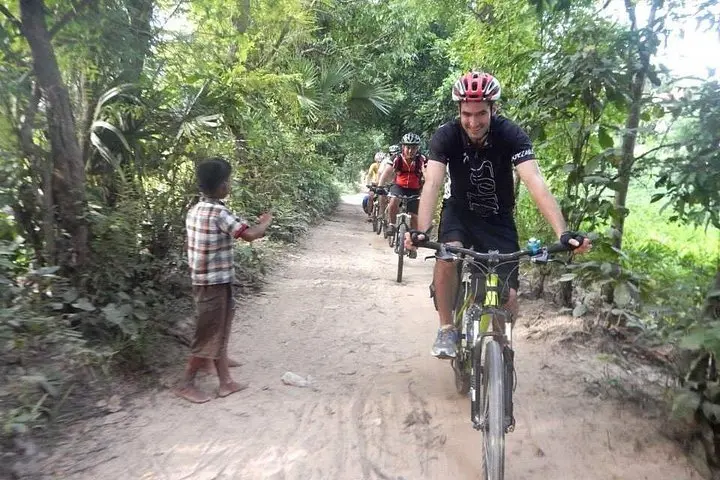
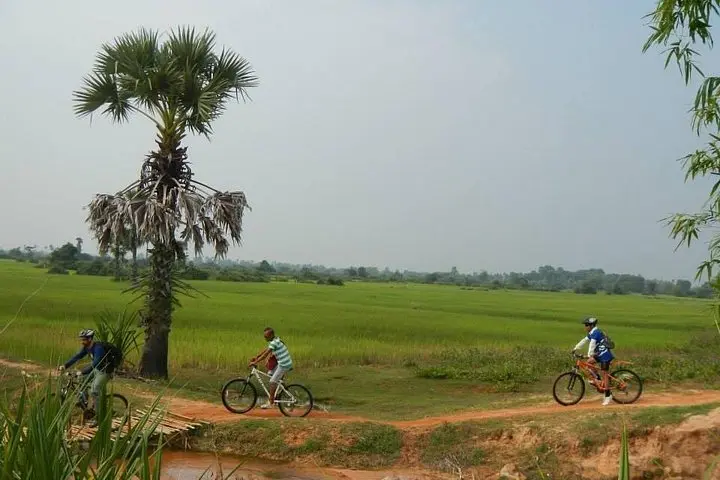
Wheels whisper over packed dirt as an e-bike lifts you through villages where wooden stilt houses balance above the wet season’s memory. Children wave from shaded porches; rice paddies fan out like green fields marked by narrow irrigation channels. The ride finishes at the river mouth, where a small boat pushes into Tonle Sap’s flooded forest and drifting houses.
Wheels whisper over packed dirt as an e-bike lifts you through villages where wooden stilt houses balance above the wet season’s memory. Children wave from shaded porches; rice paddies fan out like green fields marked by narrow irrigation channels. The ride finishes at the river mouth, where a small boat pushes into Tonle Sap’s flooded forest and drifting houses.
This corridor around Kompong Phluke sits at the eastern fringe of Tonle Sap — Southeast Asia’s largest freshwater lake — and close to the Roluos group of 9th-century temples that were part of Hariharalaya, an early Khmer capital. Geologically the plain is riverine: sediment layers from the Mekong Delta feed seasonal floods that swell the lake and give rise to floating villages and mangrove stands. Culturally, the route is everyday Cambodia: markets, basket weaving, pagoda life and boat operators whose livelihoods follow the lake’s pulse.
Expect 5 hours of mixed riding and short walks, punctuated by market stops and a 30–60 minute boat segment visiting stilt and floating houses. The e-bike assists across flat but uneven farm tracks; you’ll handle short climbs into compacted soil and maneuver around livestock and market traffic.
Practical tips: start early to avoid midday heat, carry insect repellent for lakeside sections, and wear closed shoes for village surfaces. Respect local customs—ask before photographing people—and bring small cash for market purchases and community tips. The trip mixes low-impact adventure with direct cultural encounters, ideal for travelers who want active exploration without technical difficulty.