THE ADVENTURE COLLECTIVE® · Independent discovery and booking for outdoor travel

A three-hour guided loop from Hudson Yards to the Hudson River that pairs the adrenaline of the Edge observation deck with the leafy elevated path of the High Line and the sculptural calm of Little Island. Perfect for travelers who want big skyline views and local context without the ticket-line hassle.
A three-hour guided loop from Hudson Yards to the Hudson River that pairs the adrenaline of the Edge observation deck with the leafy elevated path of the High Line and the sculptural calm of Little Island. Perfect for travelers who want big skyline views and local context without the ticket-line hassle.
The guide meets you beside the Vessel as morning light cuts across glass and steel. Hudson Yards hums—delivery trucks, commuters, the low thrum of elevators—yet five minutes later you’re standing 1,100 feet above Manhattan with the city spread like a map below. The Edge’s angled glass walls and a clear floor that dares you to look down make the first hour a concentrated dose of vertigo and skyline cinema. When the group descends, the pace shifts: a walk through Hudson Yards’ plazas, a quiet segment of the High Line where iron tracks still peek through the plants, and finally the unexpected calm of Little Island, a planted pier rising from the Hudson with sculpted hills that soften the river’s edge.
Verified experiences and guided adventures in the surrounding area.
Operated by LetzGo City Tours USA · New York, NY
The guide meets you beside the Vessel as morning light cuts across glass and steel. Hudson Yards hums—delivery trucks, commuters, the low thrum of elevators—yet five minutes later you’re standing 1,100 feet above Manhattan with the city spread like a map below. The Edge’s angled glass walls and a clear floor that dares you to look down make the first hour a concentrated dose of vertigo and skyline cinema. When the group descends, the pace shifts: a walk through Hudson Yards’ plazas, a quiet segment of the High Line where iron tracks still peek through the plants, and finally the unexpected calm of Little Island, a planted pier rising from the Hudson with sculpted hills that soften the river’s edge.
This three-hour circuit stitches together distinct chapters of New York’s recent reinvention. The High Line, once a freight rail, became a linear park that sparked a new civic imagination; Hudson Yards is its commercial and architectural corollary, built atop rail yards and engineered platforms. Little Island at Pier 55, designed with sculptural concrete “pots,” is the city’s experiment in bringing topography to the water—more landscape than pier, more public room than promenade.
You’ll cover urban terrain rather than alpine climbs: expect roughly 1.5–2 miles of walking across flat plazas, 30 feet of elevated park, and a handful of stair sections. The Edge visit occupies about 75 minutes (elevator access removes any significant elevation gain on foot), the High Line segment around 30 minutes, and Little Island about 60 minutes—total tour time is three hours as advertised.
Practical edge: arrive 15 minutes early to check in at 20 Hudson Yards. The tour operates in most weather, so layers and a windproof shell matter—the top of the Edge is exposed to river weather. Wear closed-toe shoes for cobblestone, incline and urban paths. The experience is not suitable for guests requiring mobility devices because of stairs and uneven surfaces.
Bring a charged phone for skyline shots and a portable battery; the glass floor and the Hudson vistas reward wide-angle framing. If you want fewer people in your pictures, request an early slot—this tour avoids peak midday lines by design. Guides fill the gaps between architecture and ecology with concise context: how the High Line reclaimed industrial infrastructure, Hudson Yards’ engineering challenges, and Little Island’s planting plan designed to attract pollinators.
Expect a pace that balances spectacle and stroll. The Edge gives you airborne perspective; the High Line shows how cities can turn obsolete infrastructure into public space; Little Island offers a quieter, wave-splashed counterpoint. For travelers who want a compact primer on Manhattan’s newest public spaces—with tickets and timing handled—this guided loop delivers both thrills and the kind of local insight that helps you see the city’s reinvention rather than just its surface.
The tour lasts about 3 hours with roughly 1.5–2 miles of walking, including a High Line segment and paths on Little Island.
The Edge has secure glass barriers and staff present, but the glass floor and angled viewing walls are exposed; the experience may be unsettling for those with vertigo.
Yes—timed access to the Edge and Little Island is included and handled by the guide as part of the tour.
This tour is not recommended for guests who require mobility devices due to stairs, uneven surfaces and limited ramp availability.
Comfortable closed-toe shoes and a windproof layer are recommended—dress in breathable layers for variable skyline and river conditions.
The tour operates in most weather but may be canceled for safety in severe conditions; check the cancellation policy for refunds and rescheduling.
LetzGo City Tours USA operates guided outdoor trips and adventures with an emphasis on safety, stewardship, and memorable experiences.
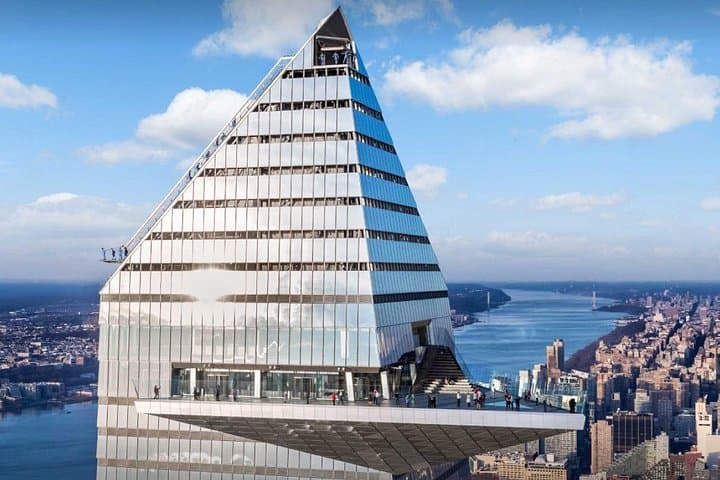
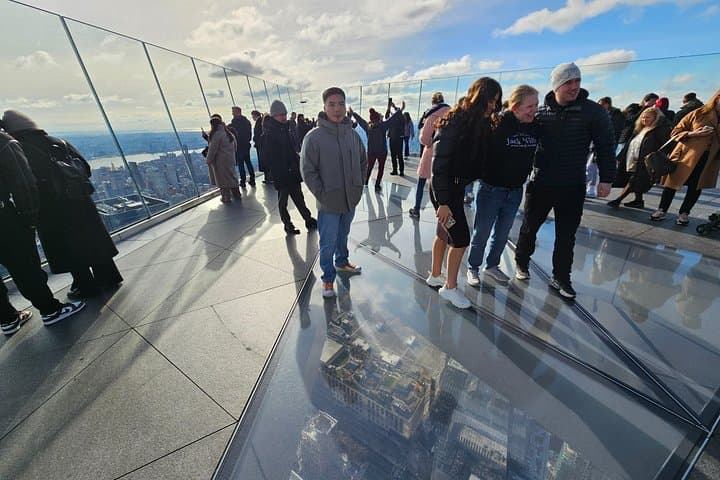
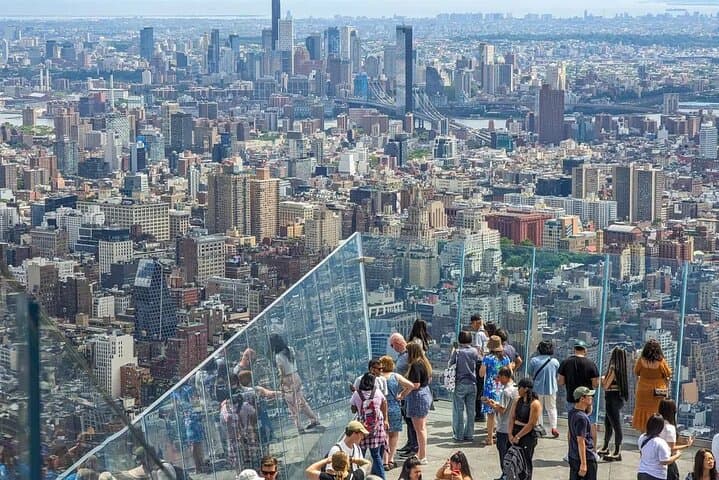

The guide meets you beside the Vessel as morning light cuts across glass and steel. Hudson Yards hums—delivery trucks, commuters, the low thrum of elevators—yet five minutes later you’re standing 1,100 feet above Manhattan with the city spread like a map below. The Edge’s angled glass walls and a clear floor that dares you to look down make the first hour a concentrated dose of vertigo and skyline cinema. When the group descends, the pace shifts: a walk through Hudson Yards’ plazas, a quiet segment of the High Line where iron tracks still peek through the plants, and finally the unexpected calm of Little Island, a planted pier rising from the Hudson with sculpted hills that soften the river’s edge.
The guide meets you beside the Vessel as morning light cuts across glass and steel. Hudson Yards hums—delivery trucks, commuters, the low thrum of elevators—yet five minutes later you’re standing 1,100 feet above Manhattan with the city spread like a map below. The Edge’s angled glass walls and a clear floor that dares you to look down make the first hour a concentrated dose of vertigo and skyline cinema. When the group descends, the pace shifts: a walk through Hudson Yards’ plazas, a quiet segment of the High Line where iron tracks still peek through the plants, and finally the unexpected calm of Little Island, a planted pier rising from the Hudson with sculpted hills that soften the river’s edge.
This three-hour circuit stitches together distinct chapters of New York’s recent reinvention. The High Line, once a freight rail, became a linear park that sparked a new civic imagination; Hudson Yards is its commercial and architectural corollary, built atop rail yards and engineered platforms. Little Island at Pier 55, designed with sculptural concrete “pots,” is the city’s experiment in bringing topography to the water—more landscape than pier, more public room than promenade.
You’ll cover urban terrain rather than alpine climbs: expect roughly 1.5–2 miles of walking across flat plazas, 30 feet of elevated park, and a handful of stair sections. The Edge visit occupies about 75 minutes (elevator access removes any significant elevation gain on foot), the High Line segment around 30 minutes, and Little Island about 60 minutes—total tour time is three hours as advertised.
Practical edge: arrive 15 minutes early to check in at 20 Hudson Yards. The tour operates in most weather, so layers and a windproof shell matter—the top of the Edge is exposed to river weather. Wear closed-toe shoes for cobblestone, incline and urban paths. The experience is not suitable for guests requiring mobility devices because of stairs and uneven surfaces.
Bring a charged phone for skyline shots and a portable battery; the glass floor and the Hudson vistas reward wide-angle framing. If you want fewer people in your pictures, request an early slot—this tour avoids peak midday lines by design. Guides fill the gaps between architecture and ecology with concise context: how the High Line reclaimed industrial infrastructure, Hudson Yards’ engineering challenges, and Little Island’s planting plan designed to attract pollinators.
Expect a pace that balances spectacle and stroll. The Edge gives you airborne perspective; the High Line shows how cities can turn obsolete infrastructure into public space; Little Island offers a quieter, wave-splashed counterpoint. For travelers who want a compact primer on Manhattan’s newest public spaces—with tickets and timing handled—this guided loop delivers both thrills and the kind of local insight that helps you see the city’s reinvention rather than just its surface.