THE ADVENTURE COLLECTIVE® · Independent discovery and booking for outdoor travel

Beat the crowds with an early-morning private transfer from Hoi An or Da Nang to My Son Sanctuary. Explore Cham brick temples in cooler light and return by mid-morning with time to spare.
Beat the crowds with an early-morning private transfer from Hoi An or Da Nang to My Son Sanctuary. Explore Cham brick temples in cooler light and return by mid-morning with time to spare.
Before the tourist buses arrive, the valley exhales cool air and broken brick towers stand like old storytellers. A private car climbs out of Hoi An or Da Nang before dawn and drops you at the low-slung visitor area; from there a short buggy ride and a brisk walk lead into the archaeological park where light finds the red-brick lintels and bas-reliefs.
Verified experiences and guided adventures in the surrounding area.
Operated by Danang Private Taxi · Duy Xuyen, Quang Nam Province
Before the tourist buses arrive, the valley exhales cool air and broken brick towers stand like old storytellers. A private car climbs out of Hoi An or Da Nang before dawn and drops you at the low-slung visitor area; from there a short buggy ride and a brisk walk lead into the archaeological park where light finds the red-brick lintels and bas-reliefs.
My Son was the religious heart of the Cham kingdom from roughly the 4th to 13th centuries. Built and rebuilt in stacked fired-brick blocks without mortar, the temples show technical ingenuity and Hindu iconography uncommon in mainland Vietnam. Geologically the site sits in a river valley carved into volcanic and alluvial deposits; the surrounding hills feed monsoon runoff that has both preserved and worn the ruins.
Culturally, the sanctuary records Cham court life, temple rites and regional trade links with India. Local communities in Quang Nam maintain traditional Cham crafts and music that echo the carvings visitors study at the ruins.
Practically: arrive early to avoid heat and crowds, allocate about 4–5 hours for door-to-door transfer and a 60–90 minute park visit, and plan for uneven ground and sun exposure. The site is compact but archaeological paths are dirt and stone; comfortable walking shoes, sun protection and water are essential. Photography is allowed in most areas but treat fragile carvings with care. A private transfer simplifies logistics and gives time to ask the driver or guide questions about Cham history before the valley fills with visitors.
Drive time is roughly 40–70 minutes from Hoi An and 45–75 minutes from Da Nang depending on traffic and exact pickup location.
This transfer includes admission and driver service; interpretive tour commentary may be limited—consider hiring a local guide at the park for in-depth history.
Access is limited; pathways are uneven and include steps. Those with mobility concerns should check with the operator for assistance options.
Yes, photography is generally allowed, but do not use tripods in crowded areas and avoid touching or climbing on structures for preservation.
Danang Private Taxi operates guided outdoor trips and adventures with an emphasis on safety, stewardship, and memorable experiences.
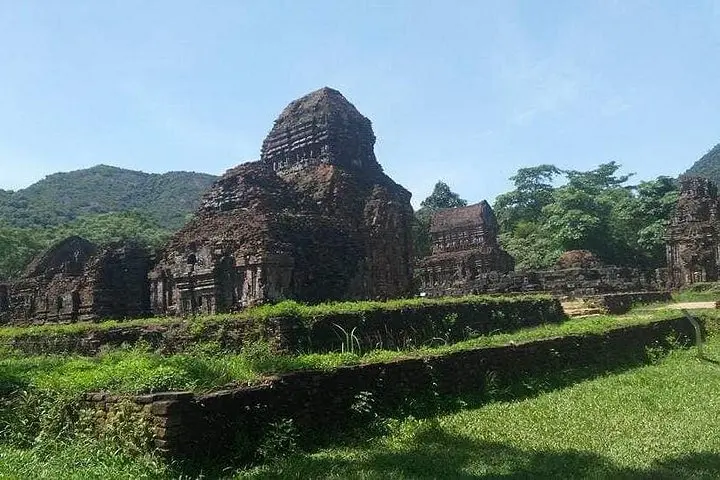
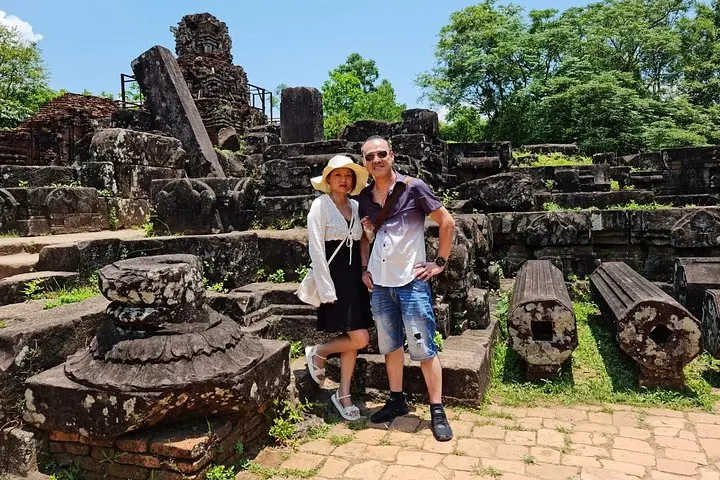
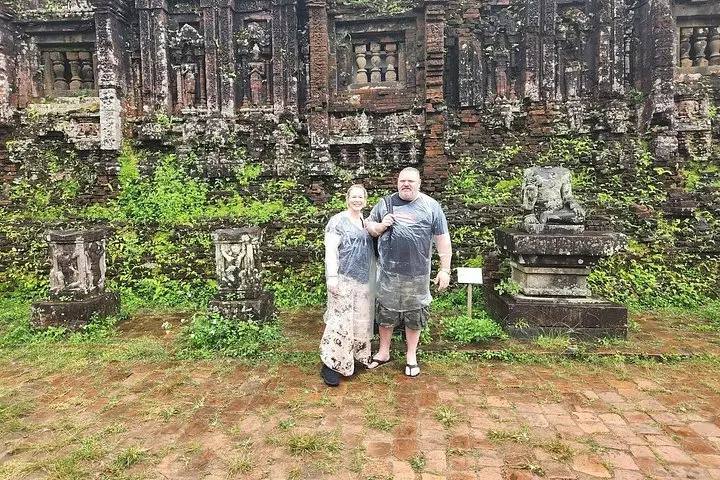
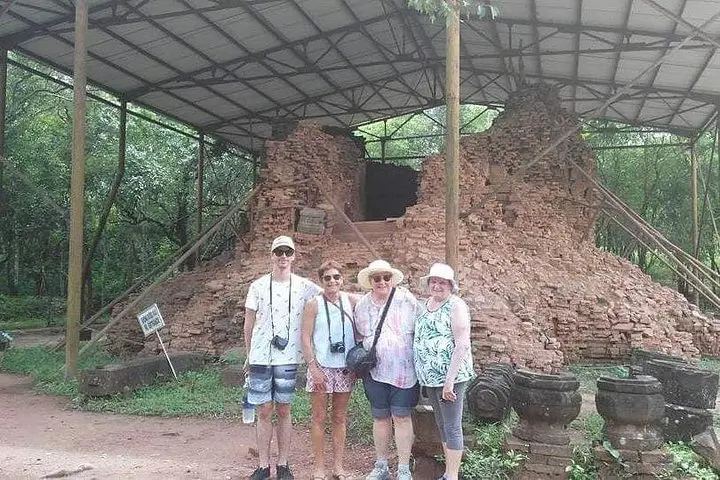
Before the tourist buses arrive, the valley exhales cool air and broken brick towers stand like old storytellers. A private car climbs out of Hoi An or Da Nang before dawn and drops you at the low-slung visitor area; from there a short buggy ride and a brisk walk lead into the archaeological park where light finds the red-brick lintels and bas-reliefs.
Before the tourist buses arrive, the valley exhales cool air and broken brick towers stand like old storytellers. A private car climbs out of Hoi An or Da Nang before dawn and drops you at the low-slung visitor area; from there a short buggy ride and a brisk walk lead into the archaeological park where light finds the red-brick lintels and bas-reliefs.
My Son was the religious heart of the Cham kingdom from roughly the 4th to 13th centuries. Built and rebuilt in stacked fired-brick blocks without mortar, the temples show technical ingenuity and Hindu iconography uncommon in mainland Vietnam. Geologically the site sits in a river valley carved into volcanic and alluvial deposits; the surrounding hills feed monsoon runoff that has both preserved and worn the ruins.
Culturally, the sanctuary records Cham court life, temple rites and regional trade links with India. Local communities in Quang Nam maintain traditional Cham crafts and music that echo the carvings visitors study at the ruins.
Practically: arrive early to avoid heat and crowds, allocate about 4–5 hours for door-to-door transfer and a 60–90 minute park visit, and plan for uneven ground and sun exposure. The site is compact but archaeological paths are dirt and stone; comfortable walking shoes, sun protection and water are essential. Photography is allowed in most areas but treat fragile carvings with care. A private transfer simplifies logistics and gives time to ask the driver or guide questions about Cham history before the valley fills with visitors.