THE ADVENTURE COLLECTIVE® · Independent discovery and booking for outdoor travel

A four-hour private tour of Luxor’s East Bank brings you up close to Karnak’s hypostyle hall and the intimate courtyards of Luxor Temple. Expect guided archaeology, uneven stone paths, and a direct connection to Egypt’s New Kingdom.
A four-hour private tour of Luxor’s East Bank brings you up close to Karnak’s hypostyle hall and the intimate courtyards of Luxor Temple. Expect guided archaeology, uneven stone paths, and a direct connection to Egypt’s New Kingdom.
You step from an air‑conditioned vehicle into heat that hums against the stone and the Nile watches from a distance, daring you to read the hieroglyphs carved millennia ago. The columns of Karnak rise like a forest of carved pillars; their shadows move as the sun arcs east to west. A private guide guides the pace, pointing out cartouches, restored reliefs, and the avenues where ancient processions once marched.
Verified experiences and guided adventures in the surrounding area.
Operated by D.Done travel Egypt · Luxor, Luxor Governorate
You step from an air‑conditioned vehicle into heat that hums against the stone and the Nile watches from a distance, daring you to read the hieroglyphs carved millennia ago. The columns of Karnak rise like a forest of carved pillars; their shadows move as the sun arcs east to west. A private guide guides the pace, pointing out cartouches, restored reliefs, and the avenues where ancient processions once marched.
Karnak grew over 1,500 years during the New Kingdom, expanding around cult practices for Amun, Mut and Khonsu. Nearby, Luxor Temple sits closer to the modern city—an island of Pharaonic assemblies and Roman additions that traces Luxor’s continuous civic life. The geology here is simple: soft Nile silt and quarried sandstone shaped by human hands more than glaciers, giving the monuments their warm, ochre tones.
Culturally the visit is both archaeological and living: local vendors, mosque minarets and felucca masts frame the ruins. Practicalities matter—this is a 4‑hour, low‑elevation walking tour over uneven stone and compact dirt, with stops at major hypostyles and open courtyards. Admission is typically not included; bring cash or a prebooked ticket. Wear sturdy, closed-toe shoes, a hat and sunscreen; carry water (the tour provides a bottle). Early morning or late afternoon avoids the peak sun and brings softer light for photos.
Respect prayer sites, avoid flash photography where restricted, and allow time at both Karnak and Luxor to absorb scale rather than rush. In four hours you get proximity to ancient belief systems, the architecture of power, and the Nile’s steady presence—an afternoon that connects past and present in the city of Thebes.
Typically not—this tour’s description indicates admission is not included, so buy tickets in advance or bring cash at the site.
Expect light walking across flat but uneven stone and sand for roughly 2–3 hours total between Karnak and Luxor Temple, with frequent stops.
Yes—it's rated easy and suitable for most fitness levels; however, plan for shade and rests in hot weather and inform the operator of mobility needs.
Photography is generally permitted in open areas; flash or tripod restrictions may apply in certain sections, and rules can change, so follow your guide’s instructions.
D.Done travel Egypt operates guided outdoor trips and adventures with an emphasis on safety, stewardship, and memorable experiences.
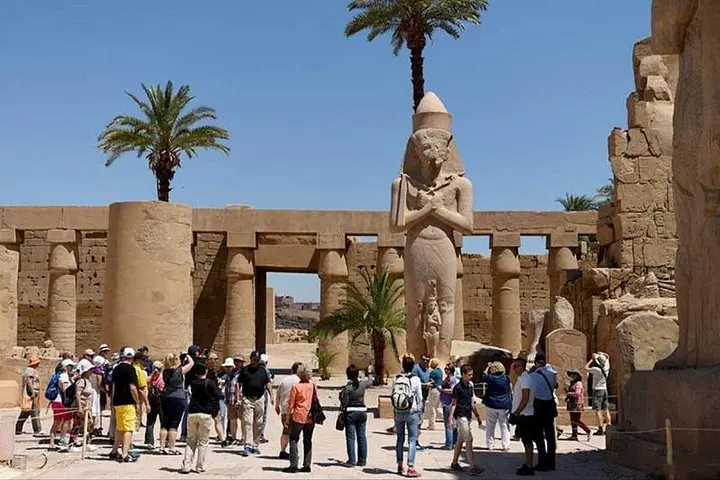
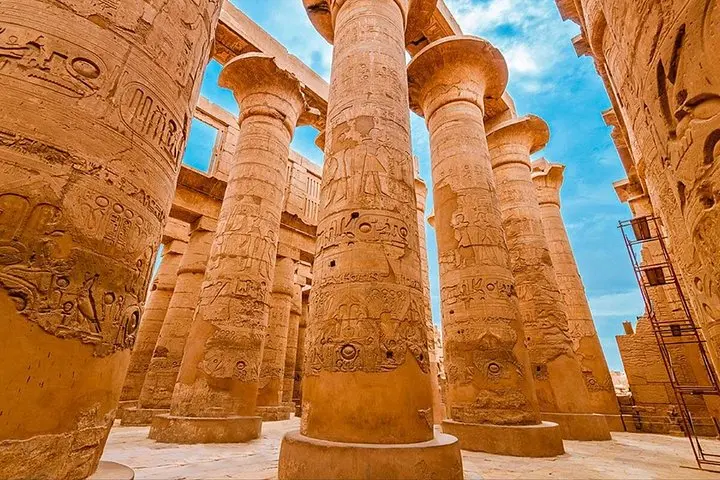
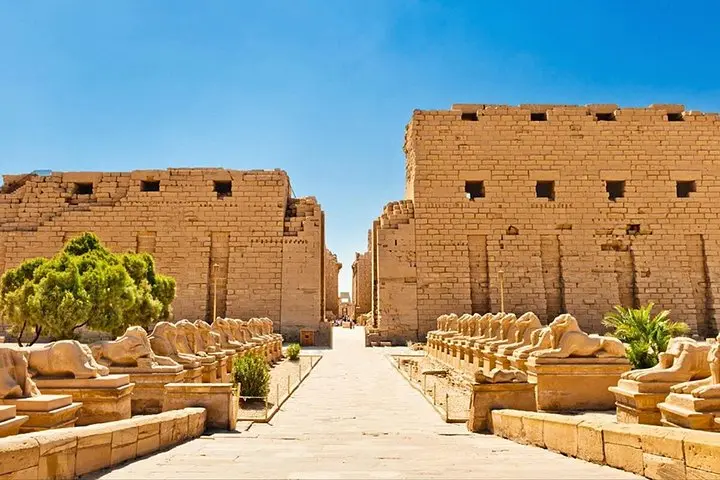
You step from an air‑conditioned vehicle into heat that hums against the stone and the Nile watches from a distance, daring you to read the hieroglyphs carved millennia ago. The columns of Karnak rise like a forest of carved pillars; their shadows move as the sun arcs east to west. A private guide guides the pace, pointing out cartouches, restored reliefs, and the avenues where ancient processions once marched.
You step from an air‑conditioned vehicle into heat that hums against the stone and the Nile watches from a distance, daring you to read the hieroglyphs carved millennia ago. The columns of Karnak rise like a forest of carved pillars; their shadows move as the sun arcs east to west. A private guide guides the pace, pointing out cartouches, restored reliefs, and the avenues where ancient processions once marched.
Karnak grew over 1,500 years during the New Kingdom, expanding around cult practices for Amun, Mut and Khonsu. Nearby, Luxor Temple sits closer to the modern city—an island of Pharaonic assemblies and Roman additions that traces Luxor’s continuous civic life. The geology here is simple: soft Nile silt and quarried sandstone shaped by human hands more than glaciers, giving the monuments their warm, ochre tones.
Culturally the visit is both archaeological and living: local vendors, mosque minarets and felucca masts frame the ruins. Practicalities matter—this is a 4‑hour, low‑elevation walking tour over uneven stone and compact dirt, with stops at major hypostyles and open courtyards. Admission is typically not included; bring cash or a prebooked ticket. Wear sturdy, closed-toe shoes, a hat and sunscreen; carry water (the tour provides a bottle). Early morning or late afternoon avoids the peak sun and brings softer light for photos.
Respect prayer sites, avoid flash photography where restricted, and allow time at both Karnak and Luxor to absorb scale rather than rush. In four hours you get proximity to ancient belief systems, the architecture of power, and the Nile’s steady presence—an afternoon that connects past and present in the city of Thebes.